Petra Saari, Åbo Akademi University, petra.saari@abo.fi
Scientific diving is an important tool for marine research, providing access to underwater environments and data that would otherwise be difficult to obtain. As a PhD researcher in the Digital Waters (DIWA) Flagship, I use scientific diving to study how ship wakes affect bladderwrack (Fucus vesiculosus), a key species of the Baltic Sea. In this article, I explore the differences between occupational scientific diving and recreational diving, share my journey into scientific diving, and describe how diving supports my PhD research in the Archipelago Sea as well as the opportunities I hope to pursue in the future.
How does occupational scientific diving differ from recreational diving?
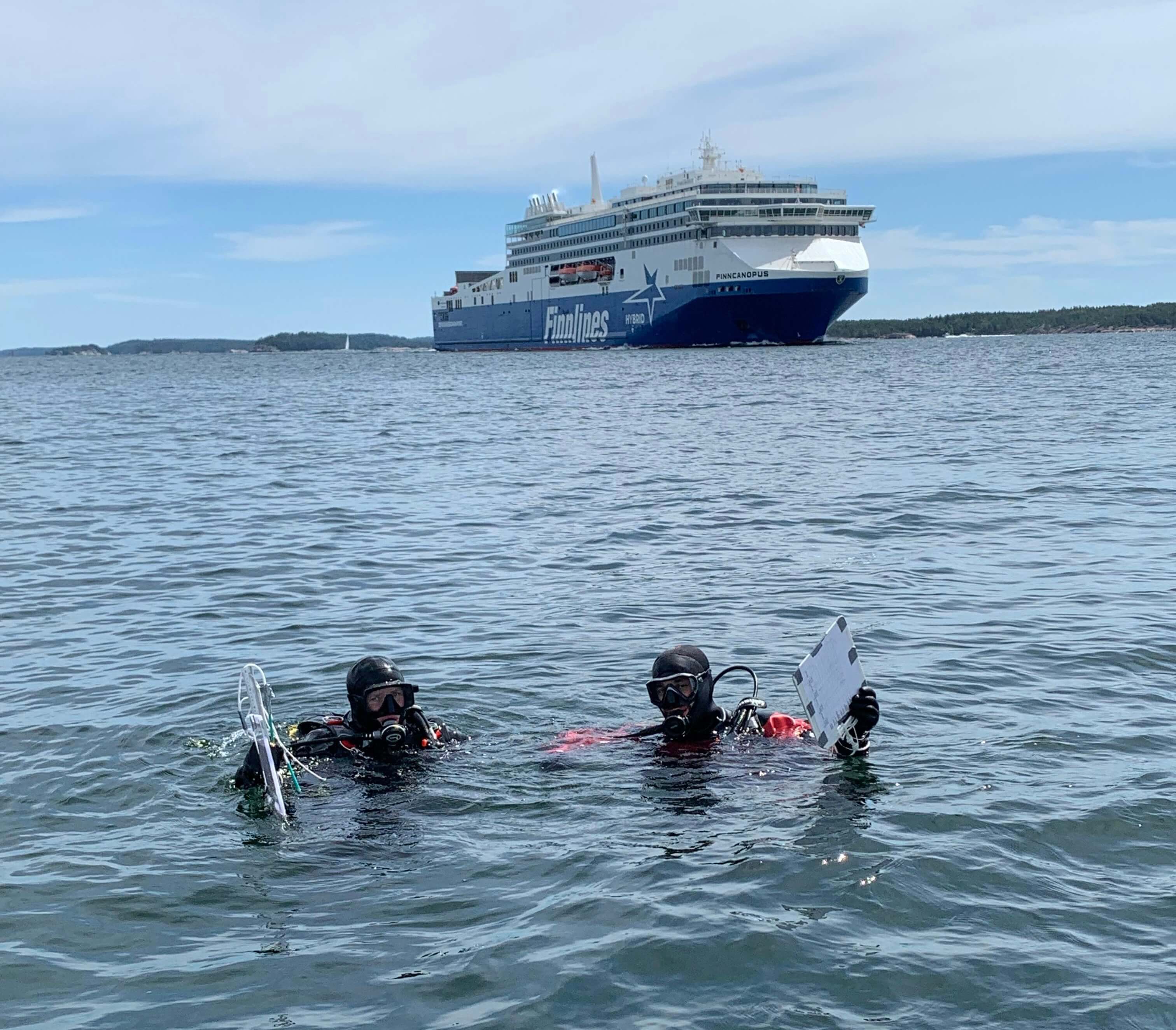
Occupational scientific diving is an essential tool for aquatic research, enabling sample collection, detailed underwater surveys and the precise deployment of scientific instruments. Unlike recreational diving, which focuses on enjoyment, scientific diving involves specific research objectives that must be achieved safely and efficiently. It therefore requires specialized training and competencies beyond recreational diving.
The European Advanced European Scientific Diver (AESD) qualification illustrates the breadth of these competencies. In addition to diving theory, emergency management and practical underwater techniques, its requirements include dive project planning, supervision of diving operations, scientific sampling methods and experience leading dives (European Scientific Diving Panel, 2022). European scientific diving qualifications provide a framework for recognizing these competencies and supporting collaboration across countries (Féral and Norro, 2023).
My path into scientific diving
My interest in scientific diving grew from my experience using other methods to map underwater habitats, as I began to recognize their limitations. In 2021, I completed a year-long vocational training programme in occupational scientific diving, earning the Advanced European Scientific Diver (AESD) qualification and gaining experience in a wide range of diving techniques. The training covered full-face mask diving, surface-tethered diving, equipment servicing, diving medicine lectures, photogrammetry, underwater photography, search exercises, helmet diving, hyperbaric chamber training, lift-bag use, ice diving, compressor operation and boat handling. I also learned specialized scientific diving methods, including transect surveys, species identification, sediment core sampling, Kautsky sampling and ice sampling. My experience in marine fieldwork every summer since 2019, combined with my occupational scientific diving training and professional experience as an occupational scientific diver since 2021, has provided a strong foundation for conducting my own PhD research.
Scientific diving in my PhD research
In my PhD, I study how ship wakes affect bladderwrack (Fucus vesiculosus). The dives involve mapping vegetation depth limits, conducting transect surveys, deploying different monitoring equipment, collecting samples and using quadrats to estimate algal density.
Diving is only one part of the work. Before each operation, sampling procedures and equipment placement must be planned, diving and sampling equipment prepared, and responsibilities assigned among team members already on land as verbal communication is not possible underwater. Drawing on my years of experience in marine fieldwork and scientific diving, as well as my AESD qualification, I helped the team navigate the challenges of working at sea and carrying out scientific diving operations, which were new to the other team members. My responsibilities included dive planning, coordinating the diving team, and selecting appropriate procedures to ensure safe and effective fieldwork. Field research also requires boat handling, weather assessment, equipment maintenance, sample processing and continuous attention to safety.
As a PhD researcher, my role extends beyond carrying out fieldwork. I design my research around specific scientific questions, select methods suited to those questions, and collect and analyze the resulting data. Being involved in every stage of the research allows me to connect the scientific objectives with practical decisions underwater and assess how field conditions may affect the data. This integrated approach helps ensure that the methods, fieldwork and analysis support one another.
Maintaining diving skills requires commitment throughout the year. Finnish diving conditions often involve cold water, darkness and poor visibility. Regular practice in these harsh conditions, including ice diving in winter, helps maintain competence and readiness for fieldwork.
Looking ahead: new skills and research opportunities
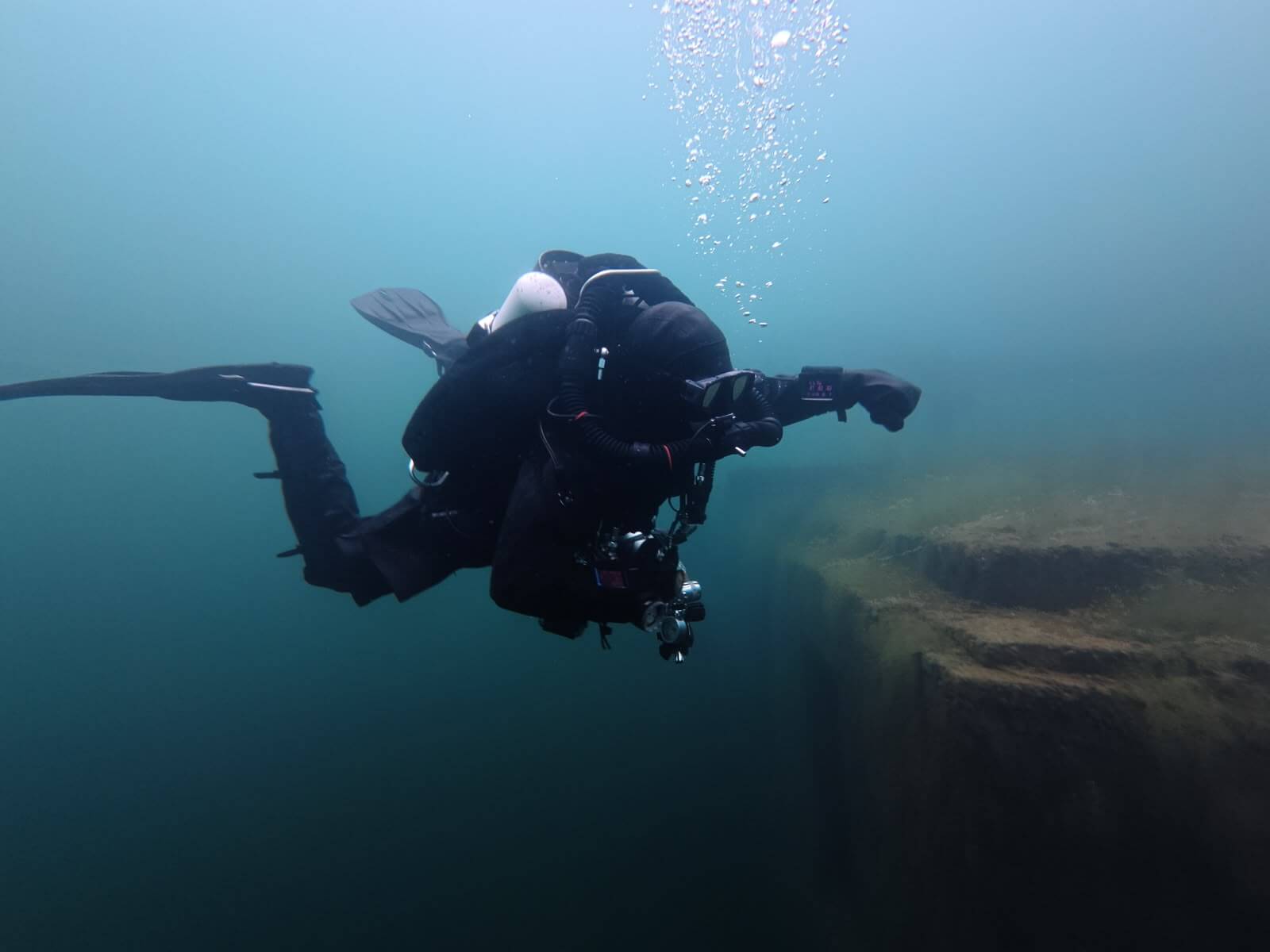
This year, I began diving with a rebreather because of its potential to expand the possibilities of scientific diving. During my PhD, I have gained experience in designing and conducting my own research. Learning to use a rebreather is an exciting opportunity to build on this experience and explore new possibilities for scientific research in the future.
By recycling breathing gas, rebreathers use gas more efficiently than open-circuit scuba, extending dive duration and reducing helium consumption and associated costs on deeper dives (Norro, 2016; Sieber & Pyle, 2010). Maintaining a controlled oxygen partial pressure can also improve decompression efficiency, potentially reducing ascent time and allowing more time for research at depth.
After my PhD, I hope to pursue research opportunities where I can apply my rebreather diving skills for scientific research in less-explored underwater environments.
References
- European Scientific Diving Panel. (2022). Common practices for recognition of European competency levels for scientific diving at work: European Scientific Diver (ESD) and Advanced European Scientific Diver (AESD) (Consultation Document No. 1, Rev. 1, updated October 2022). https://www.esdpanel.eu/wp-content/uploads/2022/10/Esdp_consult_1_rev1_oct-2022.pdf
- Féral, J.-P. & A. Norro. (2023). Specific initial training standards are needed to dive for science in Europe, Occupational vs. Citizen Science Diving. Frontiers in Marine Science. 10.Article 1134494. https://doi.org/10.3389/fmars.2023.1134494
- Norro, A. (2016). The closed circuit rebreather (CCR): Is it the safest device for deep scientific diving? Underwater Technology, 34(1), 31–38. https://doi.org/10.3723/ut.34.031
- Sieber, A. & R. Pyle. (2010). A review of the use of closed-circuit rebreathers for scientific diving. Underwater Technology, 29(2), 73–78. https://doi.org/10.3723/ut.29.073
20.10.2026