Bhattarabhop Viriyaroj & Reeta Vaahtera
Doctoral studies can be full of adventures, one of which is travelling to a conference. Earlier this year, we* went to a conference, EGU26, together. If you are not aware, EGU (European Geosciences Union) is one of the biggest conferences in Europe, where around 20,000 people attend every year. For us, this was the first big, international conference in the scientific ocean. Afterwards, we realised that there were so many things we wished we knew before we departed for the conference. So, we want to share our tips and tricks when navigating the conference ocean.
This blog aims to help out our peers preparing for international conferences: what to do beforehand, how to get the most out of the conference week but still take care of your own well-being. Fasten your life-jackets – now we begin!
1. Get into the role (very important)
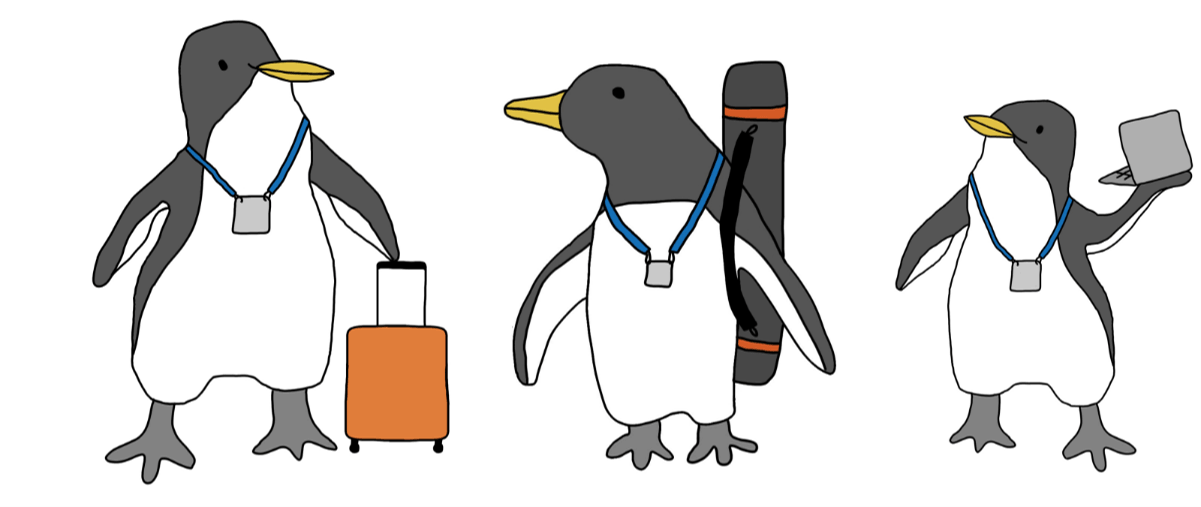
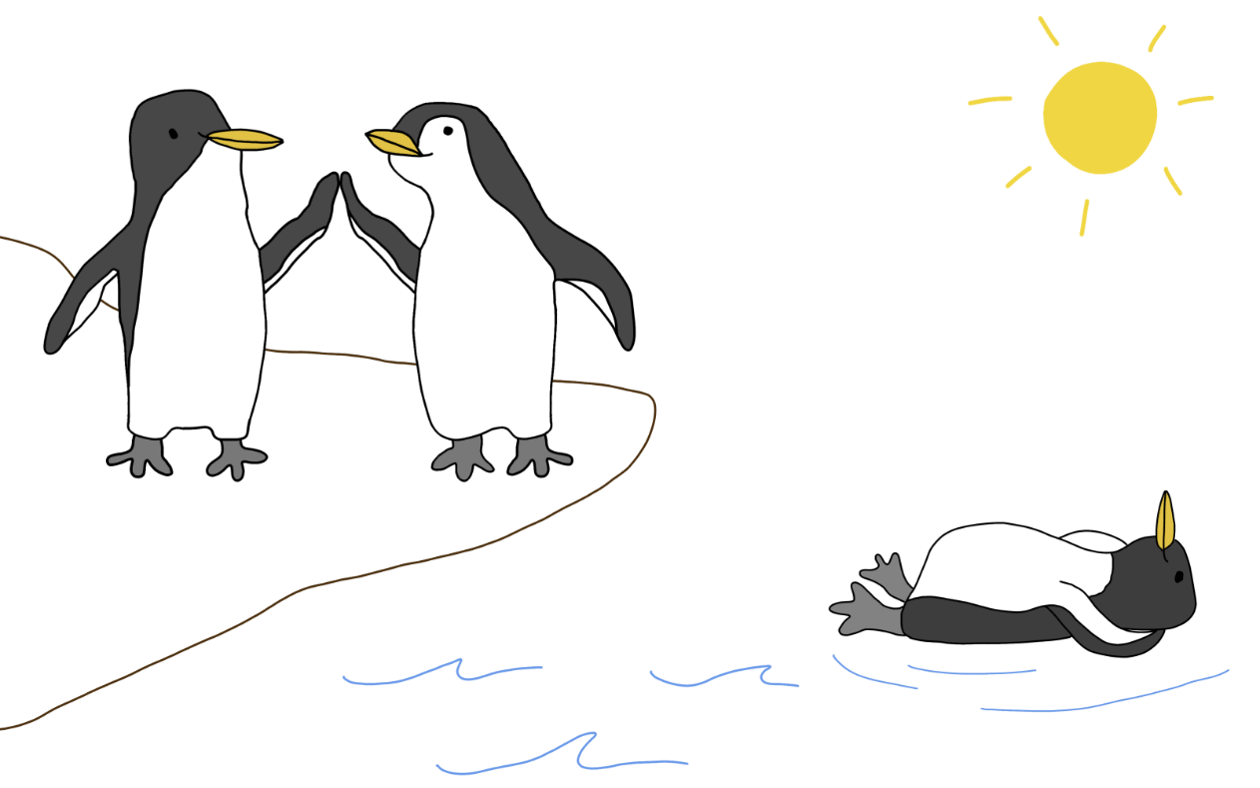
As early-career scientists in water-related fields, we felt like penguins going to swim in the stormy waters called an international conference for the first time. So, before you start your voyage, please immerse yourself in the penguin mindset. Here’s the picture for you to get into character.
2. Before the storm
Before you start your voyage into the ocean, we recommend you find other fellow penguins (other conference first-timers). These will be your friends who can help you before, during and after the conference. What if you don’t see any fellow penguins in sight? Do not fret; your fellow penguins are surely somewhere out there!
Whether you are just a lone penguin or you’ve already found your pack, check that you are all geared up for the voyage and know your swimming route.
Gear Checklist:
- Have you registered for the conference? Remember that the abstract submission and registration are likely separate!
- Have you prepared your materials? – If you are presenting, check that you have submitted your abstract and prepared the presentation materials. You can potentially print at the venue.
- Check how you can get your name badge.
- Consider writing an out-of-office email to avoid information overload during the conference.
Know your ocean:
- Have you booked accommodation and travel? -> For big conferences, we recommend you do your bookings at least 3-4 months beforehand.
- “Cost-efficient penguin recommendation: shared apartments with your fellow penguins can reduce the cost!”
- How to travel to your accommodation? -> Check out the local transportation and check-in information.
- “Usually there is luggage storage available at the conference site”
- Where can you grab some food? Swimming takes a lot of energy! Meals might be included in the conference or available for purchase at the venue.
3. Swim and breathe, swim and breathe
After you have checked your gear and swimming route, it is time to jump into the water!
When first swimming in the ocean, you might get very excited to see everything and interact with all other creatures. Remember to manage your energy and your mind. Nobody will die (hopefully!) from you missing a couple of presentations. Breathe some fresh air, touch some grass, or look around the city. And ask your fellow penguins to join you – they might be needing a break just as much. Last but not least: stay hydrated (and no, coffee does not count!)
IF Lost in the sea…
Help! There are so many things going on. I don’t know what to do! Don’t worry, little penguins! You are not alone. Feeling lost, confused, and overwhelmed are very common among the big conference attendees. Here is a health toolkit you can use:
- First, find a place to sit and breathe.
- Are you lost? Find the staff or organisers. They are there for you.
- You don’t know what to do? Find your fellow penguins! There’s a high chance that they feel the same way. Have a chat, and maybe you can join the next session together.
3. When encountering other animals
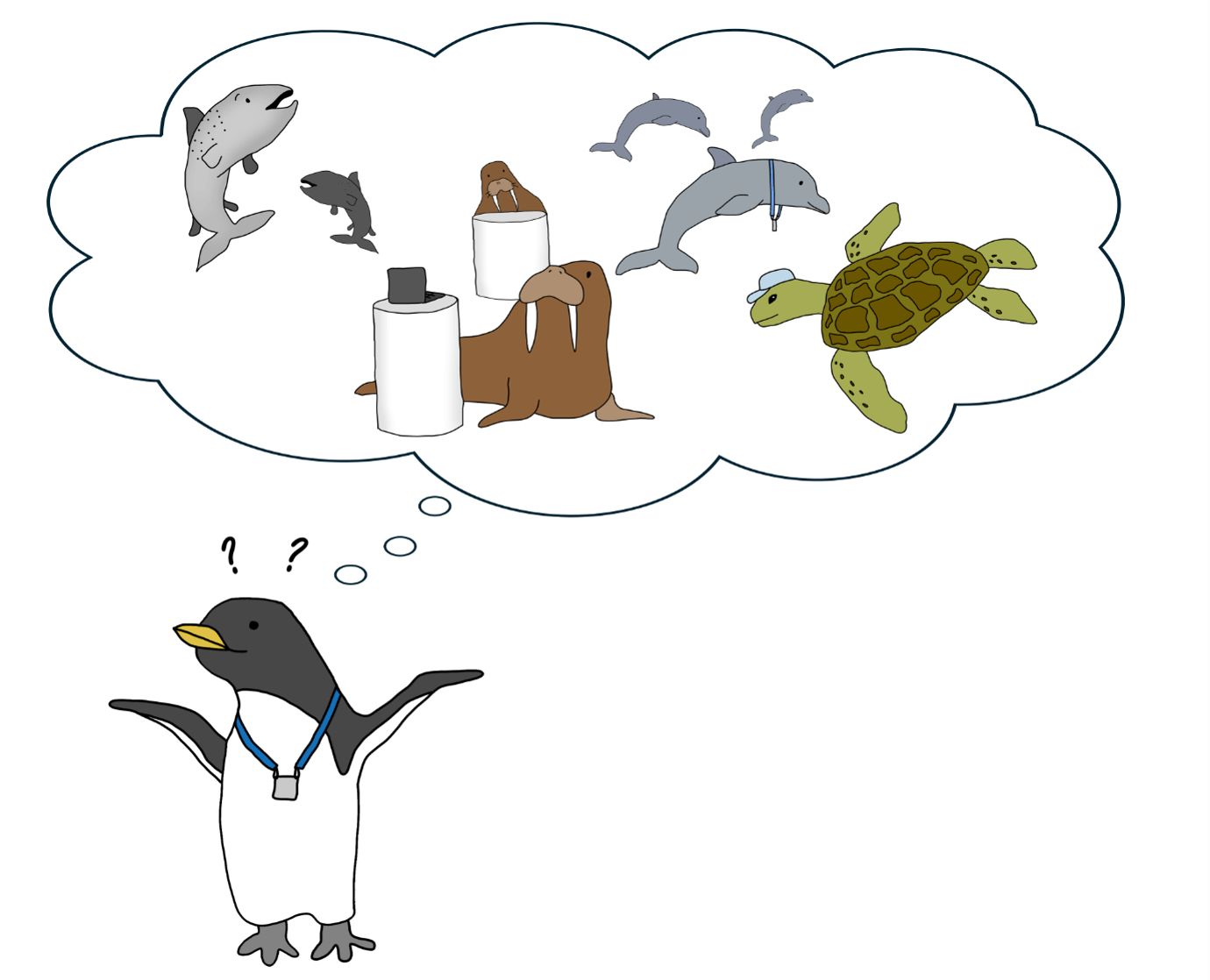
When you are swimming in the sea, you might encounter other sea creatures in addition to your fellow penguins. Let’s have a quick look at a few of them.
Salmon
Firstly, we would like to present the salmon. They are already well-established in their career, potentially recently tenured, and hence have a clear, important role in the system. Just like salmon, they are typically migratory: they keep moving around the conference, attending different events. Although their schedules might seem full, they are happy to talk to you and might be valuable connections to you as well. Whether you are just networking or trying to find new opportunities for research visits or future career opportunities – the salmon probably have something for you. So even though they might seem slippery and their fast movements make you confused, approaching well-established researchers is highly recommended!
Sea turtles
Sea turtles are the celebrity researchers who have already made their names known in the field. People usually recognise them and try to talk to them. They might be the organisers for some of the events, and are usually quite busy. However, unlike salmon, the sea turtles have had all their connections figured out. Our recommendation on how to approach sea turtles is to get in contact with them before the conference (e.g. through emails). Then, during the conference, your best chance to talk to them would be when they have free time, such as dinner events, and mention that you are the person who has been contacting them to get the conversation going.
Walruses
The third interesting stop is the island of walruses, i.e. exhibition booths. Are you looking for a job, state-of-the-art measurement devices or perhaps potential business collaborators for your research? Find the walruses! They might seem to be in their own bubble, but don’t hesitate to approach them. A stroll around the exhibition area also offers you a little break from the rest of the conference. Walruses are extremely useful in establishing connections, ranging from companies and publishers to funding associations.
If you are not sure what to do, you can always check out the booths or the poster session. At the booths, you can find the chill walruses, while the poster sessions offer you a way of looking at others’ work at your own pace. You might end up having fruitful conversations when there are not many people.
Dolphins
Lastly, we have dolphins. These are the post-doctoral researchers or people organising short courses and mentoring sessions. They have quite a fresh experience as doctoral students and are often excited to give you guidance. In big conferences like EGU, multiple short courses are held to give attendees information on the state-of-the-art tools to help with your research. To interact with these helpful dolphins, we recommend you wait until the end of the session then approach them. Other dolphins might chime in with your conversation as well!
Remember that you don’t need to have extensive conversations with the fascinating animals right away! You can set a meeting or send an email after the conference to stay in touch with them. Bring a notebook and a pen, or use LinkedIn to get their contact details. But don’t wait too long to contact them!
4. We made it back!
Hurray! Congrats on surviving your first conference! Now it’s time to lie down and appreciate what you have achieved. We recommend that you take some days off afterwards. There’s (work) life after the conference as well, so remember to manage your energy after coming back home.
Going to your first big conference can be overwhelming, but with good preparation it can be a rewarding experience. Also, remember that it’s a learning process – it takes time to know how to navigate these waters! Conferences are exciting and fun, especially with fellow penguins. You get to meet fascinating other creatures and who knows, you might even encounter the rare animals such as influencers (Nemos), or tourists (Otters).
Text: Best Bhattarabhop Viriyaroj and Reeta Vaahtera
Illustrations: Reeta Vaahtera
“Best” Bhattarabhop Viriyaroj – Best is a doctoral student at Aalto University and part of the DIWA PhD Pilot program. He researches global food systems and their connections to economic and ecology. bhattarabhop.viriyaroj@aalto.fi
Reeta Vaahtera – Reeta is a doctoral student at Aalto University and also part of the DIWA PhD Pilot Program. Her research looks into how climate change impacts on river ice can be studied better. reeta.vaahtera@aalto.fi
13.8.2026