Eeva Järvi Laturi, University of Oulu. Eeva.Jarvi-Laturi@oulu.fi
Flying thousands of kilometers to study climate change can feel contradictory. Environmental research often aims to understand and address global challenges, yet conducting that research requires travel, resources, and a footprint of its own. After returning from a three-week field campaign in Northeast Greenland, I found myself reflecting on a question that I rarely hear researchers say out loud: is the knowledge we gain really worth the cost?
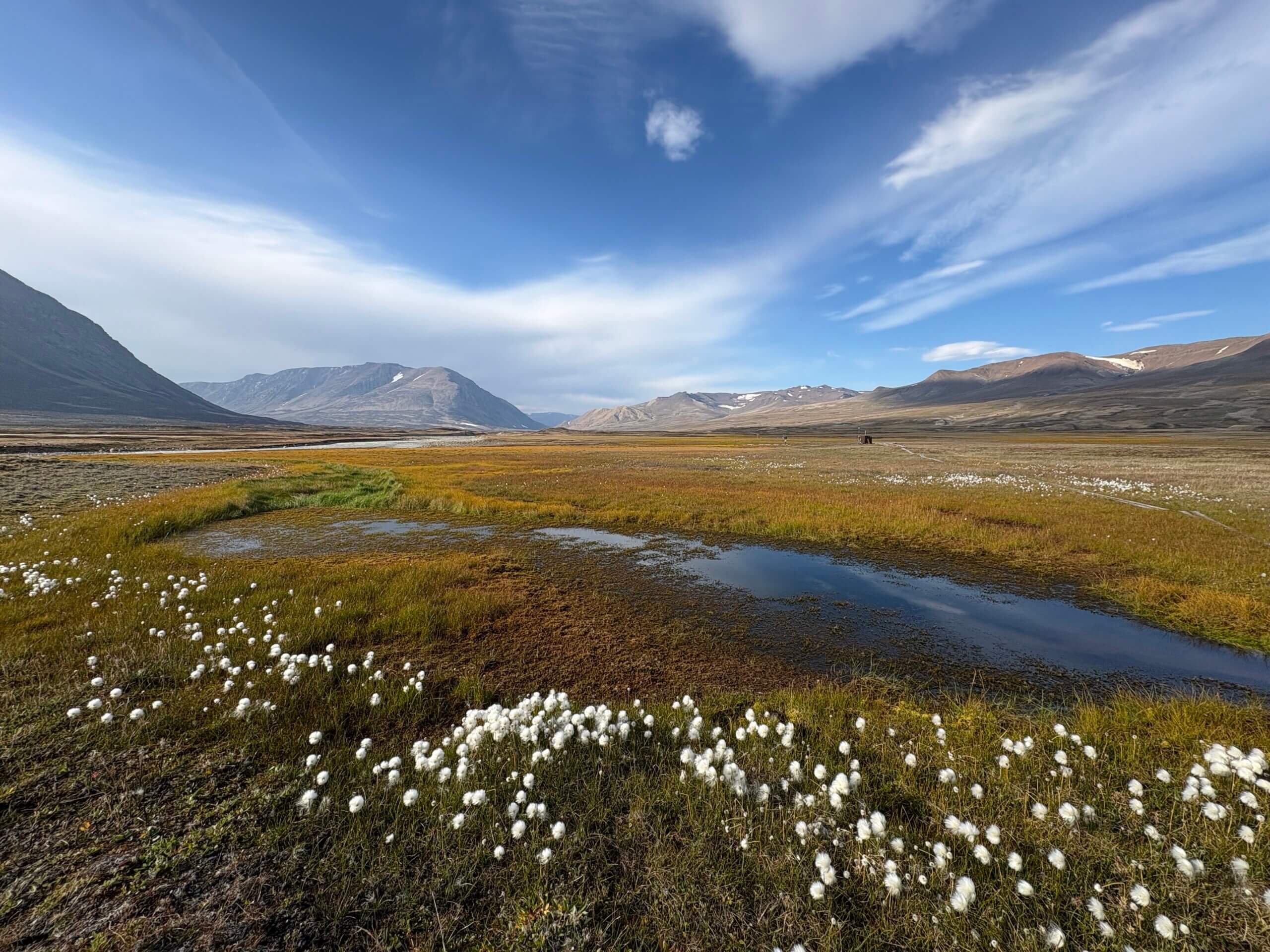
Planning and carrying out a field campaign in a remote Arctic location requires months of preparation, many people’s working hours, and substantial resources. Scientific equipment needs to be transported, permits arranged, safety procedures considered, and travel carefully planned. Behind every measurement collected in the field lies a long chain of logistics that is largely invisible in the final scientific paper.
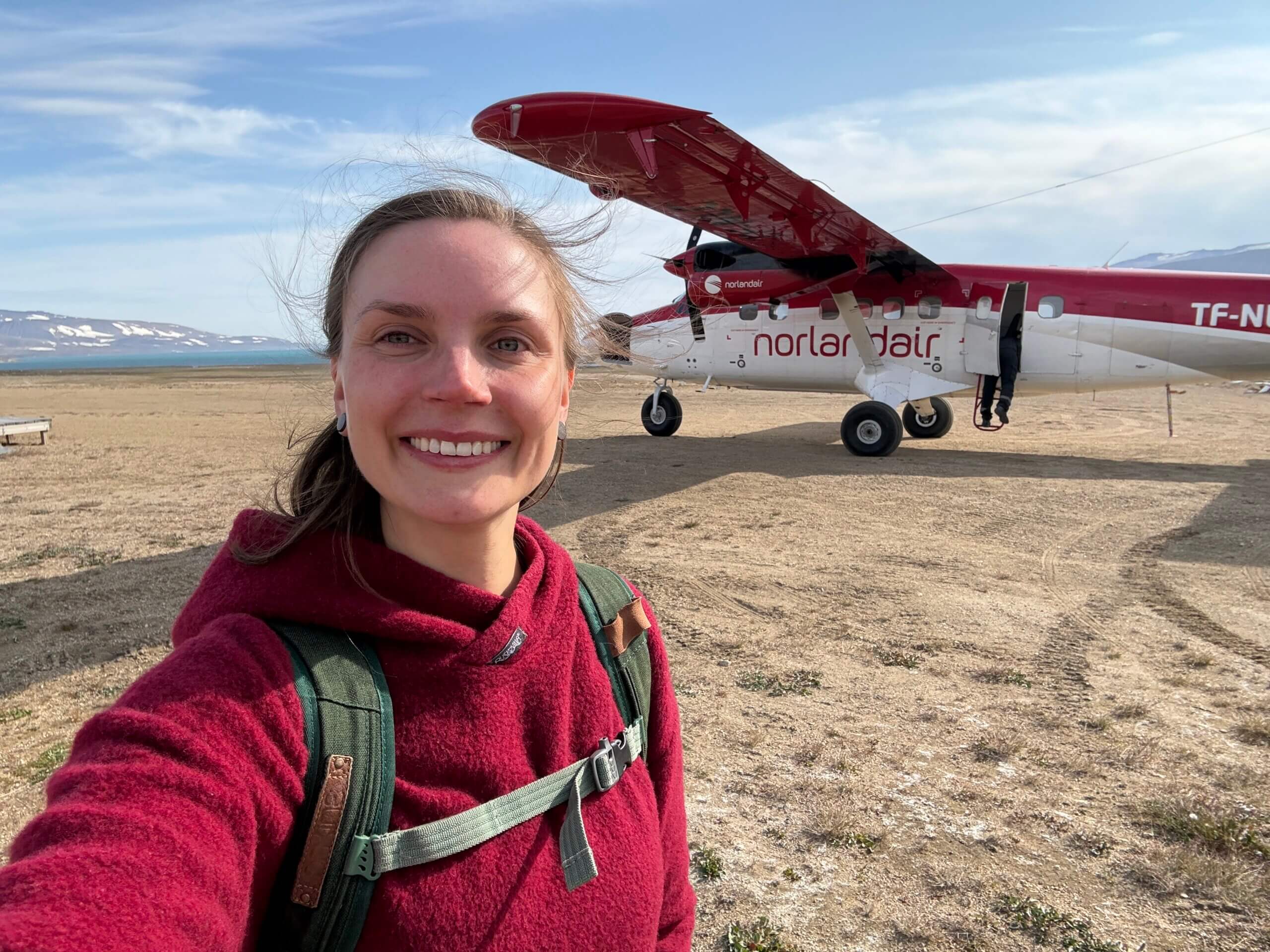
As someone studying environmental issues, I cannot ignore the irony that research itself often requires flying. Reaching remote places such as Zackenberg research station in Northeast Greenland, 500 km from the nearest settlement, involves multiple flights, including small aircraft carrying only a handful of passengers. Like many researchers, I sometimes experience climate anxiety, and this creates an uncomfortable conflict: I believe the work I am doing is important, but I still wonder whether it is important enough.
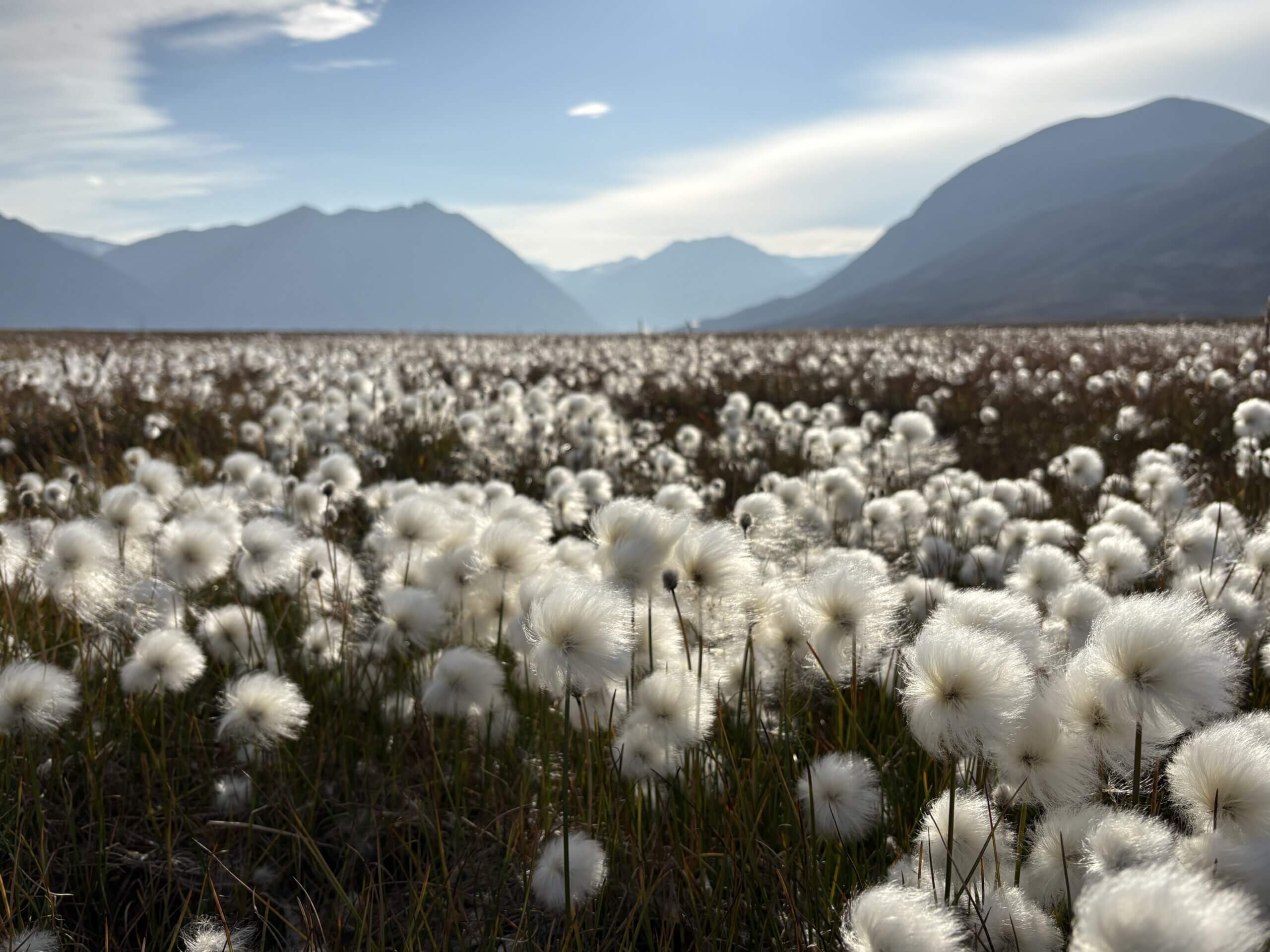
Despite these conflicting feelings I feel privileged to have had the opportunity to work in Greenland. Spending time in the Zackenberg Valley allowed me to experience a landscape unlike anything I had seen before. Equally memorable was the atmosphere among the people working there – everyone seemed genuinely willing to help, share knowledge, and support one another. Perhaps that is what happens when people with shared values and common purpose come together in an isolated place.
From doubt to perspective
There were thoughts that stayed with me throughout the trip.
The only Greenlandic people I met (assumptions were made here) were the few staff members at Nerlerit Inaat, also known as Constable Point, airport in eastern Greenland. This raised a familiar feeling that I have also experienced when travelling in Australia and New Zealand: what gives me the right to be here? Greenland is in the middle of important conversations about self-determination and local agency. As an outsider arriving to conduct research and then leaving again without communicating with locals, I could not help but question my own place in that context.
Many thoughts also accompanied me on my flights home.
I found myself questioning not only the logistics and ethics of fieldwork, but also the value of science itself. I study methane emissions and plant traits in an area that very few people will ever visit. That means spending hours collecting measurements from individual plants and looking at tiny details that most people ignore. Who cares what one plant emits? What difference does it make whether a remote Arctic site stores carbon or releases it?
The answers became clearer when I stepped back and looked at the bigger picture.
Science often progresses by connecting small observations to larger patterns. Understanding individual plants helps us understand plant communities. Understanding plant communities helps us understand ecosystems. Understanding ecosystems helps us better understand global climate processes. A single measurement may seem insignificant on its own, but collectively these observations help us answer much larger questions.
The same principle applies to environmental modelling, which my fieldwork also aims to support. We model and predict future conditions because society depends on understanding change. Weather forecasts, flood risk assessments, climate adaptation strategies, and international climate agreements all rely on our ability to make informed predictions. Those predictions can only be as good as our understanding of the processes behind them.
Making peace with the contradictions
Still, one question remains: why does society invest so much in research that does not directly generate economic profit?
I do not have a perfect answer. But I believe that understanding the environment has inherent value. Clean water, stable climate conditions, functioning ecosystems, and healthy soils form the foundation on which our economies and societies depend. Knowledge about these systems is not separate from human wellbeing. It is one of the things that makes wellbeing possible.
On the way home, I discussed these thoughts with a colleague over a pint at Helsinki Airport, and the conversation turned into an unexpectedly meaningful one. To be honest, it did not take much to convince myself once again that our work truly matters. More importantly, it reminded me how valuable it is to say these doubts out loud. Researchers are not immune to climate anxiety, ethical uncertainty, or feelings of inadequacy, yet these topics are often left unspoken. Simply discussing them with someone who understands can bring a much-needed sense of perspective.
Sometimes a conversation is enough to remind you that even the smallest measurements contribute to something much larger. The doubts may never disappear completely, and perhaps they should not. They encourage us to think critically about our work and the responsibilities that come with it.
For me, the answer is not that environmental research is free from contradiction. Rather, it is that these contradictions are worth reflecting, discussing, and navigating together. And despite uncertainty, I still believe that understanding our changing world is one of the most meaningful things we can do.
7.9.2026