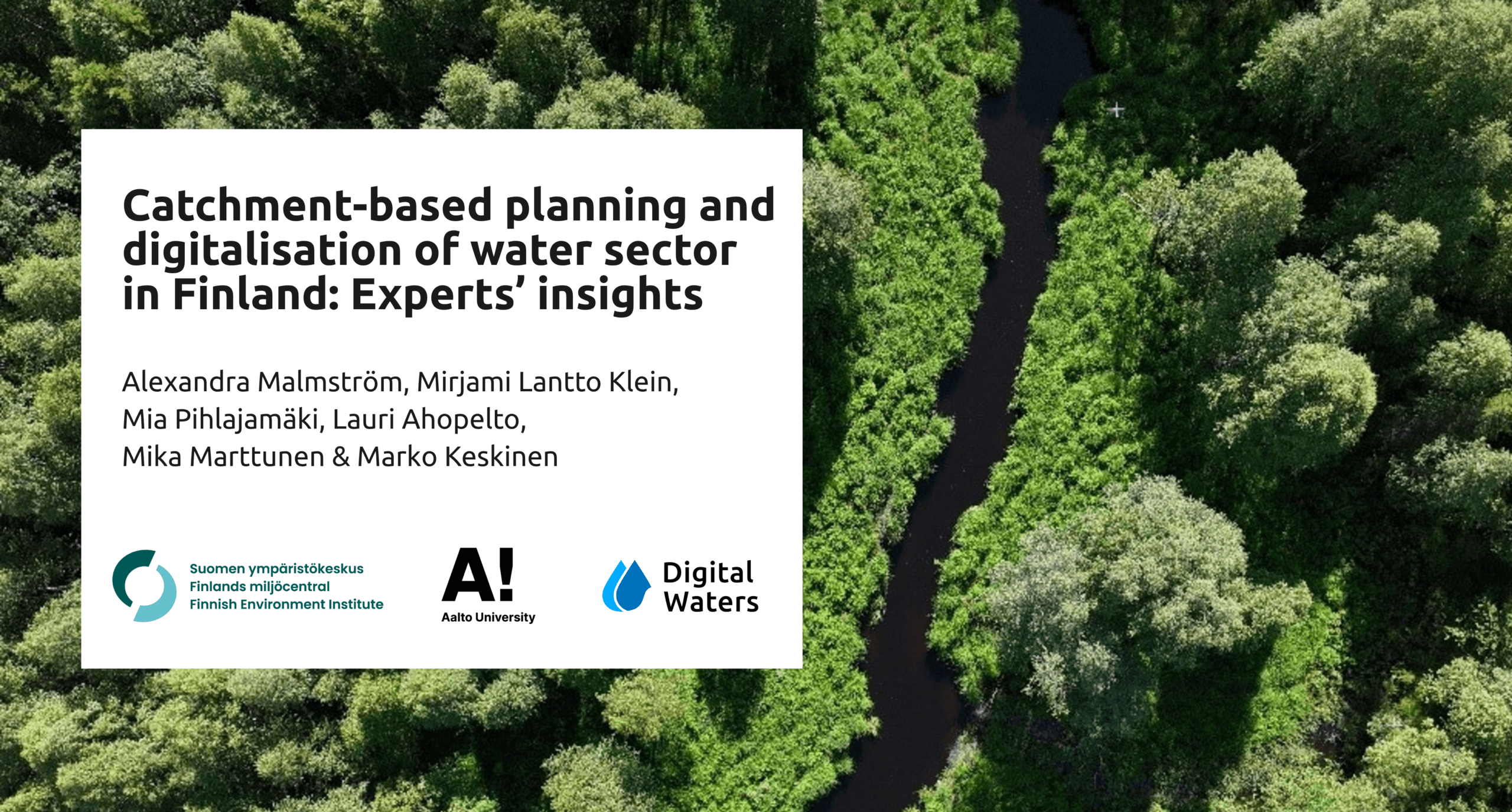
A recent study by Digital Waters Flagship partners explored water sector stakeholders’ perspectives on the questions “How can catchment-based planning be advanced in Finland?” and “What kind of a role can digitalization play?” In the final report, the findings suggest that the biggest challenges in catchment-based planning are not primarily related to the lack of data. Instead, they stem from unclear responsibilities, fragmented land ownership, and the scattered nature of data and digital tools.
How can we address this?
- Water management requires closer collaboration between authorities, more predictable funding, stronger stakeholder engagement, and planning approaches that better incorporate landowner perspectives.
- The greatest opportunity for digitalization lies in improving the integration, accessibility, and utilization of existing data and tools.
- Looking ahead, there is a need for more integrated datasets, improved modelling of the impacts of measures, and better methods for identifying and prioritizing actions at the catchment scale.
The report provides valuable insights into where water management development efforts should be focused in the coming years. The findings can support both the development of digital services and the strengthening of catchment-based planning and collaboration—two themes that are at the core of our work within the DIWA Flagship.
The study was conducted in 2025 as a collaboration between Aalto University and the Finnish Environment Institute (SYKE) as part of the Digital Waters (DIWA) Flagship research theme “Transformative Water Management.”
Read the full report (available in both Finnish and English) via the link below.