Bilal Liaqat, University of Turku, bilal.liaqat@utu.fi
Spring floods are one of the most important hydrological events in Finland. Each year, melting snow causes river levels to rise rapidly, sometimes leading to flooding. In my PhD research, I explore how Artificial Intelligence (AI) and Explainable AI (XAI) can help us not only predict these floods more accurately, but also better understand the processes behind them.
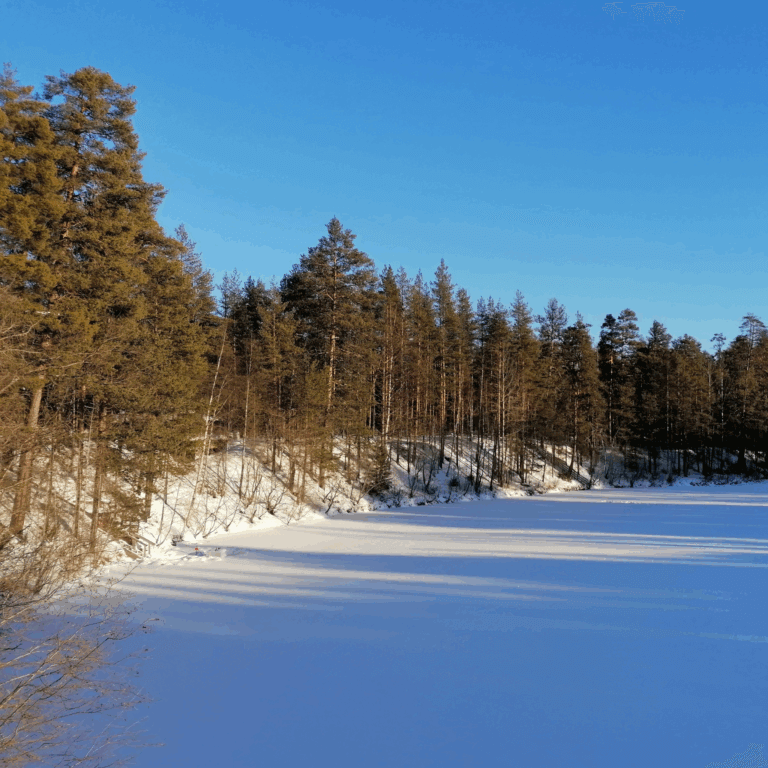
Finland is often called the Land of a Thousand Lakes. In reality, it has far more than that. Lakes, rivers, snow, and long winters define the Finnish landscape. Water is present everywhere and in many forms throughout the year. Because of this, Finland offers an ideal natural setting for studying how water moves through the environment. The Nordic climate plays a key role here. Winters in Finland are long and cold, and most precipitation accumulates as snow. When temperatures rise in spring, the snow melts rapidly, leading to sharp increases in river flow. Accurately predicting this spring streamflow is essential for effective flood management, water resource planning, and environmental protection.
The Challenge of Modeling Spring Floods
Traditionally, hydrologists have used process-based models to simulate river discharge. These models describe hydrological processes using physical equations and assumptions about how water behaves. While this approach has been very successful in many cases, it often struggles in environments where relationships between variables are highly non-linear. In snow-dominated regions, small temperature changes can suddenly trigger large changes in runoff, and interactions between snow storage, melt rates, and precipitation become difficult to describe with fixed equations.
This is where data-driven models offer a powerful alternative. Instead of prescribing how the system should behave, data-driven models learn patterns directly from historical data. By analyzing long time series of temperature, precipitation, snow conditions, and streamflow, these models can discover complex and non-linear relationships on their own. Deep learning models, such as Long Short-Term Memory (LSTM) networks, are especially well-suited for this task because they can learn from past conditions over long time periods.
Data-Driven Model as a Black Box
Data-driven models also have an important weakness. They are often described as black boxes. While they may produce very accurate predictions, it is not immediately clear how or why they arrive at a specific result. In hydrology, this lack of transparency can be problematic. Scientists and decision-makers want to understand which factors drive streamflow changes and whether the model’s behavior is physically reasonable. Without this understanding, it can be difficult to trust model predictions, especially under changing climate conditions.
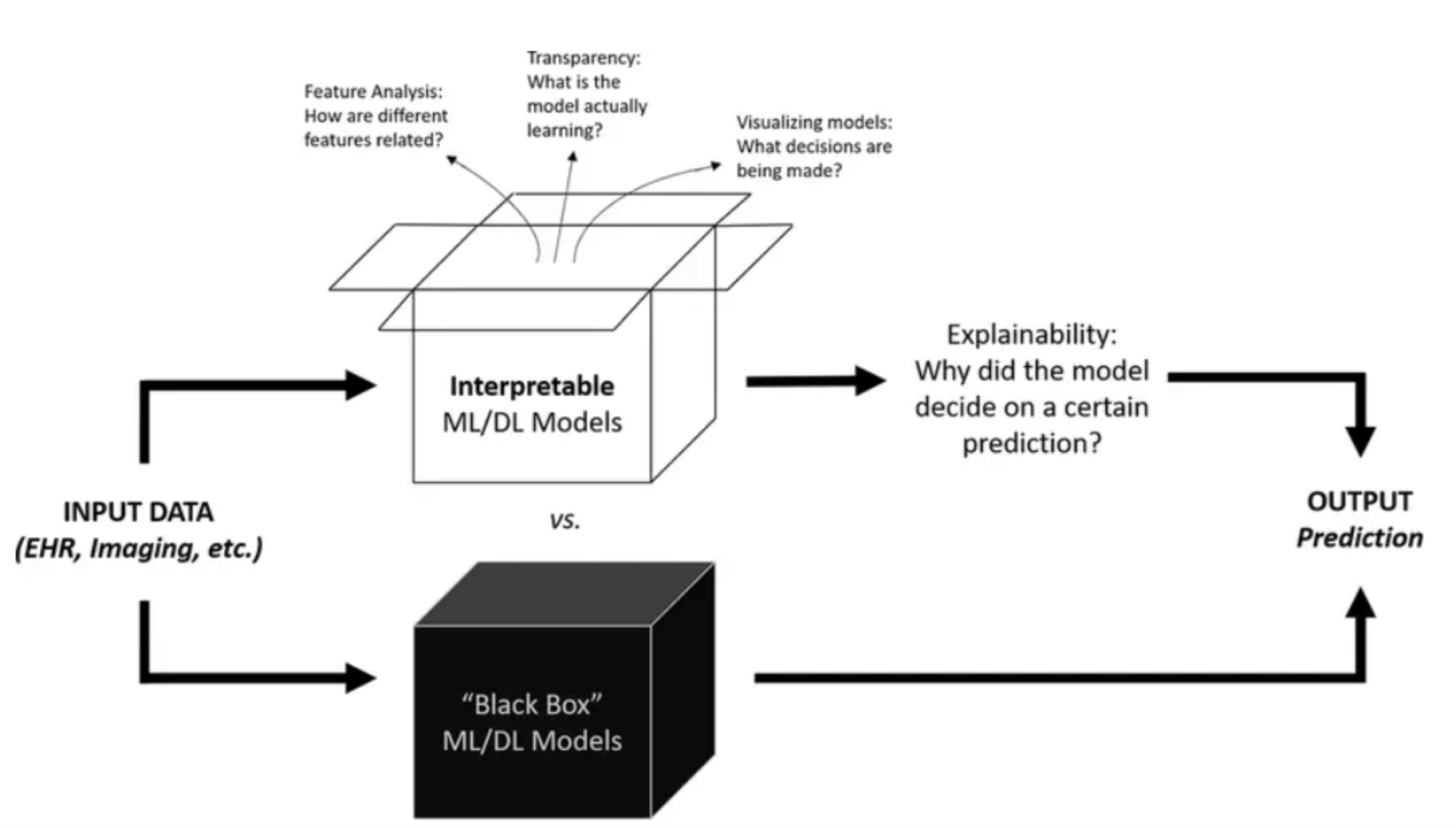
Explainable Artificial Intelligence, or XAI, helps address this problem. XAI methods make it possible to look inside data-driven models and analyze how different input variables influence predictions. Instead of only knowing that a model performs well, we can understand when temperature matters most, how snow conditions influence spring floods, and how recent rainfall affects short-term changes in river flow. In this way, XAI transforms data-driven models from black boxes into tools that not only predict streamflow accurately but also deepen our understanding of hydrological processes.
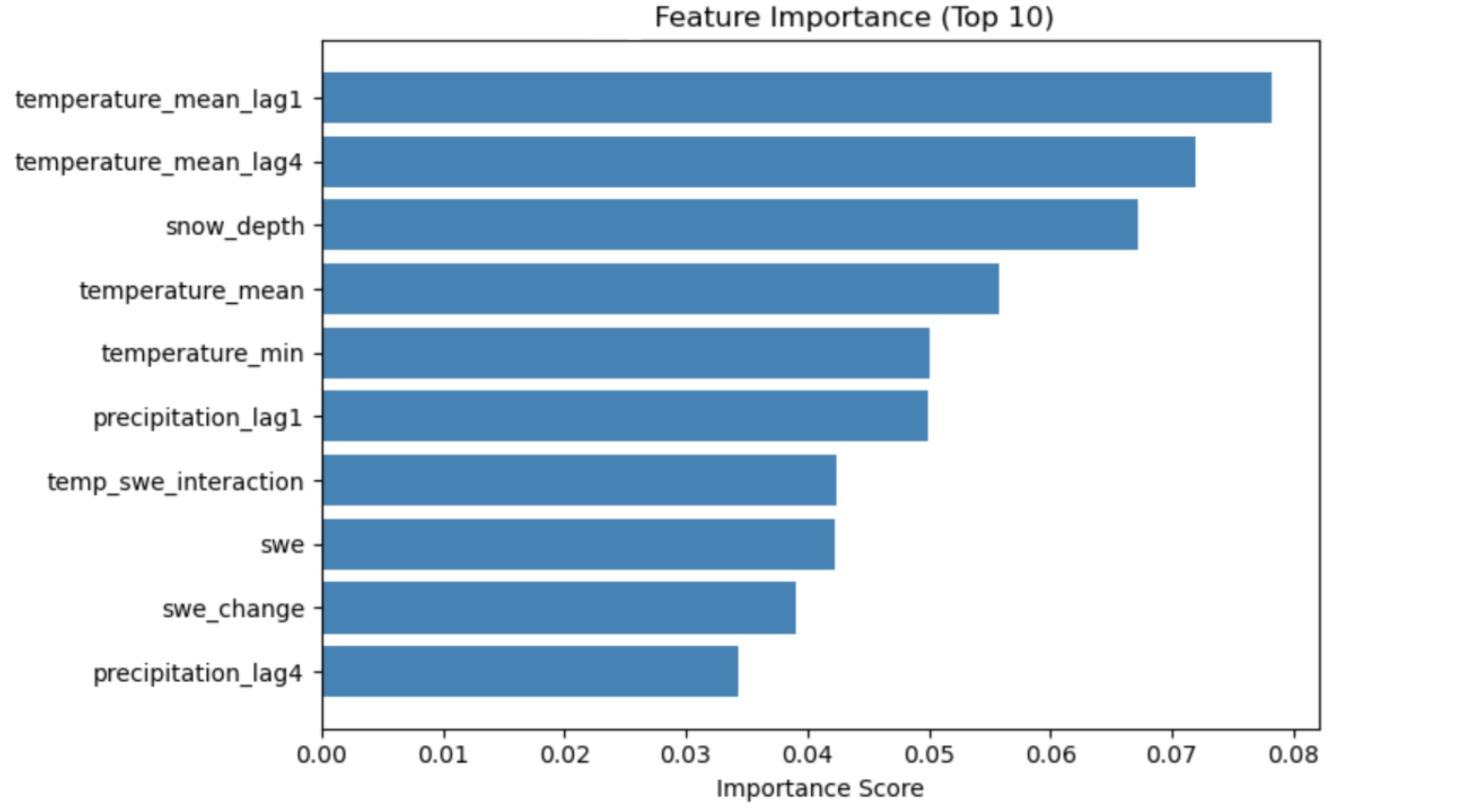
The most influential predictors identified by the LSTM model are shown in Figure 2. Based on my PhD research, temperature (both current and lagged values), snow depth, and precipitation play a central role in shaping spring streamflow dynamics in Finland. These results highlight how snow storage and temperature-driven melt processes strongly control river discharge during the spring season.
Work together: If your work involves AI-driven hydrology, snowmelt prediction, or explainable machine learning, I’d be eager to connect. Let’s discuss how we can jointly enhance streamflow forecasting and deepen our understanding of processes in snow-dominated areas. Connect with me through email: bilal.liaqat@utu.fi.
23.2.2026