Arctic Expedition along coastal West Greenland 2025 Professor and UArctic Research Chair Jeffrey Welker & colleagues.
Source to Sea processes from the Low to the High Arctic: Freshening and Fertilization of marine food webs along coastal West Greenland
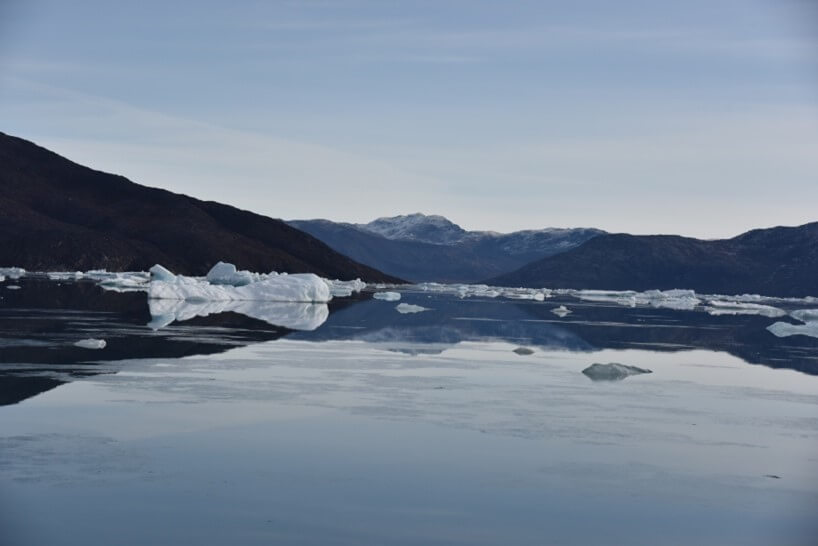
The dramatic thinning and melting of the Greenland Ice Sheet (GiS), especially along the western coast, is delivering massive volumes of freshwater to the fjords and nearshore marine systems of some of the most exquisite, culturally valuable, and economically important regions of the Arctic (Figure 1). However, understanding the biogeochemical connections and interactions between GiS meltwater, the ice-covered permafrost, and the delivery of a completely new freshwater sources of ancient nutrients (C, N, P), which are fertilizing phytoplankton and zooplankton growth; is an urgent manifestation of climate changes that require a dedicated program of research that Professor Welker and his team are addressing (Figure 2).
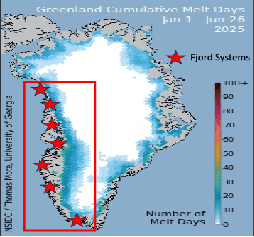
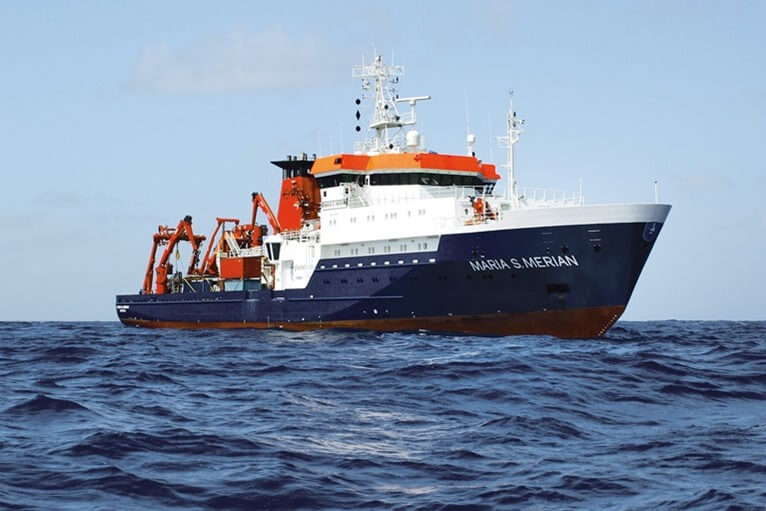
Aboard the AWI German research vessel, Maria Merrian (Figure 3), UArctic Research Chair and Professor Jeff Welker (Arctic Ecology and Biogeochemistry Research Unit) and Dr. Danny Croghan (Water, Energy, and Environmental Engineering Research Unit) at the University of Oulu will be collaborating with members of the Danish Museum of Natural History. Dr. Nina Lundrum, who will be collecting phyto- and zooplankton samples from a suite of fjord systems from the very southern tip of Greenland up to Melville Bay (Figure 2).
These biomass samples from the base of the fjord and nearshore marine food web will then be analyzed for their 14C properties that will allow the team (including radiocarbon expert Dr. Claudia Czimczik) to determine the age of the biomass C. Based on preliminary work it is anticipated radiocarbon age of samples might be between 500 to 1000 years old, which is indicative of thawing permafrost C being a important contributor to the foundation of these marine food webs, and “fertilizing” the fjord and nearshore systems with C and all the other nutrients associated with ancient ecosystems that are under the ice. These anticipated findings are based in part on our discoveries of ancient C dissolved in nearshore sea water along western Greenland presented in a forthcoming paper titled: “Western Greenland ice sheet-land-ocean interactions: near-shore dissolved organic carbon 14C ages and composition in eastern Baffin Bay”; by Croghan and Welker et al. (2025).
In addition, Welker’s collaborators will be collecting seawater from the same depths as the phytoplankton and zooplankton samples to simultaneously identify the magnitudes of glacial meltwater (a sign of “freshening) using water isotope forensics (18O) in these zones of productivity. The co-isotope (14C and 18O) nature of Welker’s research team provides an exceedingly unique biogeochemical forensics analysis of the source to sea dynamics and a geochemical fingerprinting of the functional aspects of the fjord and marine food webs.
The team expects that the degree to which ancient C and freshwater glacial meltwater are driving the base of the food web processes in W Greenland fjord and near shore systems may vary in their intensity (Figure 4). This variation within and between fjord systems from south to north will likely be dependent upon the extent to which fjords are dominated by earth marine or land terminating glaciers, as these two systems are structured quite differently, has been show by Dr. Meier and colleagues from the Greenland Institute of Natural Resources in the Nuuk System especially (Figure 4).
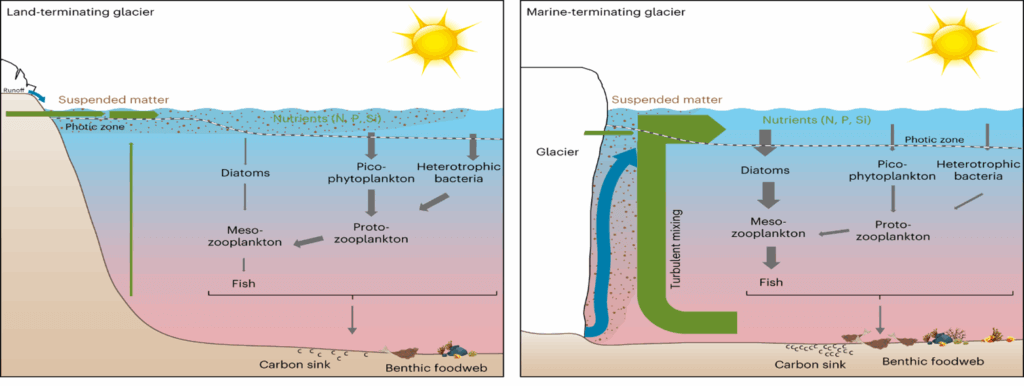
The marine terminating systems are unique in their subglacial water discharge. This is where glacial ice meltwater dissolves the ice-covered ancient terrestrial ecosystem (permafrost C). This dissolved C and all the other nutrients (NPK) are then carried into the surface photic layer, providing ancient C (14C aged) for phytoplankton C assimilation. When zooplankton eat the phytoplankton, they consume the ancient C biomass and thus reflect the 14C signature of the primary producers. This food web trophic geochemical linkage via the C cycle is validated in part by the simultaneous unique 18O values in the seawater of the photic zone, which is glacially unique
References
Meire, L., Paulsen, M.L., Meire, P. et al. Glacier retreat alters downstream fjord ecosystem structure and function in Greenland. Nat. Geosci. 16, 671–674 (2023). https://doi.org/10.1038/s41561-023-01218-y
19.8.2025.