In Finnish:
DIWA webinaarisarjan teemana ovat DIWA lippulaivassa olevat keskeiset tutkimusalueet, jotka ulottuvat pohjoisesta Tenojoesta eteläiseen Vantaanjokeen. Alueiden lisäksi webinaareissa tullaan käsittelemään myös muita keskeisiä teemoja, kuten DIWAn digitaalisia palveluita.
Webinaarisarja on suunniteltu kaikille vesienhallinnassa mukana oleville tai siitä kiinnostuneille julkisen, yksityisen ja kolmannen sektorin sidosryhmille ja toimijoille.
Tulevat webinaarit:
- Perjantai 16.1.
- Mia Pihlajamäki, Akateeminen koordinaattori, Aalto-yliopisto. “Digitaaliset vedet -lippulaivan keskeiset tutkimusalueet”
- Pyry Kettunen, Tutkimuspäällikkö, Maanmittauslaitos. “Tarkkaa pieniuomaverkosto-aineistoa DIWAn keskeisille tutkimusalueille”
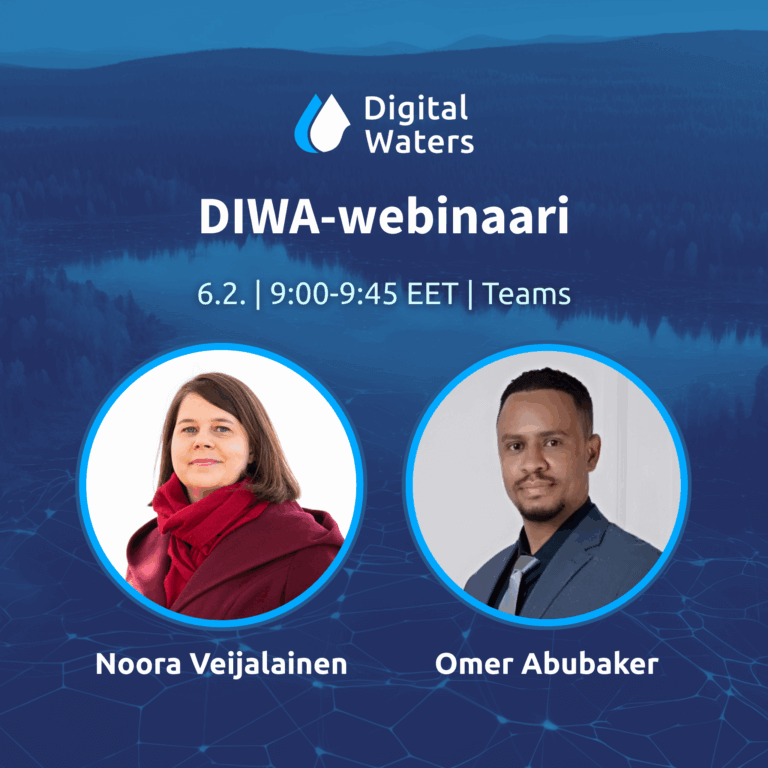
- 6.2. Vantaanjoen tutkimusalue
- Noora Veijalainen, Johtava hydrologi, Suomen ympäristökeskus
- Abubaker Omer, Postdoctoral researcher, Aalto University
- 27.2. DIWA Digital Services
- Elizabeth Carter, Research Coordinator, University of Oulu
- 20.3. Kemijoen tutkimusalue
- Jaakko Ikonen, tutkija, Ilmatieteenlaitos
- Pertti Ala-Aho, Apulaisprofessori, Oulun yliopisto
- 27.3. Tenojoen tutkimusalue
- Villa Kankare, Apulaisprofessori, Turun yliopisto
- Eliisa Lotsari, Academy Research Fellow, Aalto-yliopisto
- 10.4. Oulangan tutkimusalue
- Hannu Marttila, Apulaisprofessori, Oulun yliopisto
- Linnea Blåfield, Postdoc-tutkija, Turun yliopisto
- 29.5. Saaristomeren tutkimusalue
- Elina Kasvi, apulaisprofessori, Oulun yliopisto
- Vivi Fleming, Ryhmäpäällikkö, Suomen ympäristökeskus
- 5.6. Kokkolan tutkimusalue
- Anna Autio, postdoc-tutkija, Oulun yliopisto
- Pekka Rossi, apulaisprofessori, Oulun yliopisto
- 12.6. Oulun tutkimusalue
- Anna-Kaisa Ronkanen, Suomen ympäristökeskus
Ensimmäinen webinaari järjestetään perjantaina 16.1. Webinaari antaa yleiskatsauksen DIWA-lippulaivan keskeisiin tutkimusalueisiin ja niiden tarkkoihin vesistöverkostotietoihin.
Tulevien webinaarien esitys aiheet tarkentuvat myöhemmin. Webinaareihin ei vaadita ennakkoilmoittautumista.
Webinaarien etäyhteyslinkit tullaan jakamaan DIWA Webinaarisarjan sivuilla:
In English:
Note! This webinar series will be mostly in Finnish. Some of the webinars will have presentations in English.
In this webinar series, we are focusing on the DIWA research supersites – which span from the Tana River in the north to the Vantaanjoki River in the south. In addition, we cover other key themes such as DIWA’s digital services.
The webinar series is designed for all stakeholders and actors in the public, private and third sectors involved in or interested in water management.
The List of upcoming webinars: Please view the full list in Finnish above. At least webinars on 6.2. and 27.2. will have presentations also in English.
The first webinar on Friday, 16th of January, will introduce the DIWA supersites and the highly accurate watercourse network data available for these locations (In Finnish).
More specific presentation topics for future webinars will be announced later. No pre-registration required for the webinars.
Meeting links will be shared on the DIWA Webinar Series webpage:
19.12.2025