A recent feature on the Picarro blog highlights new research that improves our understanding of how freshwater moves through the Arctic Ocean system.
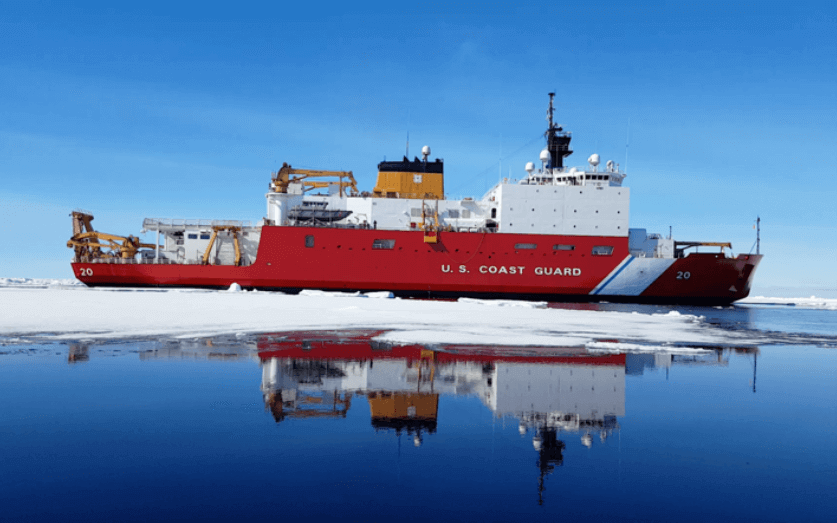
The Arctic is freshening rapidly due to increasing river discharge, precipitation, glacier melt, and sea-ice melt. Traditional measurements of temperature and salinity alone cannot fully distinguish between these freshwater sources. To address this, researchers from several institutions and universities used high-resolution data from two late-summer 2021 shipboard surveys (USCGC Healy and CCGS Amundsen) to give Baffin Bay one of its clearest oceanographic portraits to date.
By combining isotope data with hydrographic profiles, nutrient measurements, and circulation analyses, the team was able to separate and quantify freshwater contributions from meteoric sources (such as rivers and precipitation), glacial melt, and sea-ice processes. The study traced how freshwater travels from the Pacific-influenced western Arctic across to Baffin Bay and onward toward the North Atlantic.
The international research collaboration includes Prof. Jeffrey Welker, whose work contributes to improving our understanding of Arctic freshwater pathways and their implications for ocean circulation and climate change.
24.2.2026