Petra Saari, Åbo Akademi University. petra.saari@abo.fi
What are the impacts of wave disturbance from ferries on bladderwrack (Fucus vesiculosus) and the coastal ecosystem that they support? In my PhD, I combine ecological measurements, underwater technology, and sediment analysis to assess the ecological consequences of ship-induced wave stress on one of the key species of the Baltic Sea.
As I write this, the fieldwork season for my PhD is coming to an end. I have soon spent four months living on the island of Korppoo, located in the Archipelago Sea, though it feels like the work only began a month ago.
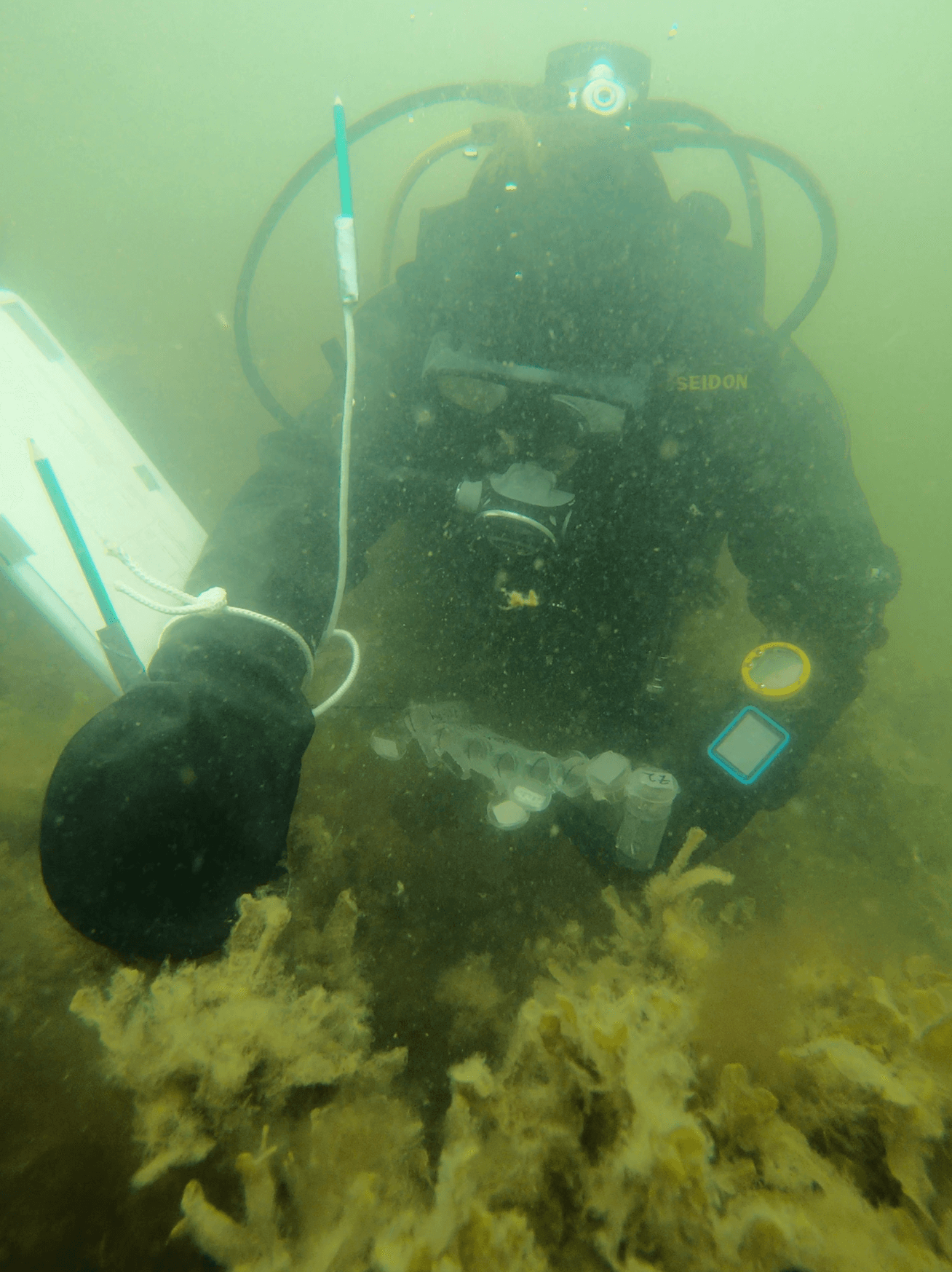
Ferry waves differ a lot from natural waves and may have impacts on growth, recruitment, morphology, reproduction, and epiphytic load of bladderwrack
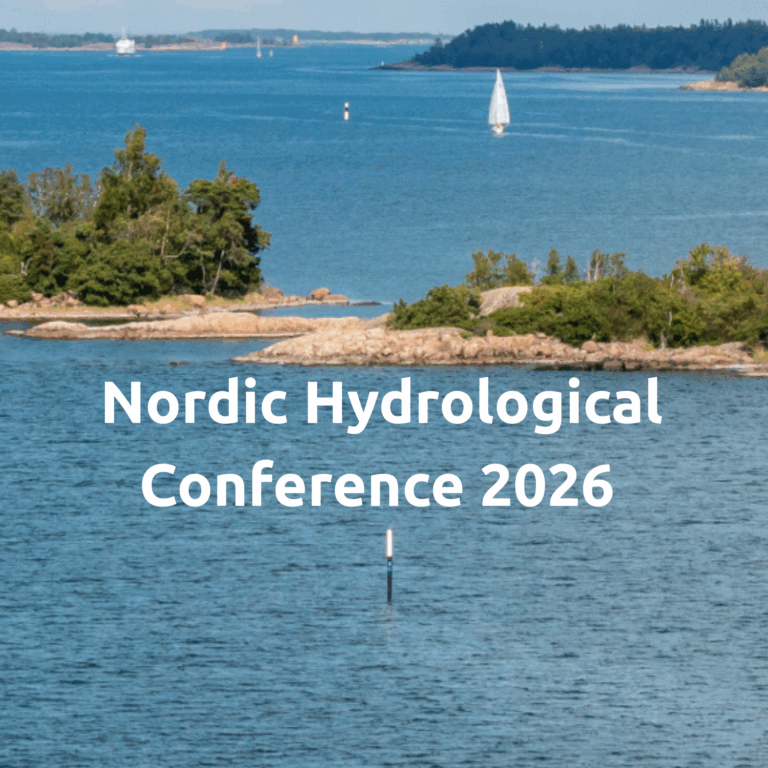
My study sites are located along the shores of islands in the Archipelago Sea, close to a busy fairway. About half of the islands lie near the lane (approximately 0.2–1 km away), while the other half are further away (3–5 km). The aim is to compare these high-impact areas with low-impact ones, to study how ship-generated waves affect bladderwrack (Fucus vesiculosus). Observing wave action on-site as ships pass near the islands, we have seen a striking effect—a much stronger and qualitatively different wave environment from natural wave conditions. Ships produce strong and regular wave pressure several times a day, something that would not occur naturally in these environments.
To study this further, we have recorded wave data using pressure and acceleration loggers and measured underwater light levels with light loggers. Additionally, sediment traps were deployed to investigate sedimentation conditions at the sites. My hypothesis is that ship waves increase water turbidity near the shore, which can negatively impact bladderwrack since it requires light for photosynthesis.However, waves may also help by cleaning sediment off the algae surfaces, potentially benefiting them. Wave action influences the bottom sediment layer in different ways:
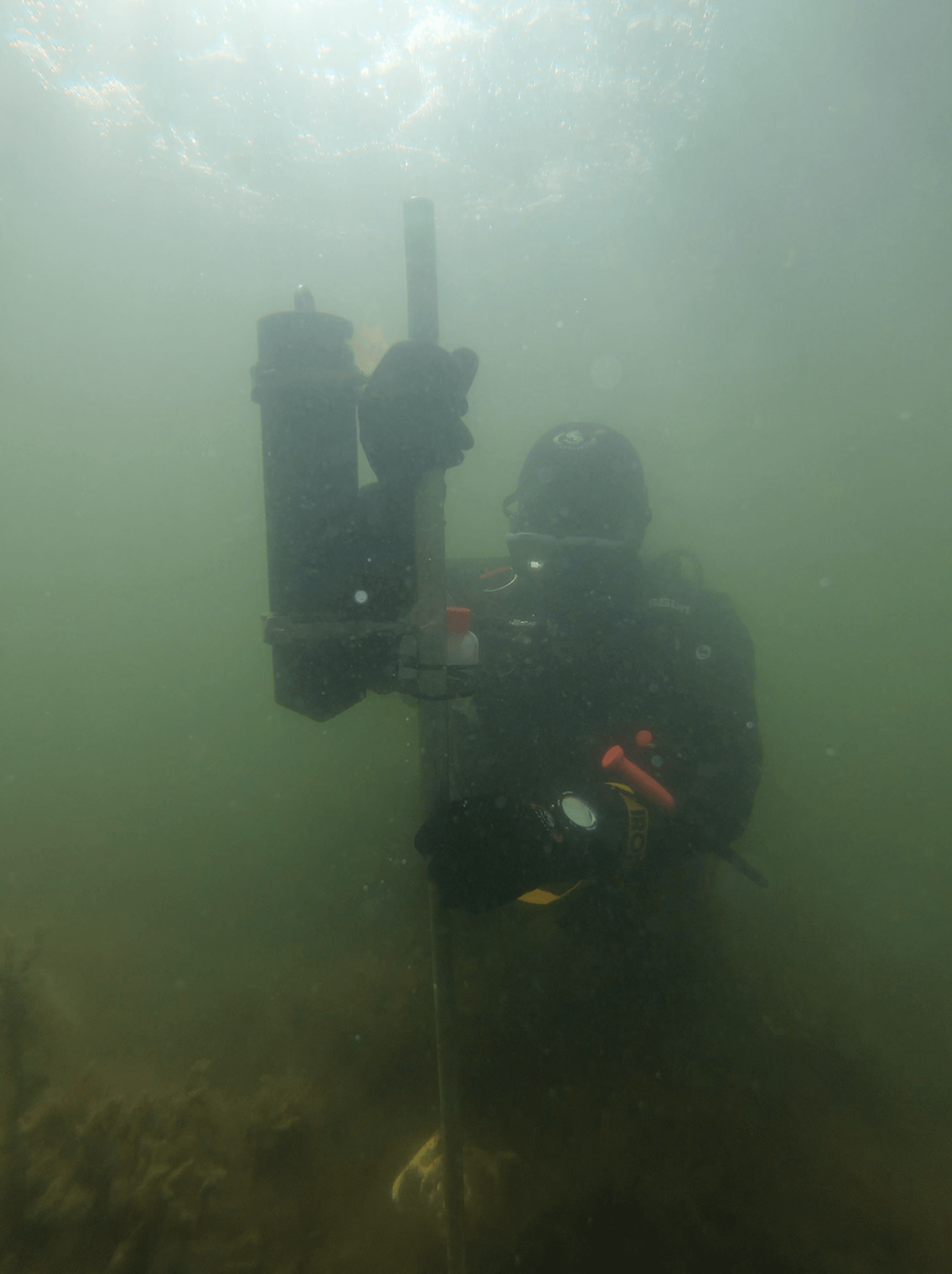
it can transport sediment accumulated in deeper areas toward the shore or prevent sediment from settling nearshore due to strong water movement. Sediment covering rocky surfaces hinders the attachment of young bladderwrack individuals during their reproductive season.
Besides measuring environmental variables such as water quality and seabed characteristics, I have also measured several parameters directly related to the algae itself. These include morphological traits (e.g. length, weight), growth rates, success in attachment of new individuals, reproductive status, and the quantity and species composition of epiphytic algae.
Piloting a new underwater LiDAR method for macroalgae biomass estimation
I’m piloting a new method to support mapping and monitoring of underwater vegetation. This involves underwater LiDAR technology mounted on a remotely operated vessel. The LiDAR captures vegetation structure by measuring laser pulse echoes. Ideally, it will provide returns from both the vegetation canopy and the seafloor, enabling us to measure vegetation height—an important step toward developing this method further for biomass estimation.
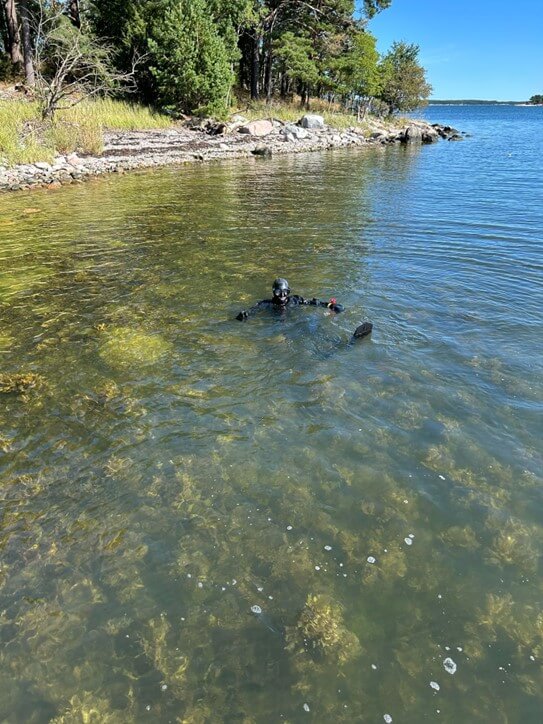
Understanding ecosystem responses to human pressure and developing new, more efficient tools for monitoring are crucial in rapidly changing marine environments
Understanding how ship-generated waves influence coastal ecosystems is becoming increasingly important in our rapidly changing marine environments. As global shipping traffic grows, so too does its impact on nearshore habitats and key foundation species like bladderwrack. By identifying how physical disturbances affect algae growth, reproduction, and habitat conditions, this research aims to inform conservation strategies, guide sustainable marine traffic planning, and ultimately support the resilience of coastal ecosystems in the face of human-induced pressures.
To effectively support these efforts, there is also a growing need for accurate and efficient tools to map and monitor underwater habitats. Technologies like underwater LiDAR offer essential support in this regard, enabling detailed, scalable data collection that helps track ecological changes and protect vulnerable coastal environments.
Additional links
If you are interested to see videos about my research and field methods used, you can follow me on Instagram: cold.water.diver[PS1]
11.9.2025.