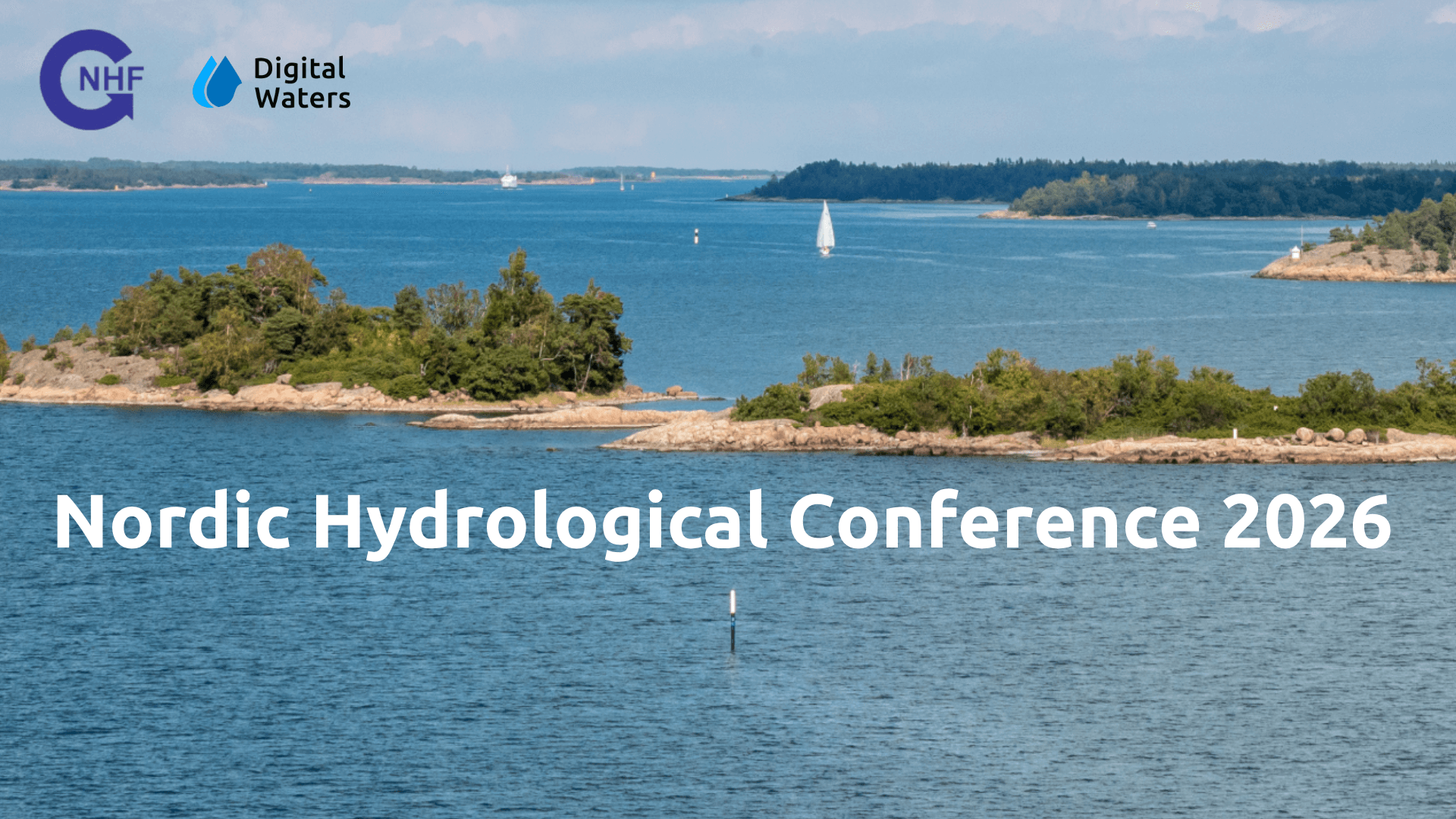
We are proud to announce the upcoming Nordic Hydrological Conference (NHC2026), which brings together experts, researchers, and practitioners to explore new directions in “Digital solutions in hydrology and sustainable water management”.
The conference is organized in cooperation with the Nordic Association for Hydrology (NHF) and Digital Waters Flagship.
Conference highlights:
- Oral and poster presentations
- Academic dialogue and collaboration
- Keynote speakers – lineup will be revealed soon
- Impact – to demonstrate relevance beyond academia
In NHC2026, we concentrate on exploring digital frontiers in water resources, water quality, and ecohydrology. As global water systems face increasing pressure from climate change, population growth, and land use shifts, digital innovations are reshaping how we understand, model, and manage our water resources. We look for solutions for water resource management (e.g., observations, models, and decision support) and pathways for societal impact, and dive into Hydrology for a changing world.
We invite academics at all career stages to submit abstracts to the conference!
Registration:
The deadline for abstract submission is 30th April 2026.
Welcome, on behalf of the organizing committee!