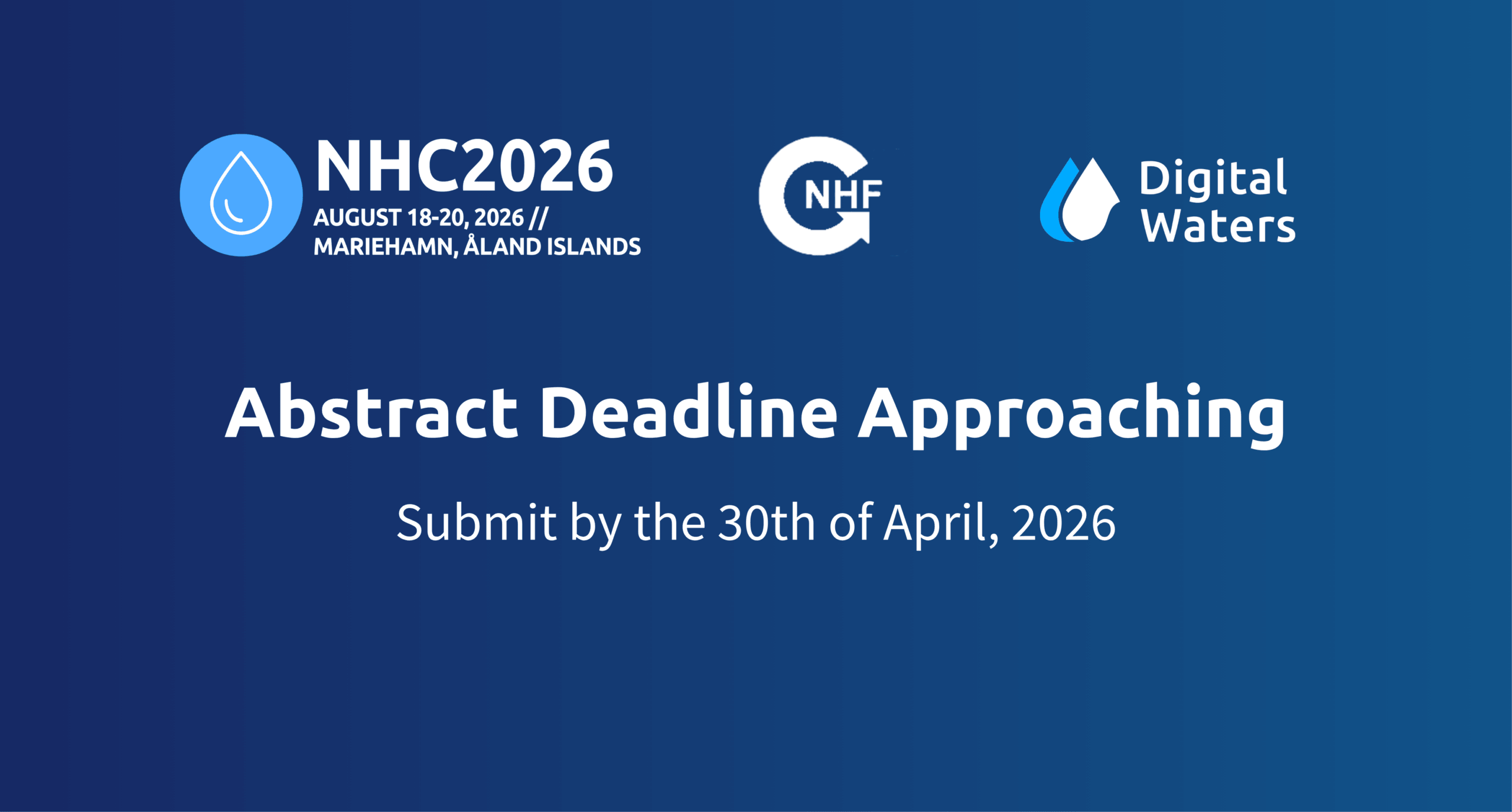
The deadline for abstract submissions for the Nordic Hydrological Conference is approaching! Please note that abstracts must be submitted by April 30.
We warmly encourage academics at all career stages to take this opportunity to share their research, ideas, and insights with a wider audience. Whether you are presenting ongoing research or completed projects, your contribution is highly valued and will enrich the NHC2026 program.
Whether your work focuses on hydrological data science, ecohydrology, water quality, climate impacts, or decision support systems, this is a great opportunity to share your insights, spark discussion, and connect with a vibrant Nordic and international community. Accepted abstracts will be featured in the conference programme.
Conference theme & topics
Theme: Digital solutions in hydrology and sustainable water management
Topic 1. Exploring digital frontiers in water resources, water quality and ecohydrology
Topic 2. Hydrology in a changing environment – observations, models and decision support
Topic 3. Solutions for water resources management and pathways for societal impact
Read the full topic descriptions here
The conference is organized in cooperation with the Nordic Association for Hydrology (NHF) and the Digital Waters Flagship.