Matin Rafipour Langeroudi, University of Oulu, Matin.Rafipour@oulu.fi
For decades, climate change has been seen as the main driver of future water crises. Melting glaciers, shifting rainfall, and rising temperatures are expected to reshape rivers and threaten water security worldwide. But the reality is more complex. In some parts of the world, glaciers are not changing in simple or predictable ways. In Central Asia’s Pamir Mountains, glacier change has been far less dramatic than in many other regions, with some glaciers remaining relatively stable for decades before beginning to decline (Zhou et al., 2019). What does this mean for the future of mountain glaciers and water resources in this region? Will glacier melt increase or reduce future water supply, and beyond climate change, who else are the key players shaping the emerging water crisis?
Rethinking water in a changing mountain world
Before starting my PhD, I often wondered how many glaciers in this region might disappear in the future. Over time, I realized that the more important question was not only how many glaciers would vanish, but how their changing behavior would reshape river flows and the decisions societies must make about water, energy, and food.
My research focuses on glacier-fed rivers in this region, where millions of people depend on water that originates high in the mountains. These rivers are sensitive not only to rising temperatures but also to human decisions such as dam construction, reservoir operations, and large-scale irrigation. This creates new risks for energy production in winter and agriculture in summer, especially in transboundary basins where countries depend on the same water. In the future, the biggest challenge may not be water scarcity alone, but the timing and reliability of water when it is most needed.
To address this, I combine glacier modelling, hydrological simulations, and water management tools to explore a wide range of possible futures. In practice, this means building digital representations of river systems and testing how they respond to different climate and policy choices before these decisions are made in the real world. Instead of searching for a single “optimal” solution, my research investigates how different management strategies perform under deep uncertainty. Early findings suggest that some traditional assumptions about seasonal water availability and reservoir operation may no longer hold under changing climate and runoff conditions. Identifying robust and flexible strategies can support better planning, reduce conflict between upstream and downstream regions, and help societies adapt to a future where water, energy, and food systems are increasingly interconnected. While this work focuses on Central Asia, the lessons may also be relevant for many other mountain regions facing similar challenges.
Why are glacier-fed rivers so important?
Glacier-fed rivers act as natural water towers. During warm and dry summers, when rainfall is low and water demand is high, glacier melt provides a crucial and reliable source of water. This seasonal buffer supports agriculture, drinking water, and hydropower for millions of people. In Central Asia, downstream countries depend heavily on this summer flow to irrigate crops and sustain food production in arid regions.
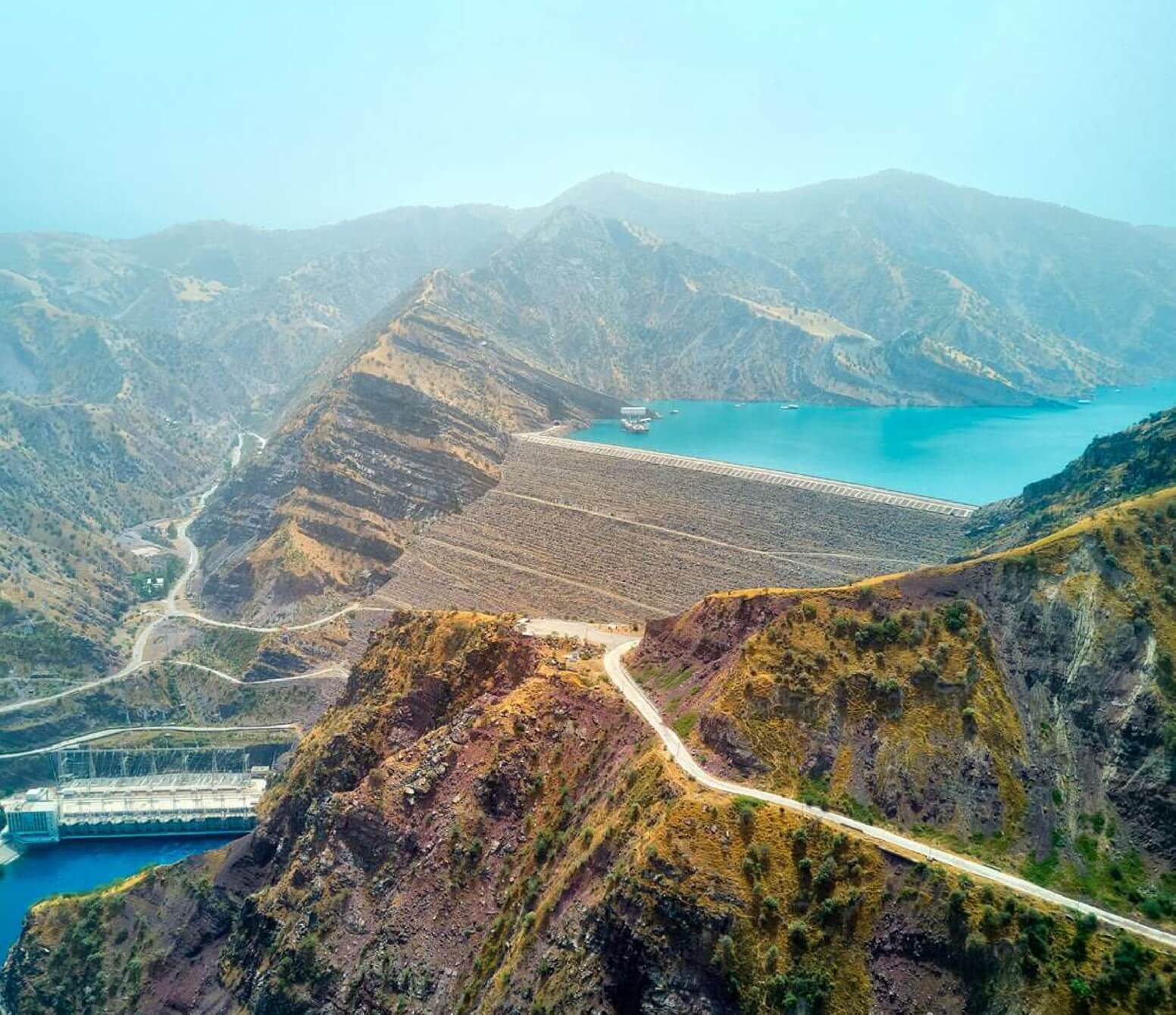
Climate change is now altering this balance. Snowmelt is occurring earlier, and glacier melt patterns are shifting. In the short term, some basins may even experience more water. But over the long term, declining ice storage could reduce summer availability. More importantly, river flows are becoming less predictable. For water managers, this variability can be more challenging than gradual change. In transboundary basins such as the Vakhsh River, timing is critical. Upstream countries often store water to generate electricity in winter, while downstream countries need water in summer for irrigation. As seasonal patterns shift, this mismatch can increase tensions. Water released at the wrong time can be just as problematic as water scarcity.
When human decisions reshape rivers
Climate change is only part of the challenge. In many glacier-fed basins, human decisions already play a major role in shaping when and how water is used. Large dams, hydropower expansion, and irrigation systems are transforming natural river regimes. These infrastructures can provide flexibility and security, but they can also amplify existing challenges as future water patterns become less predictable. In Central Asia, this creates a complex balance between energy and food. Upstream countries depend on hydropower to ensure winter electricity supply, while downstream countries rely on summer river flow to irrigate crops. Managing this system is not simply a technical issue, but also a political and economic one. Different priorities, combined with shifting seasonal flows, can increase tensions even when total water availability does not change.
The challenge becomes even greater under climate uncertainty. Evidence from recent modelling points to a clear shift in seasonal river flows, with earlier snowmelt, less reliable summer water, and greater variability from year to year. This means that traditional operating rules based on past conditions may no longer be reliable. Instead, new approaches are needed to explore a wide range of possible futures and identify strategies that remain robust even under unexpected changes. In the coming decades, the greatest water risks may not come from a lack of water, but from decisions made at the wrong time, in the wrong place, and without understanding uncertainty. The challenge is no longer only to predict the future of water, but to prepare for many possible futures.
The future of water will depend on the choices we make today.
References
- World Bank. 2023. Valuing Green Infrastructure: A Case Study of the Vakhsh River Basin, Tajikistan. Washington, DC: World Bank.
- Zhou, Y., et al. (2019). Geodetic glacier mass balance (1975 to 1999) in the central Pamir using the SRTM DEM and KH-9 imagery. Journal of Glaciology, 65(252), 833–845.
3.3.2026