Events

A session organized by DIWA Flagship at the Stockholm Water Week on 27th August!

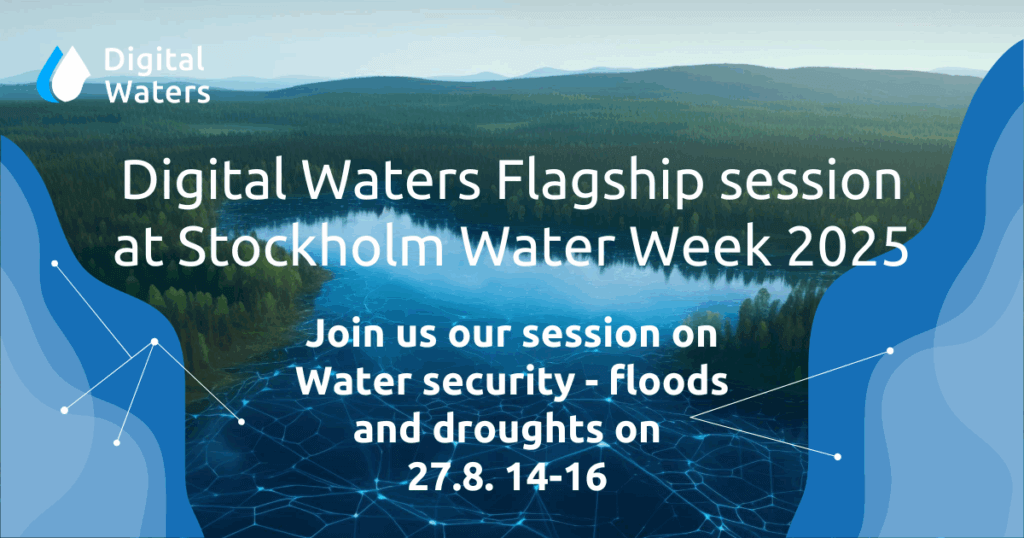
Digital Waters Flagship session at Stockholm Water Week 2025

Welcome to attend a session organized by DIWA Flagship at the Stockholm Water Week on 27th August!

Interested in discussing flood and drought-related challenges and learning about possible solutions? – This is a session for you.

Session description:

Digital Waters Flagship is hosting a 2-hour session: “Water security – floods and droughts” at the Finland Pavilion, organized by the Finnish Water Forum on 27th August at 14-16 (CEST).

The session includes a presentation from Professor Björn Klöve, the Director of the Digital Waters Flagship, and an interactive open discussion between the session chairs and participants.

Session Chairs:

  • Professor Björn Klöve, Director of DIWA, Principal Investigator, University of Oulu
  • Professor Petteri Alho, Vice Director of DIWA, Principal Investigator, University of Turku

Please contact the session leaders, Björn Klöve, Petteri Alho, or Communication specialist Hanna Holappa, if you would like to take an active role in the session and join as a speaker. Contact information can be found on our contact page.

More information about Stockholm Water Week and tickets can be found on the Stockholm Water Week website.

Share the Post:

Related Posts

PhD Pilot Blog Marika Teini

Who needs legal research on small water bodies?

Marika Teini, University of Eastern Finland. marika.teini@uef.fi Dear reader, I can sense how excited you are to dive into the thrilling world of legal research. But let’s set aside the statutes, Latin terms, and footnotes for now, and try to figure out in plain language what my research is about.

PhD Pilot Blog Beata Plutova

The impact of land-use and climate change on water quality in river systems

Beata Plutova, University of Turku. beplut@utu.fi Did you know? The majority of Earth’s water is salty (see Picture 1). Approximately 97% is contained in the oceans, while only 3% is freshwater. Of that 3%, most is stored in glaciers and groundwater, with less than 1% found in rivers and lakes.