Hung Bui Quoc, University of Oulu, Hung.BuiQuoc@oulu.fi
Complex water pollution challenges have driven the development and application of online environmental monitoring systems. Manual sampling is costly, time-consuming, and can only give a snapshot of the monitored process. Meanwhile, online monitoring can provide real-time data, supporting early detection of pollution events, proactive environmental management, and data-driven scientific research.
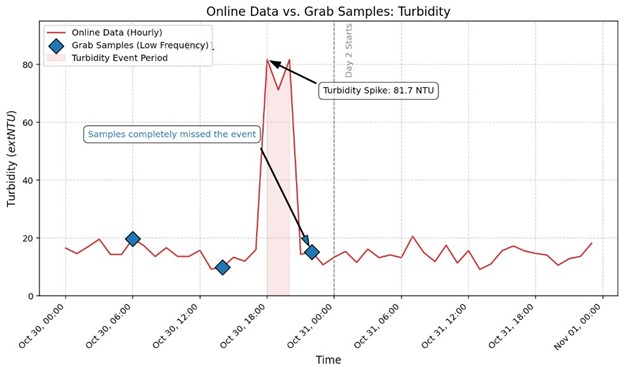
However, online sensors can be subject to different data anomalies, such as outliers, missing values, and drift. Unlike industrial applications in which sensors can work under controlled environments, environmental monitoring sensors can be impacted by unexpected disturbances such as debris, blocking objects, fouling, or freezing in winter. Also, because the monitoring stations are usually installed in remote areas, it is difficult and costly to frequently access the site for maintenance and repair. Using low-quality monitoring data can lead to false alarms, unreliable modeling, and unnecessary maintenance visit costs.
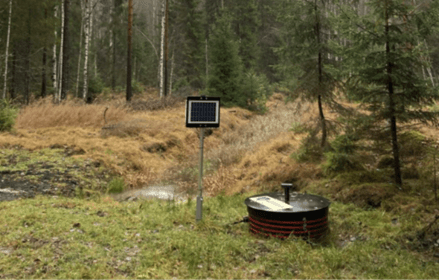
Therefore, implementing automated data quality control tools for online environmental water monitoring is crucial. Unfortunately, current studies about challenges and solutions in the environmental monitoring context remain fragmented and lacks integration. Thus, my research will first contribute to making current data quality control methods more understandable and accessible to both scientific and practitioner communities, thereby accelerating the implementation and further development of online environmental monitoring. By testing different tools on datasets from Finnish environments, it will also create enhanced solutions suited to harsh weather and environmental conditions in Finland. Rather than relying on a single approach, integrating rule-based techniques, advanced statistical methods, and machine learning could significantly improve the automation and effectiveness of data quality control tools.
My PhD can be considered an industrial PhD, as my secondment is with a company. This offers advantages such as solving practical challenges and accessing diverse datasets. However, potential challenges include selecting the most appropriate data, ensuring compliance with confidentiality and non-disclosure requirements, and reaching agreements on what can be published.
3.12.2025