An isotope (d18O, d2H, d17O) forensic study of water mass distributions and the unique geochemistry of precipitation at the top of the planet
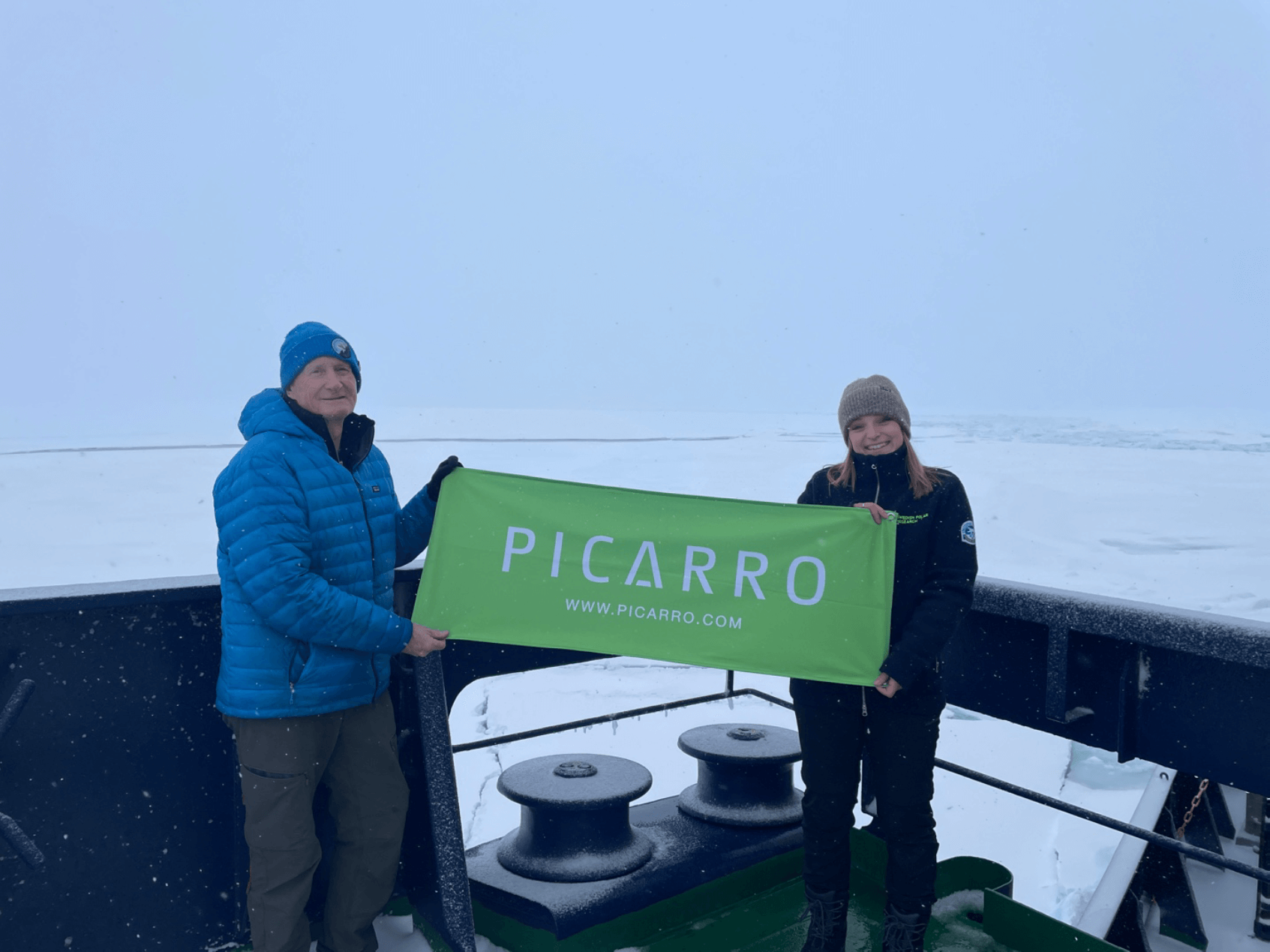
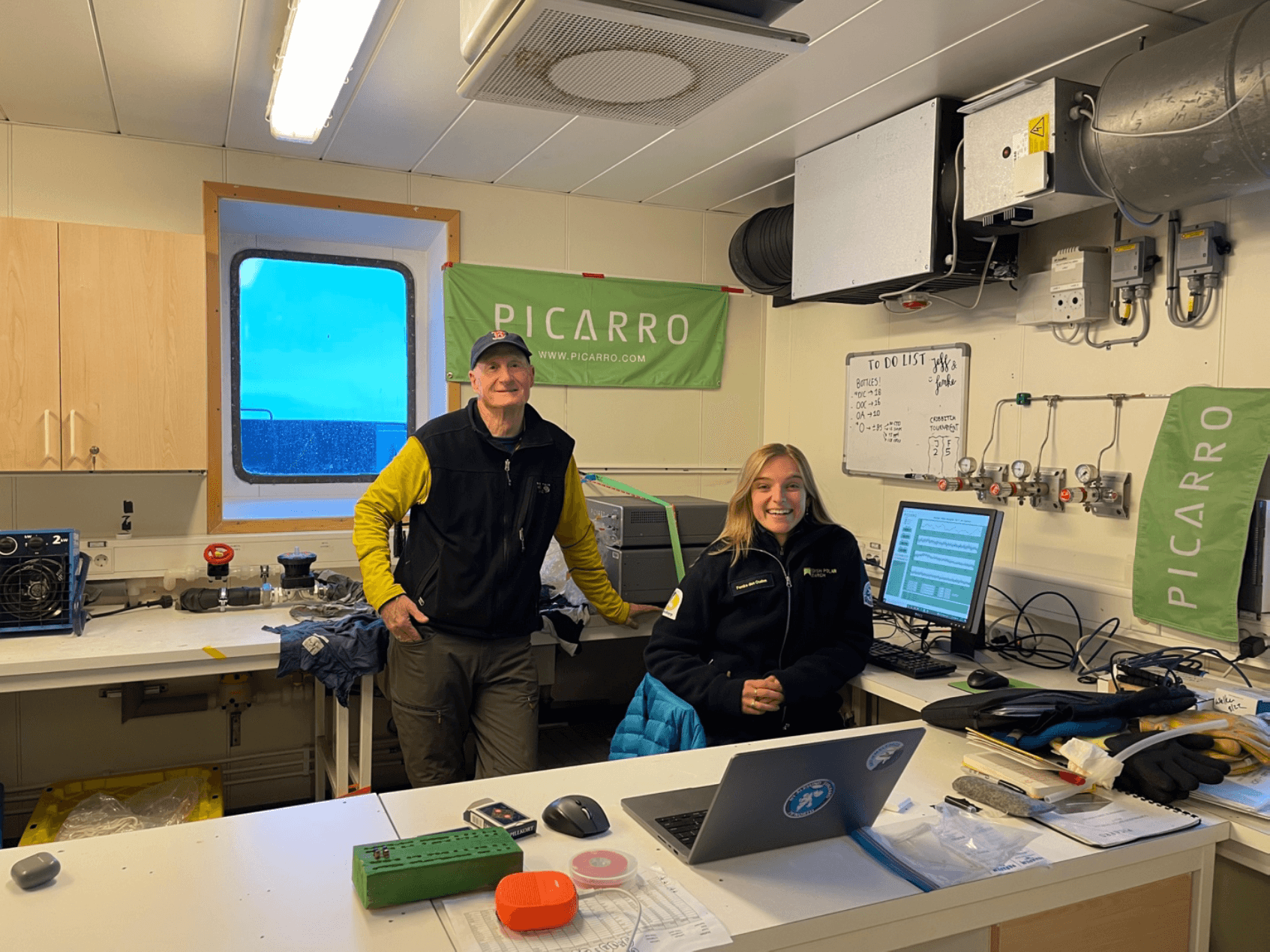
80oN-80oN: As part of the Swedish Ice Breaker Oden’s mission from Svalbard up and over, and back across the North Pole to study Atlandification of the Arctic Basin; UArctic Research Chair & Professor Dr. Jeff Welker from the University of Oulu, and Master’s student Femke de Ouden, from Utrecht University, have been continuously measuring the Arctic Ocean’s surface (20 feet deep) water (d18O, d2H, d17O-Neptune) isotopes since leaving Svalbard on the 9th of August, 2025. The Oden has transited the Nansen and Amundsen Basins (90 degrees North), as well as the Makarov and the Canada Basins. The Oden returned to Svalbard on the 19th of September.
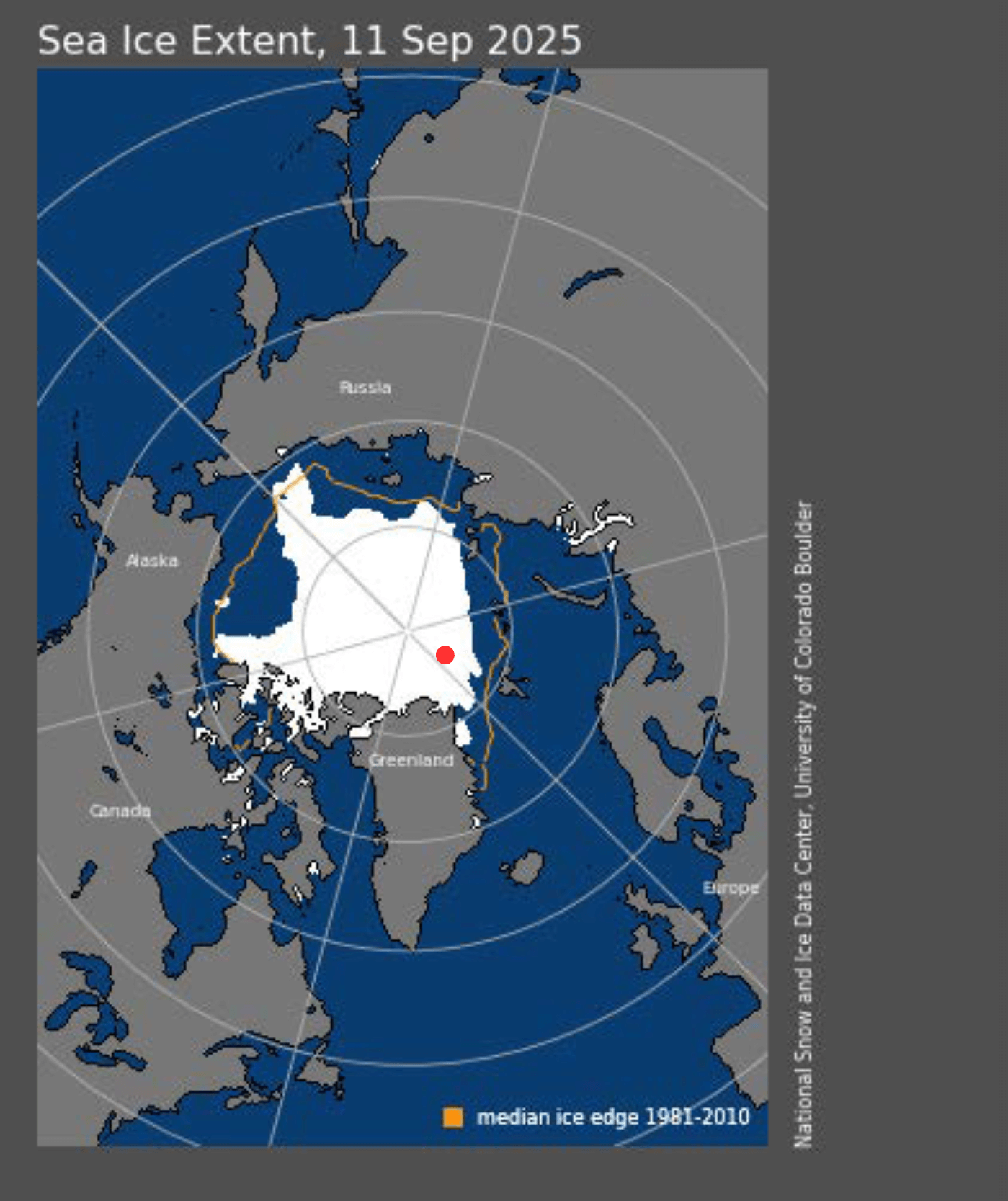
The extensive loss of Arctic Sea ice thickness and extent over the past 30 years (See figure 1.), the extensive open water leads and ponds the size of Finnish lakes, and the increasing influence of relatively warm North Atlantic water across the Arctic Ocean make this investigation exceptionally urgent. The aim of this Digital Waters (DIWA) research expedition has been to: a) delineate the surface water masses, their distributions, and the source of their freshwater content at ultra-high resolution across the Central Arctic Ocean for machine learning assisted spatial mapping (isoscapes), b) measure vertical isotopic profiles from the surface to the sea floor (down to 4000m) and c) collect samples to be measured back in the lab of rainfall and snowfall events encountered during the
expedition.
These are some of the very first precipitation and seawater isotope measurements from 80°E to 80°W ever. The extensive loss of sea ice provides new interactions between relatively warm open water masses and the cold atmosphere, providing an evaporative moisture flux that intensifies the Arctic water cycle and influences the Arctic basin and lower latitudes. The Canada-Sweden Arctic Ocean 2025 expedition includes numerous interdisciplinary teams with 21 Doctoral Researchers and Master’s students as part of an early-career researchers training program organized by the Swedish Polar Research Secretariat. The teams have been carrying out a range of studies and sampling, including sea floor coring for palaeoceanography reconstructions, water column biology and ocean productivity, atmospheric profiling, seafloor mapping, and variability in sea ice properties.
In addition to the continuous measurements using the Picarro instruments, Welker and De Ouden have collected other samples of the Arctic’s water cycle, including & melt pond water during the helicopter-served ice stations up to 20 kilometers away from the ship. From the ice stations, they also sampled the vertical profile of ~20, 1-3 meter ice cores to get vertical isotopic profiles within the sea ice. This data can be used to document the fraction of the sea ice that is derived from meteoric water (snow) or ocean water.
Furthermore, they have taken seawater samples from a 24 water sample bottle rosette CTD (Conductivity, Temperature, and Depth instrument) that is dropped periodically all the way down to the seafloor (down to 4000 meters in the Nansen Basin) to obtain vertical profiles of water isotopes, 14C-DIC (Carbon-14 content in the dissolved inorganic carbon pool), organic acids, and DOC (Dissolved Organic Carbon) properties. These carbon-focused samples allow the DIWA team to build an understanding of Arctic carbon-water interactions (A theme of Professor Welker’s Research Council of Finland consortium program in Northern Finland and in the Arctic.)
Welker and De Ouden have been able to detect and delineate the isotopic (d18O, d2H, d17O) differences associated with the West Svalbard Current, which has a North Atlantic origin, when they proceeded northwest of Svalbard. When travelling North, the ocean’s surface water became less saline and more isotopically depleted, indicative of sea ice melt freshening the water column and a shift towards a polar water source. One of the most dramatic observations was the relatively easy route to the North Pole and the remarkable degree of open water at the beginning of the expedition. Arctic Amplification: Since the Arctic is warming four times faster than the rest of the world, and the massive decline in multiyear ice is clearly visible. The open water masses can be up to five degrees Celsius warmer than the surrounding air, introducing new interactions between the ocean and the air and injecting massive amounts of water vapor into the atmosphere. This intensifies the Arctic water cycle.
Some of the findings from this expedition will likely be shown at EGU 2026, while findings from Welker’s DIWA team, which was aboard the Oden in the Fram Strait in 2023, will be presented by Dr. Kopec at AGU 2025 in New Orleans.
10.8.2025.