Tiia Westerberg, Aalto University, tiia.westerberg@aalto.fi
Decisions about rivers, lakes, and groundwater rely on many types of knowledge, such as scientific data, technical expertise, local experience, and cultural understanding. Each offers a different perspective on how water should be used, protected, and valued. Exploring how these knowledges come together — or sometimes clash — helps reveal what shapes the way we manage our shared water resources in Finland.
How Europe’s Water Law Shapes Finland’s Rivers and Lakes?
Since 2000, Europe’s main law for water protection has been the Water Framework Directive (2000/60/EC), addressing both the quality and quantity of our water resources. While setting forth numerous regulations and standards for monitoring the biological, physical, and chemical conditions, it also recognizes that cooperation from the national to the local level is important to successfully achieve its goals. It encourages coordinated efforts and active involvement of the public and all interested parties. In Finland, this has been incorporated into national legislation (e.g., 1299/2004), mandating that the responsible authority within their region engage in cooperation and interaction with stakeholders in the management of the area’s water resources.
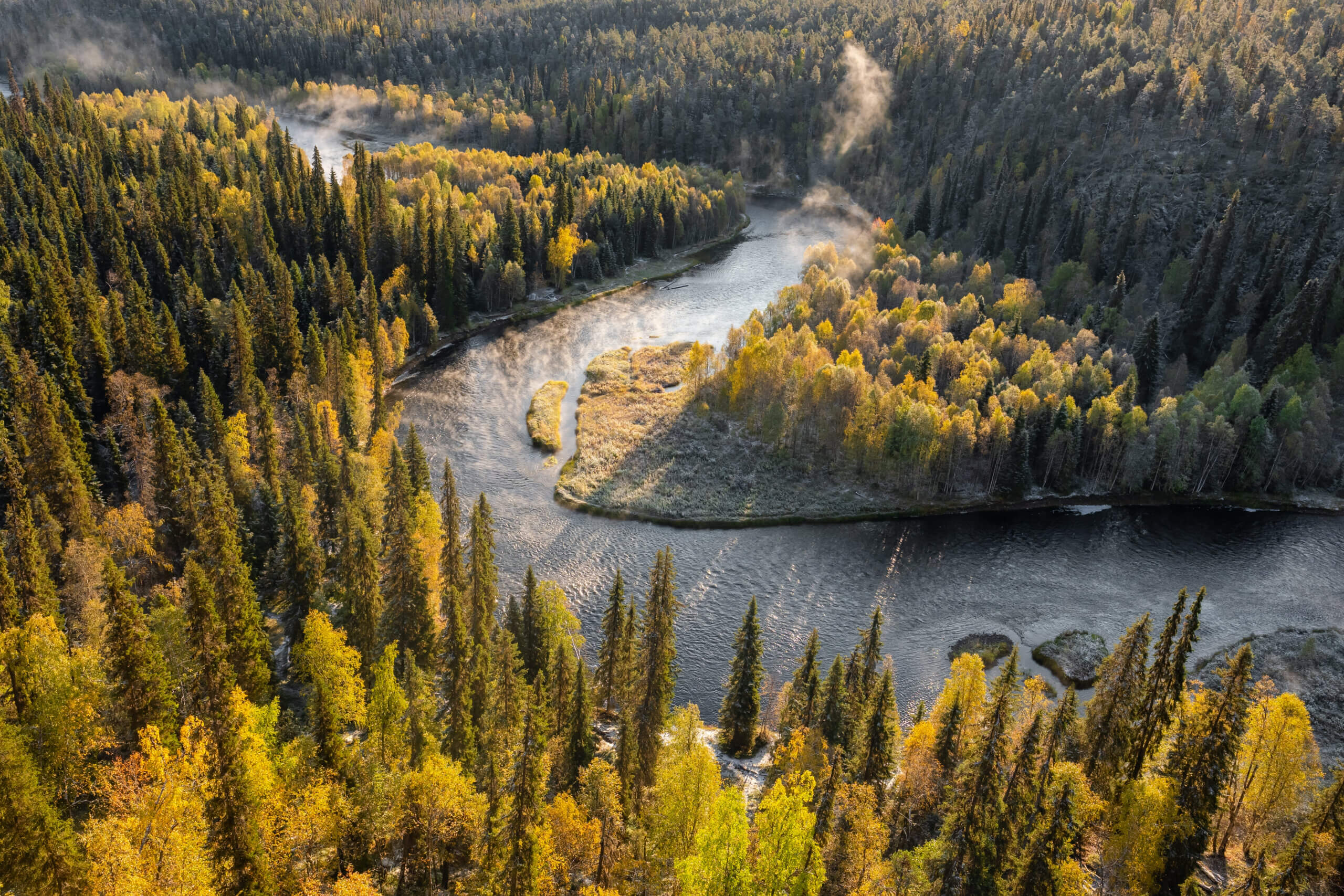
Connecting People and Knowledge: My Motivation for Studying Water Management Cooperation in Finland
From a broader perspective, research in natural resource management increasingly emphasizes knowledge coproduction and transdisciplinary action to tackle sustainability challenges. It is acknowledged that no single discipline can effectively address all these issues independently, particularly as advancing climate change introduces greater uncertainty regarding future environmental conditions. The same applies to water resource management. The issues faced are complex and impact, or are impacted by, a diverse set of stakeholders in one way or another. This complexity stems, among other things, from the various land and water uses within a single catchment area. Consequently, it creates a situation where actors with very different interests and goals are brought together around one issue – how to improve or protect the state of the waterbody in question? Producing knowledge together could help in answering that question, while also touching on aspects of representation and equality.
Due to all of this, I am interested in finding out how stakeholder cooperation and, thereby, knowledge co-production, are handled in Finland. How are different voices, i.e., knowledge types, heard and incorporated into the quite technically oriented water management process? By examining this through different approaches, I aim to find out how we could, e.g., possibly improve the production of new information and make it more efficient in the future.
31.10.2025