Christoph Gocht, University of Oulu. christoph.gocht@oulu.fi
Identifying complementary useful aspects in flood management reveals transformative potential for transnational cooperation and increasing urban resilience
Water management is one of the most pressing challenges of our time. How to provide and distribute water in times of drought, how to deal with floods, and how to predict water availability, water quality, and living better with water are among the most important questions.
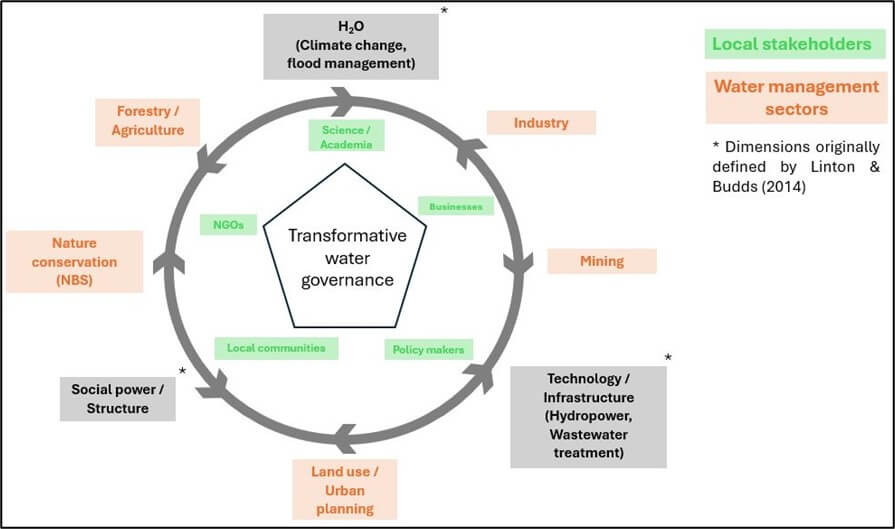
From an early age, I have been interested in environmental processes. During my higher degree education (Environmental Geography), I was focusing on urban development and land-use planning, while also learning a lot about my hometown in southern Germany and its surrounding environment, including environmental genesis (i.e., geomorphology, hydrology, climate). The decisive experience was when I learned that Achalm mountain in Reutlingen (figure 2) is not a volcano, as its shape strongly suggests and what I had always thought but an outlier located directly in front of the Swabian Jura, formed by hydrological processes. Amazed by the sheer force of water and its landscape design potential, it became clear to me that I wanted to expand and intensify my knowledge in hydrological processes and their connectivity to human-nature processes, the environment, and management & policy. The numerous, sometimes very destructive flood events in Germany have raised the question in my mind as to why Germany regularly fails in its flood management strategy, and have only intensified my interest in this subject area. Today, my work deals with transformative water management in urban areas.
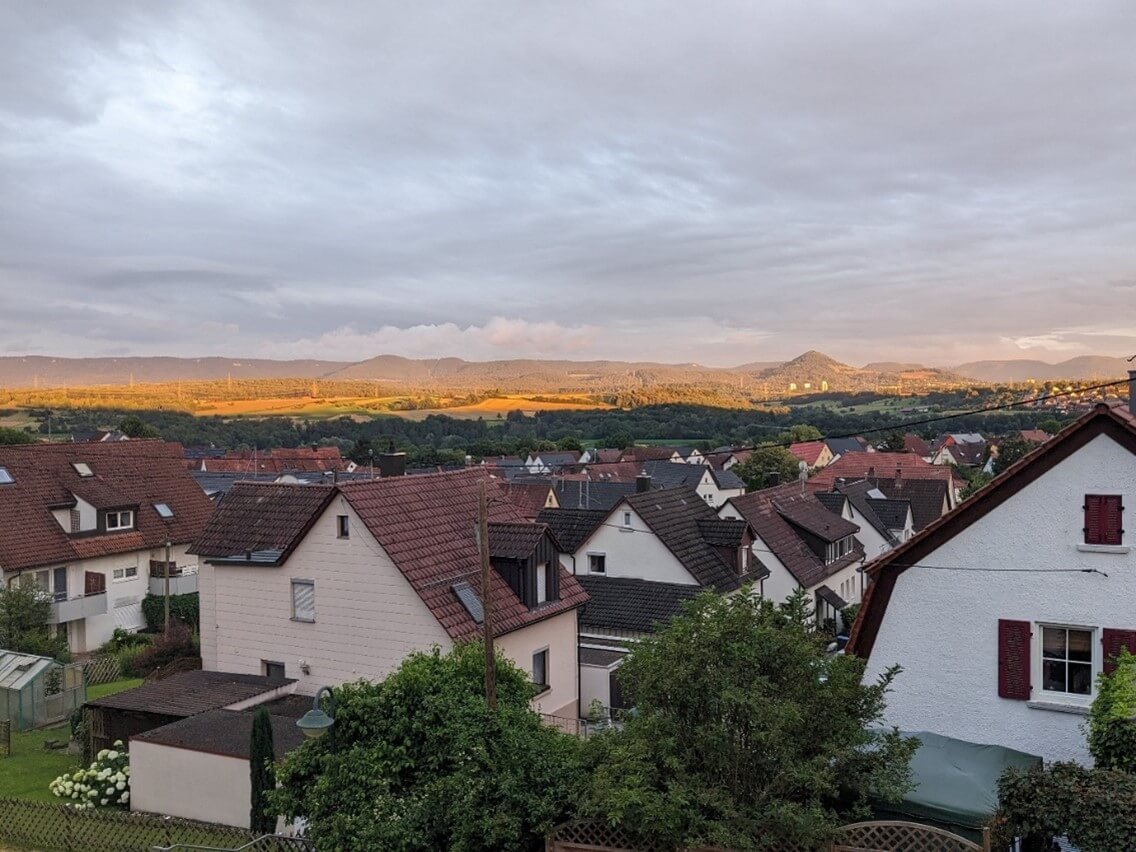
The Swabian Jura is a former seabed and is characterized by numerous past volcanic activities. The Achalm mountain (In the picture: center, half right), however, is an outlier, formed by erosion processes. A striking conical shape that is strongly reminiscent of a stratovolcano remained. Today, southwest Germany is one of the areas of the country most affected by flooding.
Quo vadis water management?
Increasing sealing of surfaces in conjunction with the effects of climate change increases urban water-related challenges, and countless cities all around the world are struggling with water-related issues, e.g., in the fields of sanitation, water provision & distribution, flood management, and water quality. Germany is no exception and faces major challenges in water management, particularly regarding flooding. It is regularly proven that Germany’s current flood management strategy needs to be improved. This is due to insufficient consideration of social and resilience aspects and our overly technical approach to water-related issues, which has led to the population becoming increasingly disconnected from their environment. These problems, however, are by no means limited to Germany. Even if Germany is mentioned here as an example, most countries face similar challenges.
Over the past centuries, we have been diking rivers and building flood protection infrastructure to develop residential areas and intensify agricultural practices in floodplains (Picture 2). This ongoing process contributes to the increasing flood risk we face nowadays and threatens socio-economic (and ecological) resilience and ultimately sustainable development. One of the questions that drove me the most was how Germany could break its vicious circle and establish a flood management strategy that actively involves the population and thus takes social aspects into account as a central component. This thought had a significant influence on my decision to co-evaluate and compare the legal basis for flood management in Germany and Vietnam, with special attention to participatory factors. The main aim was to derive complementary useful aspects that both countries could use to further develop their strategies. Simultaneously, this also requires reflecting on where optimization is needed within our strategy and where we can learn from our past. The study has shown that they can learn a lot from each other and can find additional paragraphs that would help to increase urban and socio-economic resilience. This has strong transformative potential as it creates an incentive for 1) transnational cooperation in flood management and 2) learning from others’ experiences.
In the past, flood management mainly focused on how to control water. The resulting narrative generated false expectations among the population, which stems from the fact that we are – consciously or unconsciously – trying to provide 100% security. This claim is natural to a certain degree; after all, it is human nature to exclude uncertainties, as it is difficult 1) to take them adequately into account in our decisions and communicate them, and 2) nearly impossible to even eliminate them. However, the effects of climate change show that certain things are beyond our control, which is sometimes difficult for us to admit. Instead of trying to dominate and control water, it is therefore at least as important to also think about how we can live better with water.
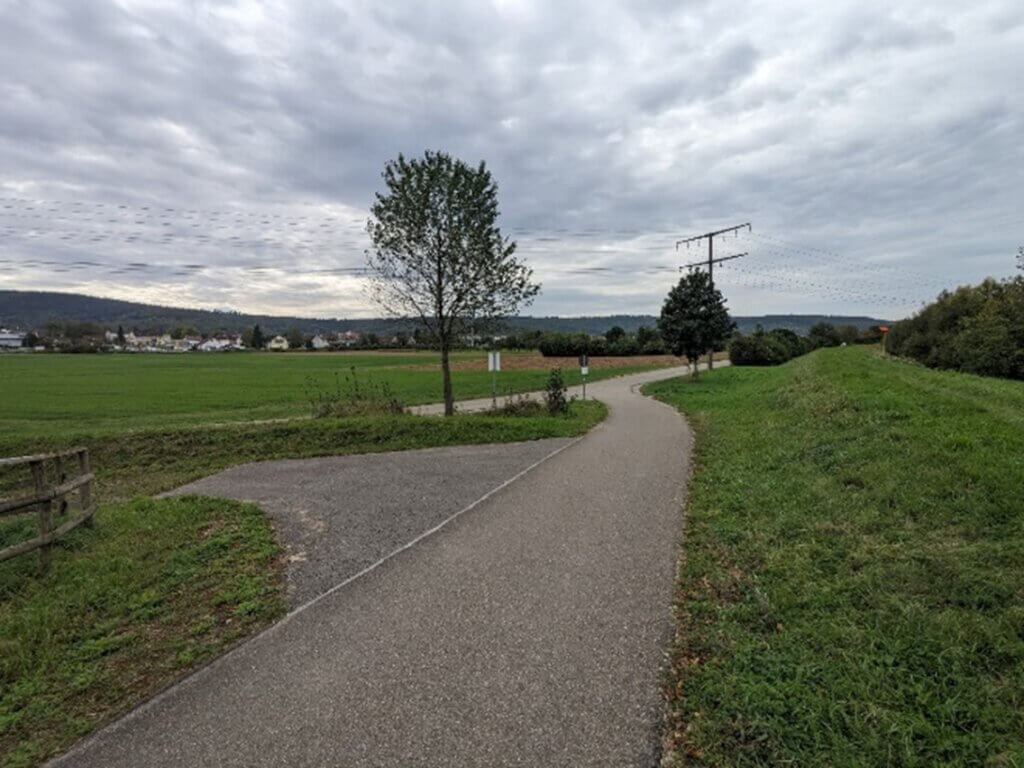
Tightly diked river rems are located on the right edge of picture 2. It illustrates the conflict of use between agriculture, flood protection, and urban development. Today, most floodplains are deprived of their essential function, which, together with urbanization and the effects of climate change, considerably increases the flood risk.
Water is the basis of all life. And water has shaped societies. Conversely, humans have continuously and significantly influenced water (and its properties) through a wide range of activities. Sometimes we had good intentions but were unable to properly assess the negative consequences for people and the environment, and are now faced with the consequences. To tackle today’s water-related problems, to initiate profound changes, and to achieve transformative water management, strong cooperation between actors across the political, economic, social, and cultural domains is required (Lemos & Agrawal, 2006).
However, because transformation is never value-free, aspects of social justice need to be considered, which leads us to one of the most important aspects in today’s water management: bringing the social sphere back into focus. Everything we do should be for the benefit of the people, whether we are dealing with issues of governance, modelling, infrastructure, or digitization. By involving them from the outset and hearing their voices, we will be able to find solutions tailored to the needs of all actors, achieve transformative water management, and ultimately increase socio-economic resilience.
19.6.2025.
References
- Lemos, M. C., & Agrawal, A. (2006). Environmental Governance. Annual Review of Environment and Resources, 31(1), 297–325. https://doi.org/10.1146/annurev.energy.31.042605.135621
- Linton, J., & Budds, J. (2014). The hydrosocial cycle: Defining and mobilizing a relational-dialectical approach to water. Geoforum, 57, 170–180. https://doi.org/10.1016/j.geoforum.2013.10.008