News

Tracing Arctic Freshwater from Alaska to Baffin Bay – Featuring Prof. Jeffrey Welker

DIWA Webinaari sarja
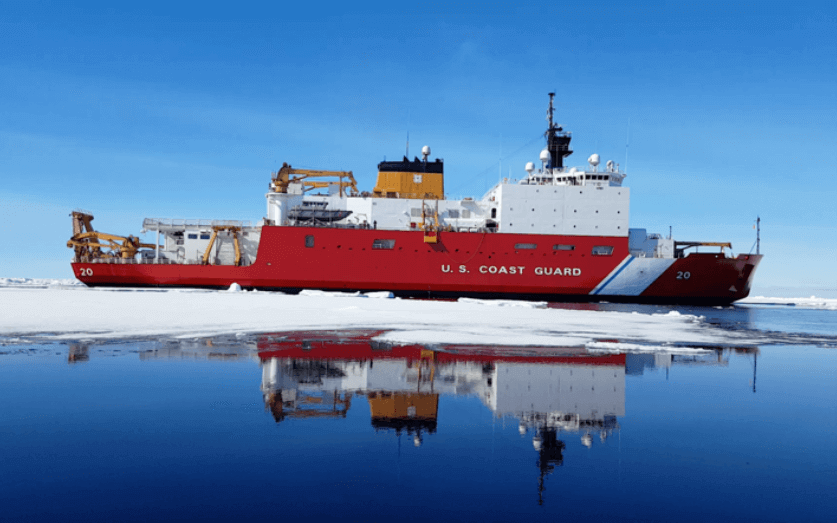
Picture 1. The US Coast Guard icebreaker Healy (USCGC). Picture by Jeffrey Welker.

A recent feature on the Picarro blog highlights new research that improves our understanding of how freshwater moves through the Arctic Ocean system.

The Arctic is freshening rapidly due to increasing river discharge, precipitation, glacier melt, and sea-ice melt. Traditional measurements of temperature and salinity alone cannot fully distinguish between these freshwater sources. To address this, researchers from several institutions and universities used high-resolution data from two late-summer 2021 shipboard surveys (USCGC Healy and CCGS Amundsen) to give Baffin Bay one of its clearest oceanographic portraits to date.

By combining isotope data with hydrographic profiles, nutrient measurements, and circulation analyses, the team was able to separate and quantify freshwater contributions from meteoric sources (such as rivers and precipitation), glacial melt, and sea-ice processes. The study traced how freshwater travels from the Pacific-influenced western Arctic across to Baffin Bay and onward toward the North Atlantic.

The international research collaboration includes Prof. Jeffrey Welker, whose work contributes to improving our understanding of Arctic freshwater pathways and their implications for ocean circulation and climate change.

24.2.2026
Share the Post:

Related Posts

PhD Pilot blog Petra Saari

Impacts of ferry waves on bladderwrack

Petra Saari, Åbo Akademi University. petra.saari@abo.fi What are the impacts of wave disturbance from ferries on bladderwrack (Fucus vesiculosus) and the coastal ecosystem that they support? In my PhD, I combine ecological measurements, underwater technology, and sediment analysis to assess the ecological consequences of ship-induced wave stress on one of

Avoin työpaikka tutkimuskoordinaattori

Avoin työpaikka: Tutkimuskoordinaattorin määräaikainen tehtävä (Turun yliopisto)

Haluatko olla mukana kehittämässä uusia innovaatioita ilmastonmuutokseen, vesivaroihin ja vesialaan liittyvien ongelmien ratkaisemiseksi? Turun yliopiston Matemaattis-luonnontieteellisen tiedekunnan maantieteen ja geologian laitoksessa on haettavana tutkimuskoordinaattorin määräaikainen tehtävä. Työsuhde alkaa aikaisintaan. Työsuhde alkaa 15.9.2025 ja päättyy 31.12.2028. Tutkimuskoordinaattoria haetaan DIWA-lippulaivan sekä siihen liittyvän tohtoripilotin hallinnointiin ja toteuttamiseen. Lisäksi koordinaatiotyötä on samaan aihealueeseen