
Beata Plutova, University of Turku. beplut@utu.fi
Did you know?
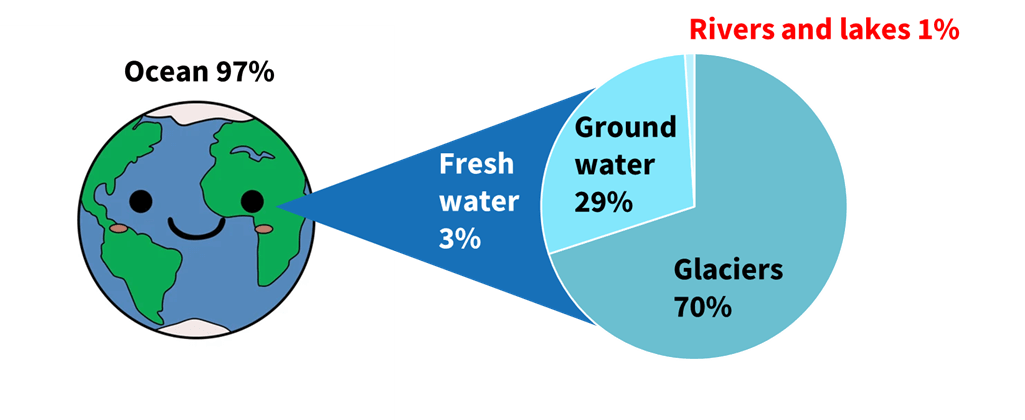
The majority of Earth’s water is salty (see Picture 1). Approximately 97% is contained in the oceans, while only 3% is freshwater. Of that 3%, most is stored in glaciers and groundwater, with less than 1% found in rivers and lakes. Yet this small fraction is essential for human societies, providing water for drinking, agriculture, industry, and ecosystems (1).
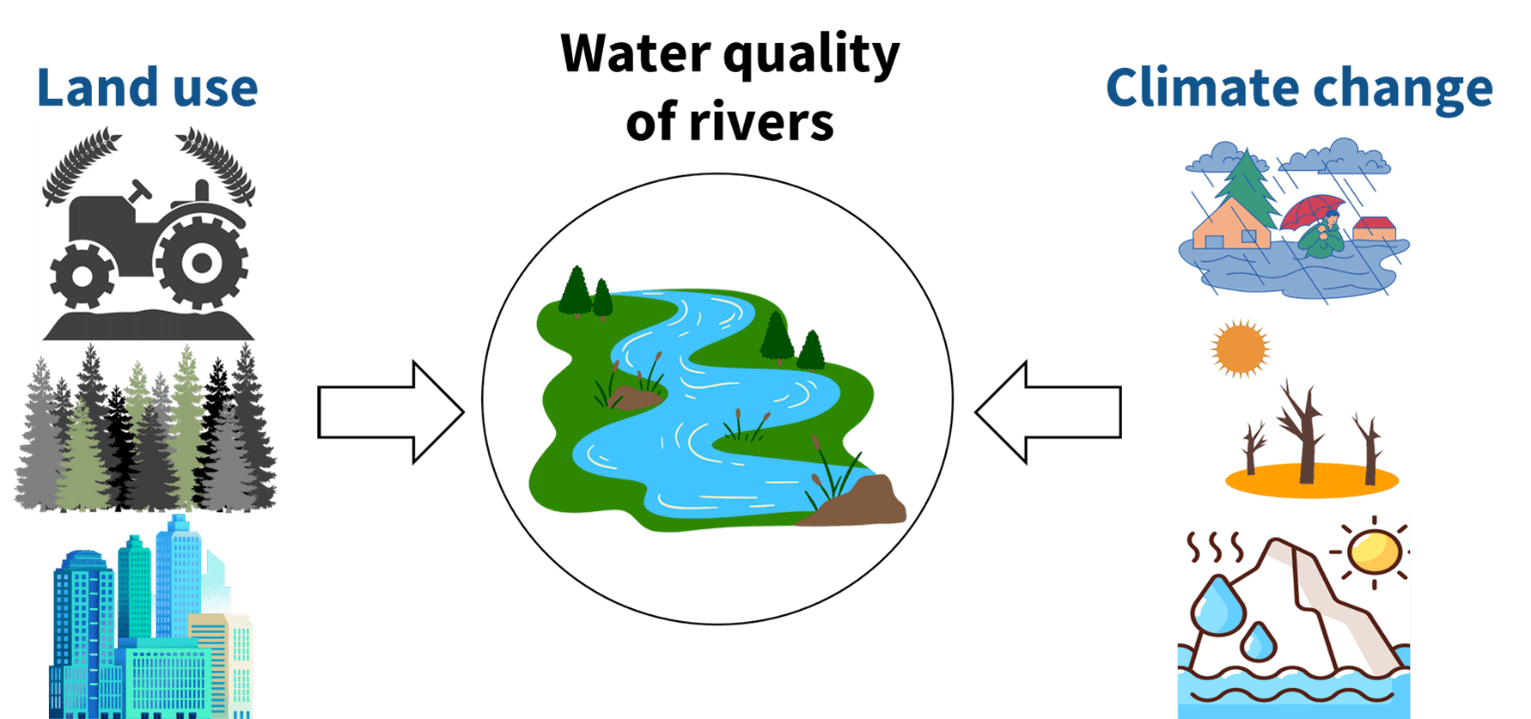
Despite their importance, rivers are increasingly under threat from two major pressures: land use changes (such as urbanization, agriculture, deforestation, and forestry) and climate change (2). These factors can significantly degrade water quality and disrupt the ecological balance of river systems.
What is the impact of land use on water quality of rivers?
Urbanization leads to increased surface runoff which creates additional transport of sediment and nutrients from landscape into rivers (4). Additionally, runoff from urban areas can contain a variety of pollutants, including chemicals like heavy metals, microplastics, as well as other contaminants such as road salts that are commonly applied during winter (3). Agriculture increases sediment and nutrient load in water bodies, as well as the number of fertilizers, herbicides and pesticides (4). In contrast, deforestation leads to changing runoff patterns, increased soil erosion, and nutrient loads, affecting system resilience (5).
What is the impact of climate change on the water quality of rivers?
In addition to land use pressures, climate change is intensifying threats to river water quality by altering rainfall patterns and increasing water temperatures. These changes lead to more frequent and severe floods and droughts, which disrupt both the quality and quantity of water in river ecosystems. Shifting precipitation regimes can increase pollutant runoff during heavy rainstorms, while prolonged droughts reduce river flow, concentrating contaminants and lowering dilution capacity. Rising temperatures further exacerbate these effects by decreasing dissolved oxygen levels, promoting harmful algal blooms, and accelerating the breakdown of organic matter and chemical substances (8).
How can they interact?
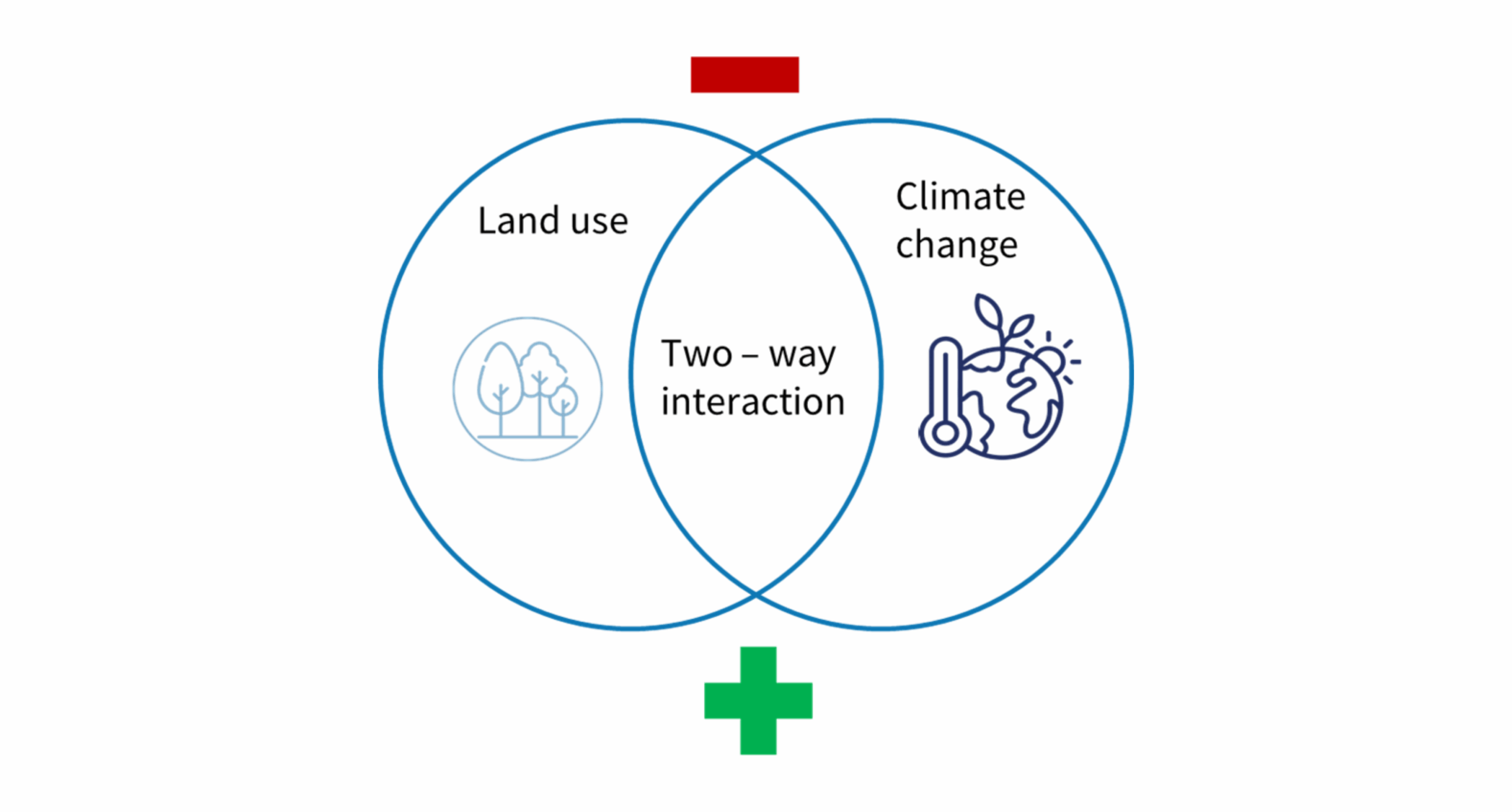
The land use and climate change are correlated by both a negative and positive two – way relationship. Agricultural activities and deforestation release greenhouse gasses (GHGs) that contribute to climate change, which in turn disrupts the productivity and stability of agriculture and forest growth (6,7). But climate – smart agriculture and effective forest management reduce GHGs and increase carbon sequestration, thus mitigating the impacts of climate change (6,7). Subsequently, both the negative or positive two – way relationships influence water quality of the river ecosystem. Despite their interconnected nature, the combined effects of these factors on river systems remain poorly understood (3).
What do I focus on?
My Ph.D. research addresses this gap by quantifying how land-use changes and climate change influence the water quality of rivers. Using statistical analysis, and modeling, I aim to identify pollution hotspots and analyze seasonal, spatial, and temporal trends to support sustainable water management.
This summer has been educational in every sense. While I don’t yet know exactly how these threads will tie together in my thesis, I know I’m moving forward – with a bit more wisdom, a lot more data, and a deep appreciation for the beautiful, messy process of doing science.
References
- Rahmani, F., & Fattahi, M. H. (2024). Long-term evaluation of land use/land cover and hydrological drought patterns alteration consequences on river water quality. Environment, Development and Sustainability, 26(7), 19051-19068.
- Sharma, S. K., Sinha, R. K., Eldho, T. I., & Patel, H. M. (2024). Individual and Combined Impacts of Land Use/Cover and Climate Change on Water Balance Components of a Tropical River Basin. Environmental Modeling & Assessment, 29(1), 67-90.
- Gunawardana, C., & McDonald, W. (2024). Impacts of land use changes on discharge and water quality in rivers and streams: Case study of the continental United States. JAWRA Journal of the American Water Resources Association.
- Giri, S., & Qiu, Z. (2016). Understanding the relationship of land uses and water quality in Twenty First Century: A review. Journal of environmental management, 173, 41-48.
- Kong, X., Ghaffar, S., Determann, M., Friese, K., Jomaa, S., Mi, C., … & Rode, M. (2022). Reservoir water quality deterioration due to deforestation emphasizes the indirect effects of global change. Water research, 221, 118721.
- Singh, R., & Singh, G. S. (2017). Traditional agriculture: a climate-smart approach for sustainable food production. Energy, Ecology and Environment, 2, 296-316.
- Szmyt, J., & Dering, M. (2024). Adaptive Silviculture and Climate Change—A Forced Marriage of the 21st Century?. Sustainability, 16(7), 2703.
- Van Vliet, M. T., Thorslund, J., Strokal, M., Hofstra, N., Flörke, M., Ehalt Macedo, H., … & Mosley, L. M. (2023). Global river water quality under climate change and hydroclimatic extremes. Nature Reviews Earth & Environment, 4(10), 687-702.
25.9.2025.