News

Significant milestone achieved in the Doctoral education pilot: Doctoral Researchers publish their first research articles

DIWA Webinaari sarja
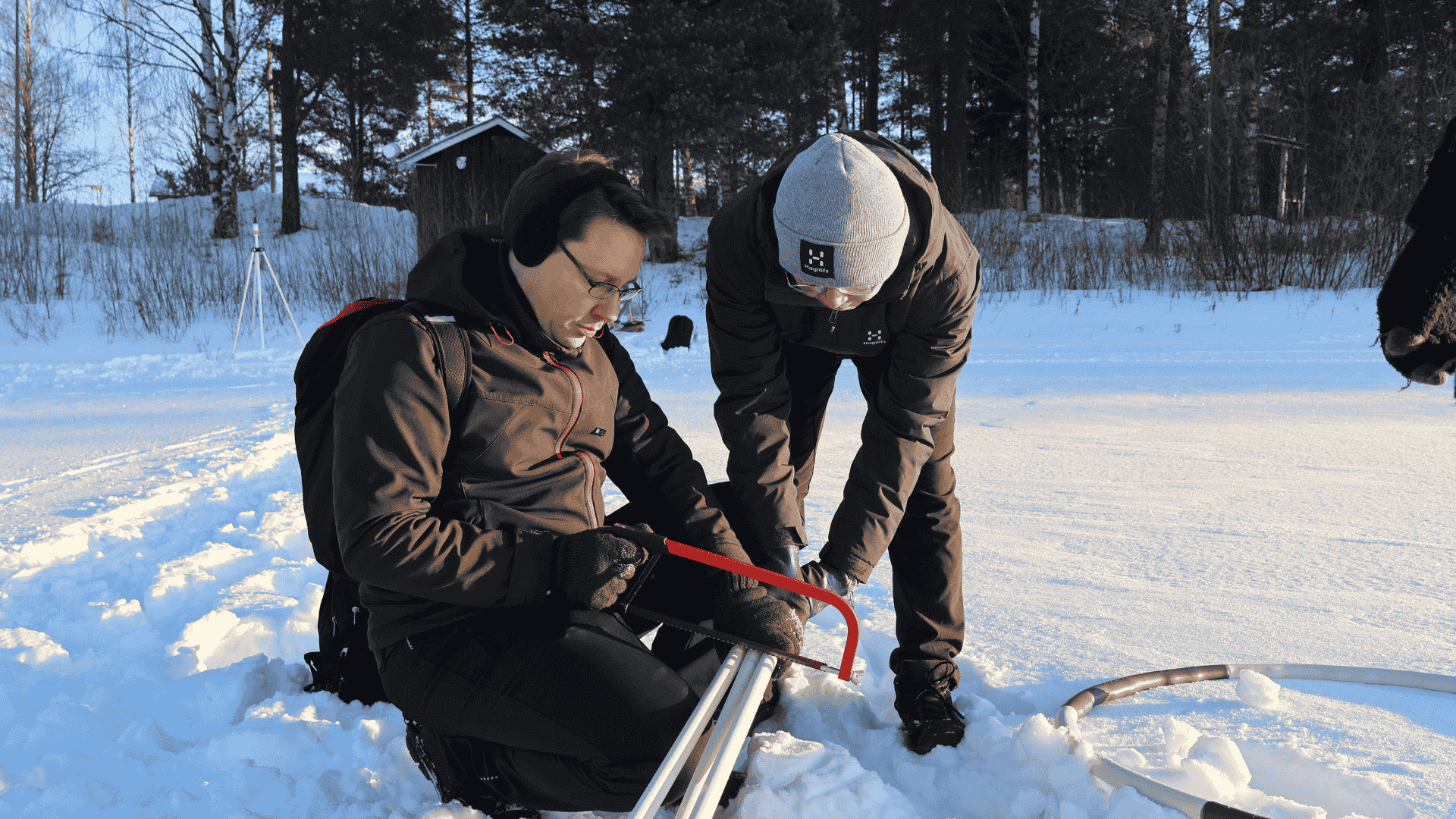
Doctoral researchers Janne Torvela & Jiahui Qiu making preparations for the installation of a research device. Photo: Hanna Holappa

The Digital Waters doctoral education pilot has delivered results: Doctoral researchers have completed their first research articles, and progress toward the doctoral degree has accelerated. The completion of these articles demonstrates that obtaining a doctoral degree within three years is possible. Behind this success are expert supervision, support from the research community, and collaboration with partners outside the university.

In the pilot, several doctoral researchers have published their first research articles. These articles have emerged from a variety of flagship research areas, covering topics such as hydrology, wastewater management, ecology, water management, modeling, digitalization, robotics, and remote sensing.

In the national doctoral training pilot for 2024–2027, approximately 1,000 new Doctoral researchers have been recruited to universities to pursue their doctoral degrees. In the pilot, universities are developing and renewing doctoral training practices. This initiative is based on the recommendations of the parliamentary RDI (Research, Development, and Innovation) working group and commitments in the government program…

9.2.2026
Share the Post:

Related Posts

PhD Pilot Blog Iiro Seppä

Spätzle, Strudel & Neural hydrology: My research visit to Linz

Iiro Seppä, University of Turku. iielse@utu.fi At the end of November, I spent two weeks with the Machine learning in Earth Sciences group at Interdisciplinary Transformation University (IT-U) in Linz, Austria. Photo 1. Researcher Iiro Seppä enjoying the weekend in Hohensalzburg, with Gaisberg in the background. Photo by Jasmin Toukoniemi.

Phd Pilot blog Matin rafipour

The next water crisis won’t be caused solely by climate change

Matin Rafipour Langeroudi, University of Oulu, Matin.Rafipour@oulu.fi For decades, climate change has been seen as the main driver of future water crises. Melting glaciers, shifting rainfall, and rising temperatures are expected to reshape rivers and threaten water security worldwide. But the reality is more complex. In some parts of the