
Waqar Khalid, University of Turku. waqar.khalid@utu.fi
The Story Hidden in Flowing Water
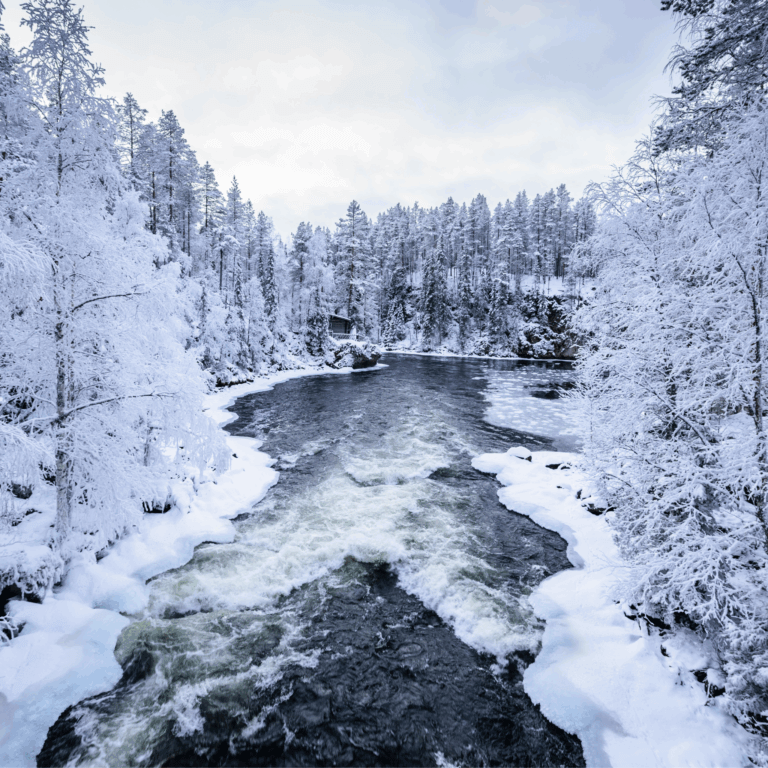
Rivers are so much more than water moving through the landscape. They are dynamic, living systems shaped by many forces: from the geologic to the climatic, from the annual floods to the silent periods of drought. They cut valleys, sustain ecosystems, deposit sediments, and even respond to the shifting climate. Every meander, every sand or gravel bar, every eroded bank is a story waiting to be told. In northern Finland, one such tale is told by the Pulmanki River, a subarctic meandering river slowly changing and remodeling its shape year by year.

My work is part of the Digital Waters flagship, which seeks to know how rivers transform under the pressures of climate stress and environmental change. We have been analyzing changes at Pulmanki using high-resolution topographic data collected every year over almost a decade. But why point bars? Why at microscales? And what do we learn about the broader river landscape?
Bar-scale Fluvial Geomorphology
A point bar is a feature along the inner bend of a meander river where slow-moving water enables sediment deposition. Through time, these bars develop, migrate, or even vanish, mirroring the equilibrium of erosion, transport, and deposition that characterizes a river’s sediment budget. Examining these microscale transformations allows us to comprehend the overall health and behavior of the river.
In the Pulmanki River, digital terrain models (DTMs) obtained mainly through drone-based photogrammetry and using LiDAR provide us with useful information about the development of the landscape. The high-resolution data enable us to monitor sediment dynamics on point bars where the river deposits and erodes material in different seasons. Through the integration of this topographic information with discharge records and flood data, especially that of seasonal spring floods, we have a better idea of how river flow drives the shaping and reshaping of these features through time. This is more than just mapping dirt. It’s finding out how these bars behave when exposed to extreme flows, how durable or brittle they are, and how rivers adapt to climate-driven changes. With more data such as vegetation cover, slope information, and water level sensors, we can assemble a story of how a river reacts to both slow and sudden environmental changes.
Why does it matter?
The findings from this observation are not only important for scientists but also water managers, conservationists, and people living alongside these rivers. In a warming world, with Arctic and subarctic rivers experiencing deep change, this type of research gives us critical baseline information.
By learning about sediment budgets, how much material arrives and how much departs, we receive hints regarding floodplain stability, habitat development, and even carbon sequestration processes. And notably, this study shows the strength of high-resolution monitoring in capturing nuances that coarser datasets tend to miss.
Each river is a story, and with technologies such as UAVs, hydrological models, and observation, we are discovering how to read the story more accurately.
27.5.2025.