Eeva Järvi-Laturi, University of Oulu. eeva.jarvi-laturi@oulu.fi
This summer, I found myself knee-deep in a peatland—both literally (almost lost a boot!) and figuratively. As part of my PhD, I spent the short but intense growing season mostly out in the field, chasing data across gradients, depths, and disciplines. It was a season of learning, growing, and occasionally stumbling—an experience that taught me more than I expected.
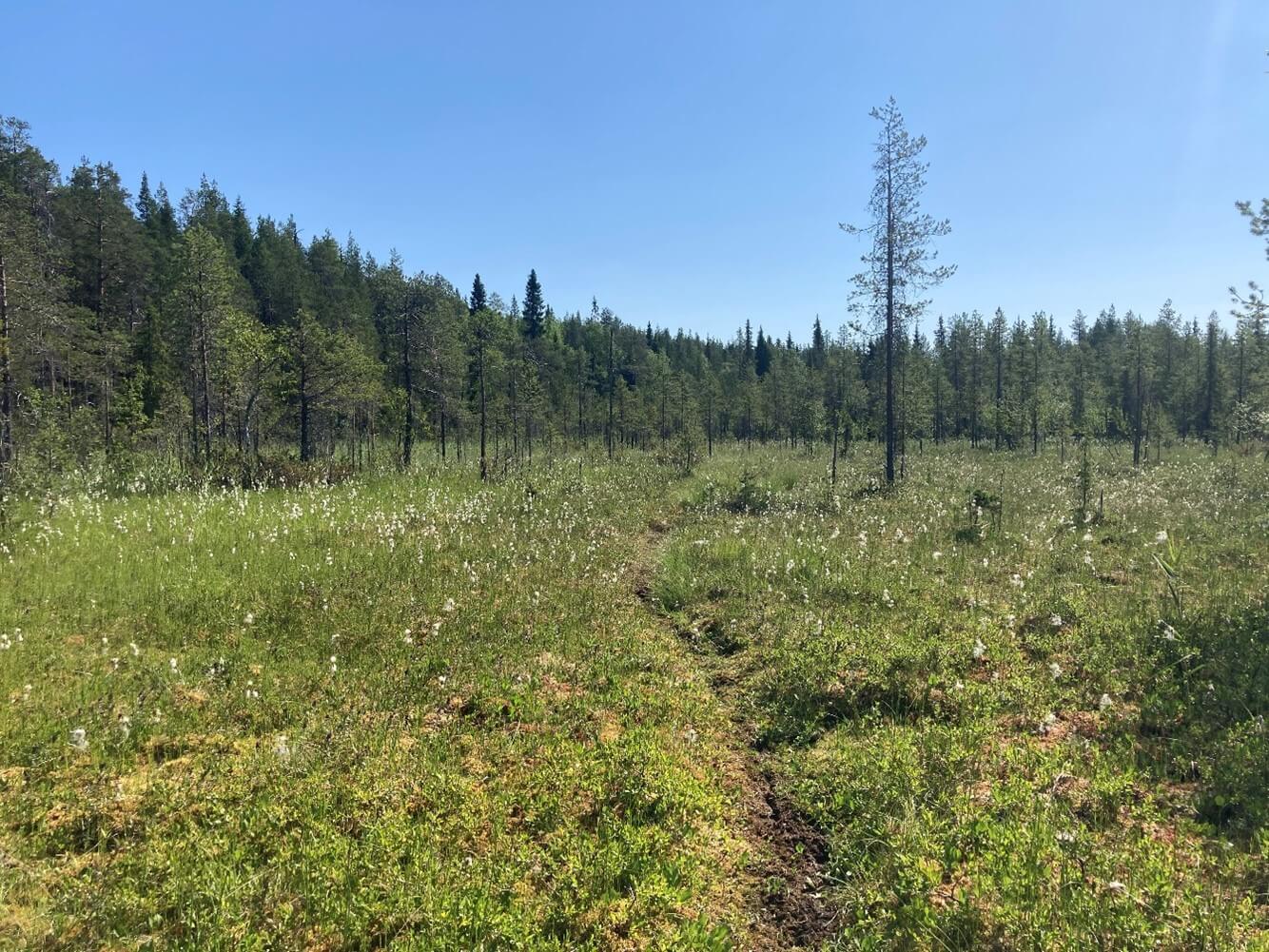
I study a special type of peatland called a rich fen, known for its biodiversity and unique hydrology. Unlike bogs, which rely on rainfall, fens are fed by mineral-rich groundwater. This maintains stable water levels and supports specialized biota. My research focuses on the relationship between fen vegetation and methane emissions, aiming to identify the key regulators of their spatial variation.
How does my work relate to Digital Waters?
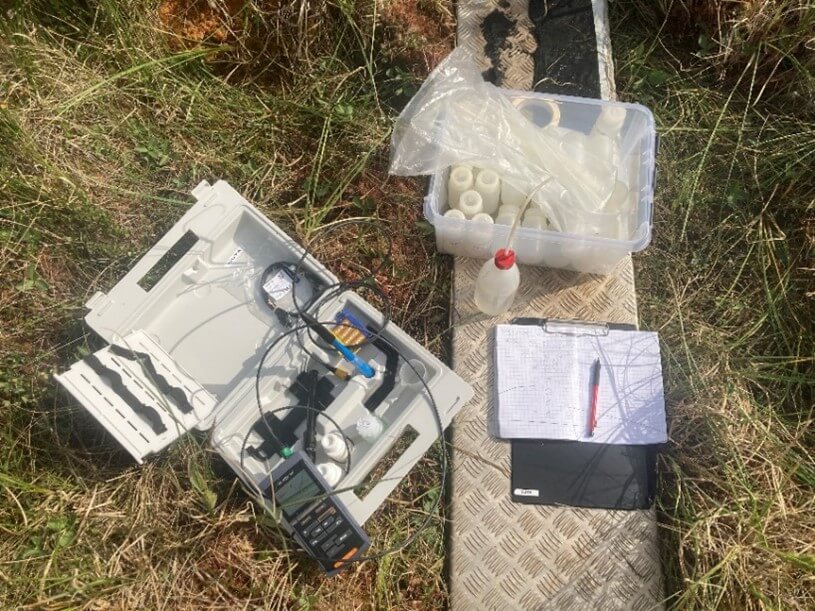
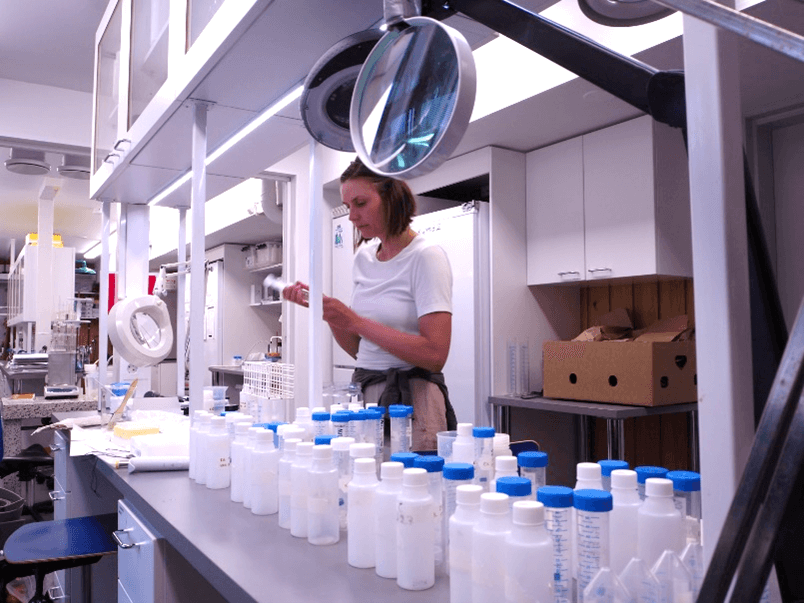
In my research, I am using multiple hydrological variables to explore methane flux dynamics. I work with 30 study plots, which represent different abundances of three key plant species. At each plot, I have data on water level depth, methane concentration, pH, temperature, electrical conductivity, and chemistry of pore water samples. One highlight of the season was developing a new method to measure pore water methane concentration using a LI-COR LI-7810 analyzer and just a few milliliters of porewater. It was exciting to see how a tiny sample could reveal such striking variation across depths and locations!
With colleagues, we also collected small soil samples to study peat water holding capacity, hoping to gain insights also into hydraulic conductivity. Initially, we had planned to measure conductivity directly at every plot but quickly realized how impractical that was. It was one of many moments where plans met reality, and adaptation became necessary.
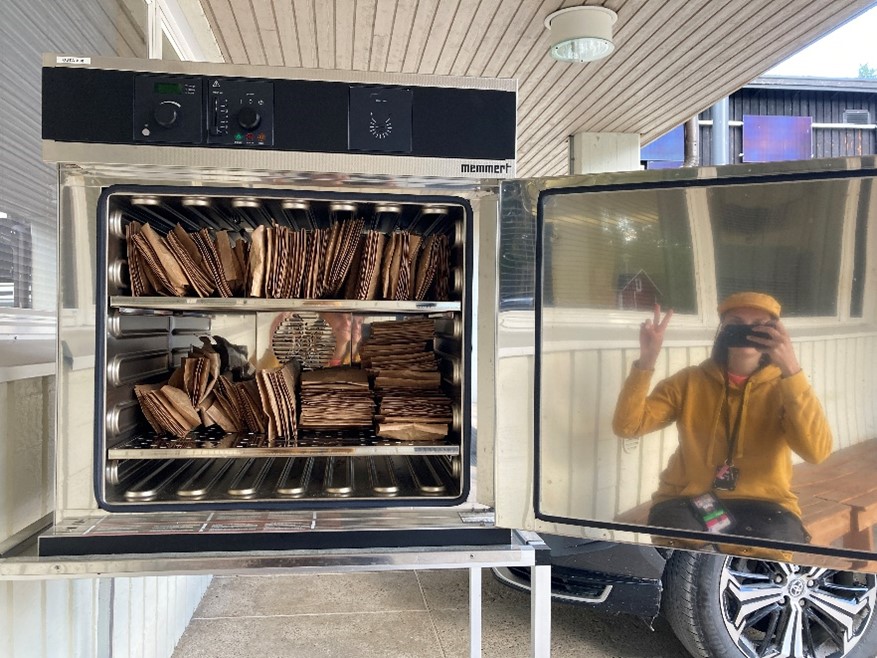
Vegetation sampling and methane flux measurements form the backbone of my research. I recorded methane fluxes at all 30 plots several times, and for the first time, measured also fluxes from individual plants. Technology amazed me again: detecting extremely low flux values and highlighting clear differences between species and individuals was just startling. I also harvested and sorted all vascular plants from the plots, scanned part of them for leaf area, and dried them for weighing. Hundreds of samples now wait for me at the Oulanka research station, ready to be digitized.
Power of shared effort
Someone told me this summer that this period is often the hardest part of a PhD: the first article still waiting to be published, the second demanding rapid data collection, analysis, and interpretation, and the third already looming on the horizon. Strangely, hearing this was comforting – it reminded me that this intensive period is a natural part of a PhD process.
Thanks to collaborations, my dataset is expanding beyond my own measurements. Together with other researchers, we collected drone data, peat cores to examine belowground plant parts, as well as soil samples for microbial analysis. These efforts will help reveal larger patterns behind methane flux dynamics. Working alongside researchers and staff from the Universities of Oulu, Umeå, and Eastern Finland, as well as the Natural Resources Institute of Finland, brought new perspectives to the project and emphasized the power of shared effort. Even when things didn’t go as planned – like when I found out that the flux chambers were still not ready two weeks before I was planning to start the measurements – collaboration and improvisation saved the day.
Fieldwork is often romanticized, but behind every scientific paper lies repetitive, laborious tasks. Planning, preparing, and implementing field campaigns are all demanding, and no amount of planning prevents surprises: a broken instrument, a forgotten detail, or unexpected weather. This summer, I was lucky: dry, sunny days throughout my main campaign helped me stay on schedule despite not really leaving room for bad weather days.
I’ve made rookie mistakes: overplanning, trusting too easily, underestimating the emotional toll of independent decision-making. But I’ve also learned to adapt, ask for help, and share the journey. Collaboration isn’t just about dividing tasks, it’s about lifting each other up when doubt creeps in, when long field-days tire you up, when things go wrong. And yes, collaborations sometimes disappoint, but more often they empower.
Now, as I write from Umeå University, where I’m visiting for two weeks to learn the methods of root sampling with peat cores collected at season’s end, I’m reminded that fieldwork doesn’t end when the last sample is collected. Sorting, scanning, weighing, digitalizing, analyzing… a mountain of afterwork that will fill the months ahead. It feels like a lot, but I know it will pay off when the graphs are finally drawn on my computer screen and the bigger picture starts to slowly take shape.
This summer has been educational in every sense. While I don’t yet know exactly how these threads will tie together in my thesis, I know I’m moving forward – with a bit more wisdom, a lot more data, and a deep appreciation for the beautiful, messy process of doing science.
17.9.2025.