
Reeta Vaahtera, Aalto University. reeta.vaahtera@aalto.fi
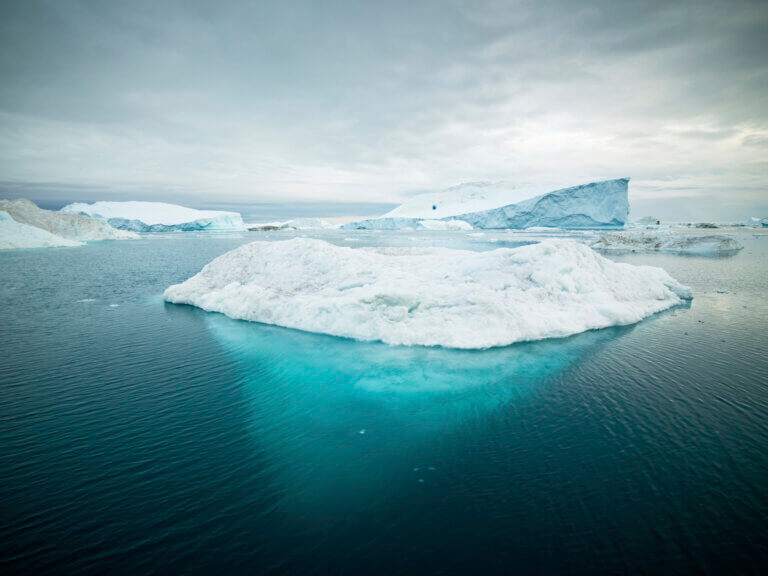
In cold climates, river ice has a wide impact – around a third of the Earth’s landmass is drained by rivers that get seasonally ice-covered. When a river freezes over, the flow of water changes remarkably, affecting all processes, including sediment transport.
In addition, the ice cover forms a physical barrier between everything above and below the water surface, including researchers wanting to study the river. Therefore, we are bringing an ice-covered river indoors, which allows us to study the flow in more detail and throughout the year without intensive fieldwork.
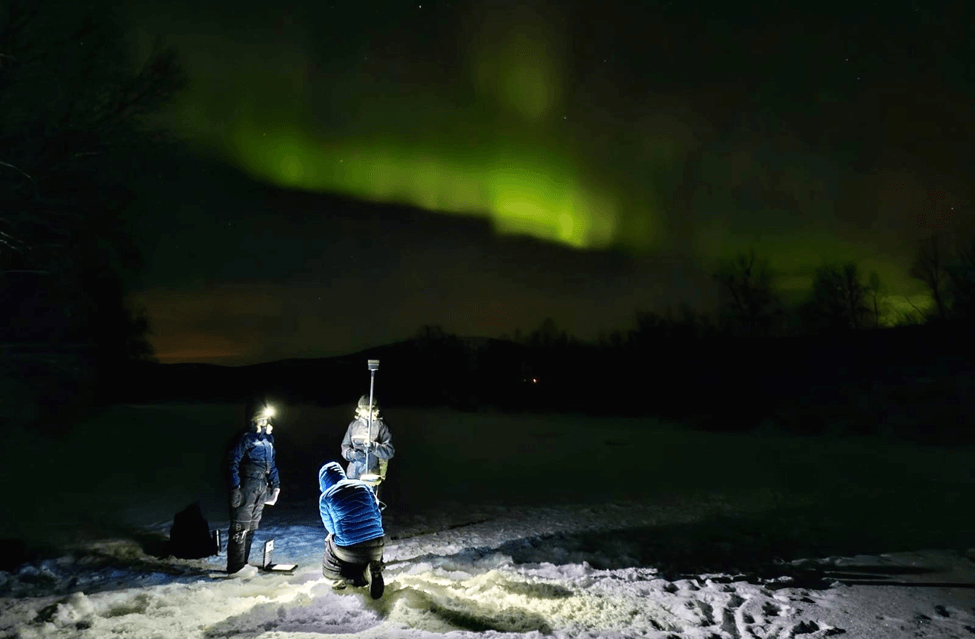
Cold and harsh weather, a long winter, and up to half a metre thick ice cover that can last nearly half of the year. Throughout the year, clean and clear water flows in the river and alters the environment. However, the flow is almost constantly changing through the seasons – sometimes rapidly and dramatically, sometimes slowly and almost imperceptibly. This is a description of conditions in a high-latitude river: the Pulmankijoki River, located in northernmost Finland.
Ice cover affects the flow of water in the river – an open channel becomes similar to a tube when another surface is added to the flow. Water level, flow velocity, and turbulence in the flow are all different compared to a river without an ice cover. Yet one can easily imagine how difficult it is to measure what happens below the thick ice cover. That is why our research aims to study real-like ice-covered river conditions in a controlled setting in the laboratory environment in the Aalto Environmental Hydraulics Lab (EHL). We have replicated the shape and surface texture of river ice and sandy riverbed, and by bringing these to a flume, we can study in detail what happens close to different surfaces and how changing flow rates affect the conditions.
What are flume experiments?
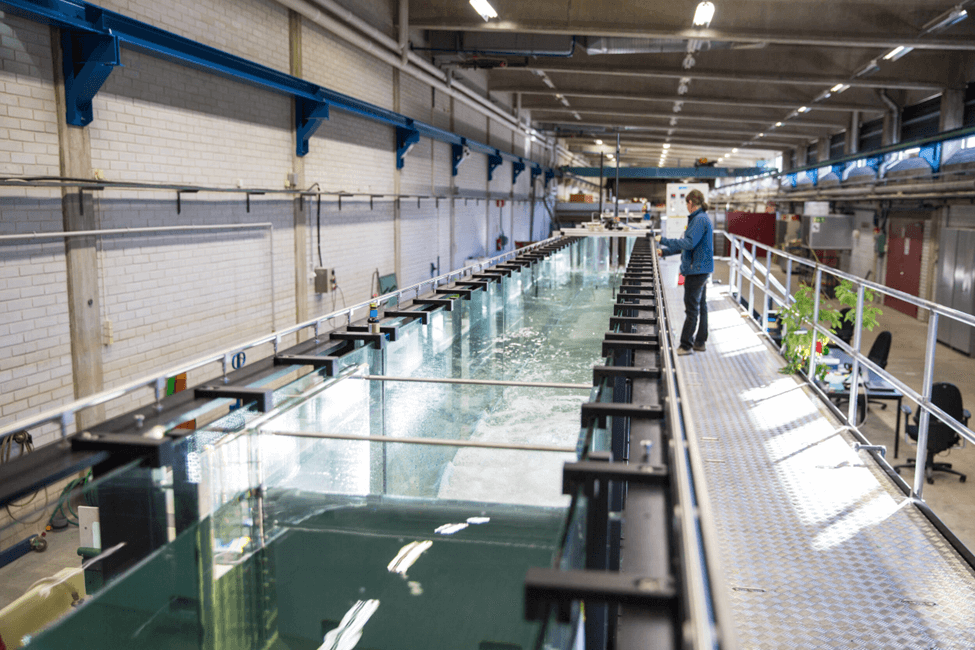
A flume is a water channel shaped for a certain purpose, such as measuring the flow of water and sediment or testing engineering structures. In other words, a flume is an artificial river that can be used for studying flowing water. EHL at Aalto is a multipurpose flume laboratory that provides possibilities to study various interactions between water, vegetation, nutrients, and other substances, and sediment. Ice-covered conditions have also been studied using flume experiments, and these approaches have led to a great deal of the knowledge we have about ice-covered flow.
Bringing a realistic ice-covered river indoors
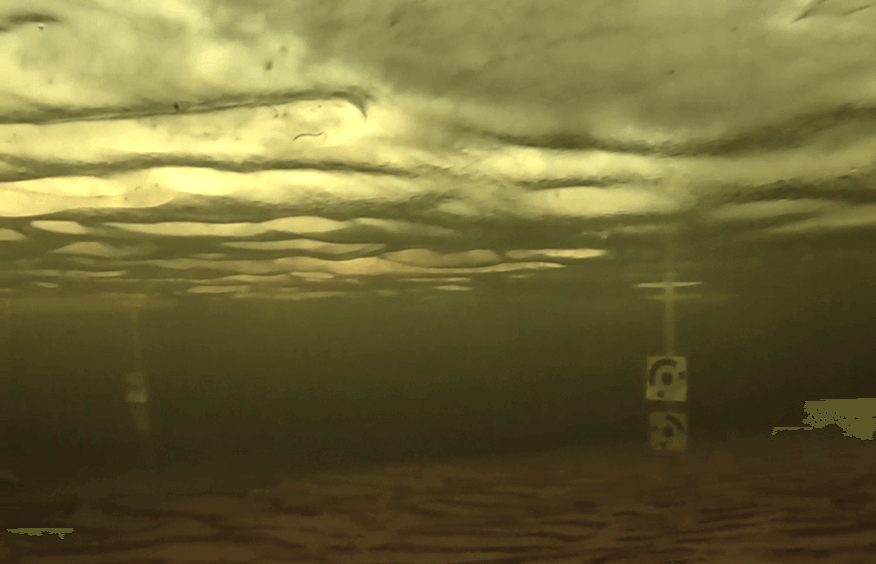
Based on extensive fieldwork over several years, we have unique and comprehensive data regarding Pulmankijoki. Based on measurements, we know that the ice is typically fixed to the riverbanks and its underside consists of wavy shapes, similar to sand dunes. However, these conditions have not typically been represented in detail in laboratory experiments: The proxy ice used has often been smooth and floating. This limits how well these findings align with what is happening below that thick, heavy, and unevenly shaped layer of ice.
Using videos taken with underwater drones and waterproof cameras, it has been possible to turn these real-world conditions into 3D models, which have been brought to physical reality again using 3D printing. This way, we have been able to bring Pulmankijoki to life in Otaniemi. Measuring the flow between the surfaces allows us to measure velocity, pressure, and turbulence in the flow. By measuring with different flow rates, we can assess the potential future changes in ice-covered flow. After all, it is evident that due to the changing climate, future winters are likely to be warmer and less harsh than the ones we know today.
In addition to the Digital Waters PhD pilot, the fieldwork in Pulmankijoki River has been conducted as part of projects funded by the Research Council of Finland (DefrostingRivers, DIWA flagship, HYDRO-RI-Platform, and Green-Digi-Basin) and MVTT.
15.7.2025.