Text & Images: Annukka Pekkarinen, University of Turku.

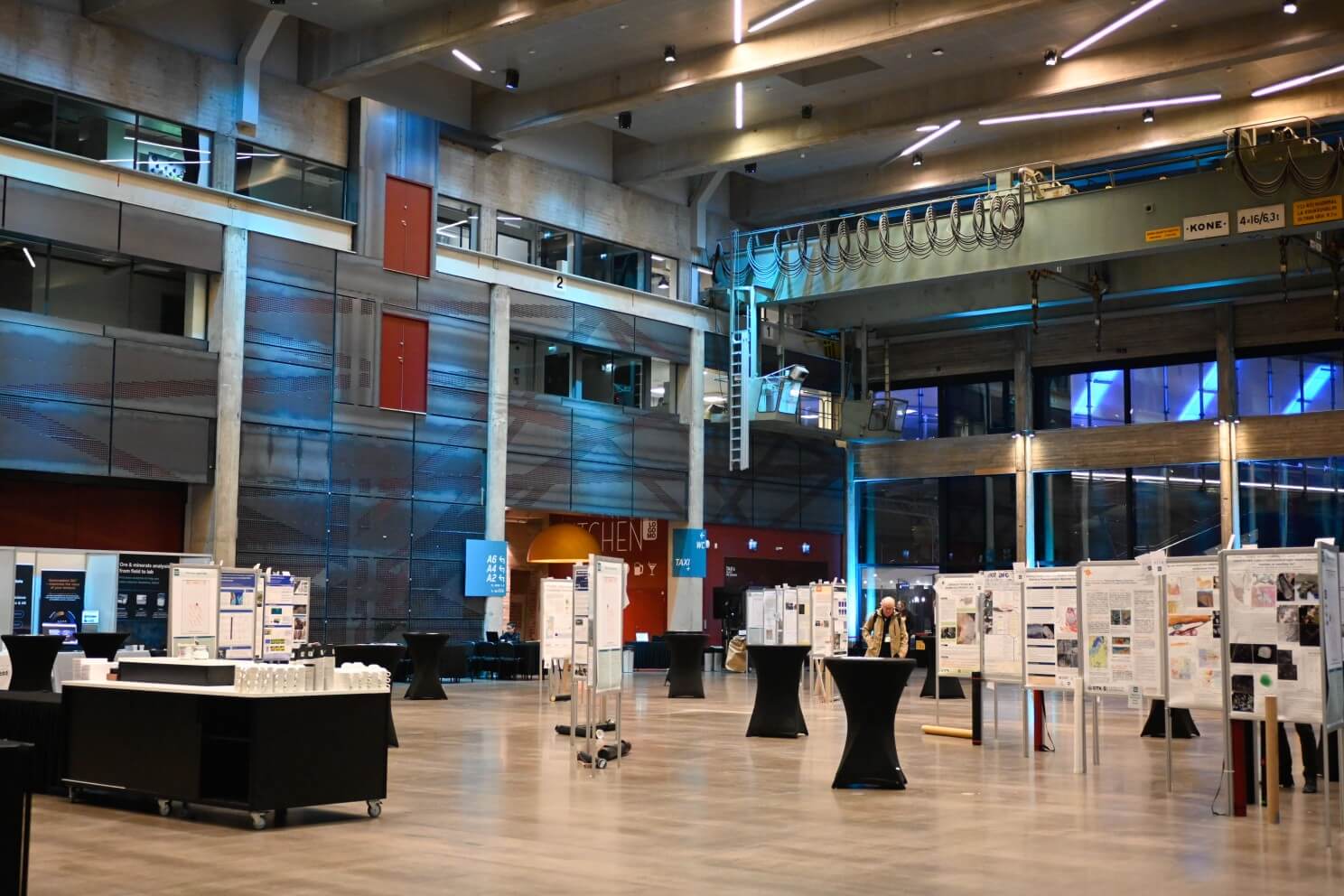
My work as the research coordinator, particularly specializing in interaction and communication, allows me to follow scientists in interesting places, sometimes also to scientific conferences. The Nordic Geological Winter Meeting 2026 in Turku, Finland, included a session for geosciences communication and outreach, so I and, the DIWA communication specialist Hanna Holappa, from the University of Oulu, sent our input to this session, describing the challenge of designing the internal and external communications of a 200-person, multi-organization, and cross-scientific consortium.
The session itself was very fun – there were several talks about various engaging ways of doing geoscience communication, and even about how to become a successful geosciences influencer on TikTok and Instagram, talking specifically about rocks. This is not a small achievement, making successful popular content on geoscience, on a platform where every possible topic in the world is competing for visibility. For some reason, we have a well-known idiom/saying in Finland, that goes “kiviäkin kiinnostaa” (even the rocks are interested), which means exactly the opposite: One would use this rock-related idiom when someone is saying something completely uninteresting. It is a snarky saying, so it’s better to use it lightly, and I think highly of underestimating the fascinating sides of geology.
In addition to the communications session, the scientific conference presentations that I saw were very good – and understandable for a non-geologist like me, which was much appreciated. The plenary session of the day was given by Karin Andreassen from UiT, receiver of the Nordic Geosciences Award 2026, describing their team’s work detecting underwater gas hydrates, particularly methane venting from the Arctic seafloor. This is a phenomenon that is leaving major craters in the iceberg- and glacier-scoured seafloor of the Barents Sea.
The terrifying part of the day was the landslide session – watching the visualized simulation of the megatsunami caused by a major landslide in an Alaskan fjord this summer sent chills down my spine, as I spend part of the year anchoring a boat in deep, narrow Arctic fjords, where retreating glaciers expose steep and apparently sometimes unstable mountain walls. Also, seeing the drone images from the clay landslide in Southern Sweden, cutting out part of the major highway E6 like a piece of pie and shifting it by 50 meters was impressive. Geology, sediments and even bedrock can really ruin your day, like one of the presentation titles stated.
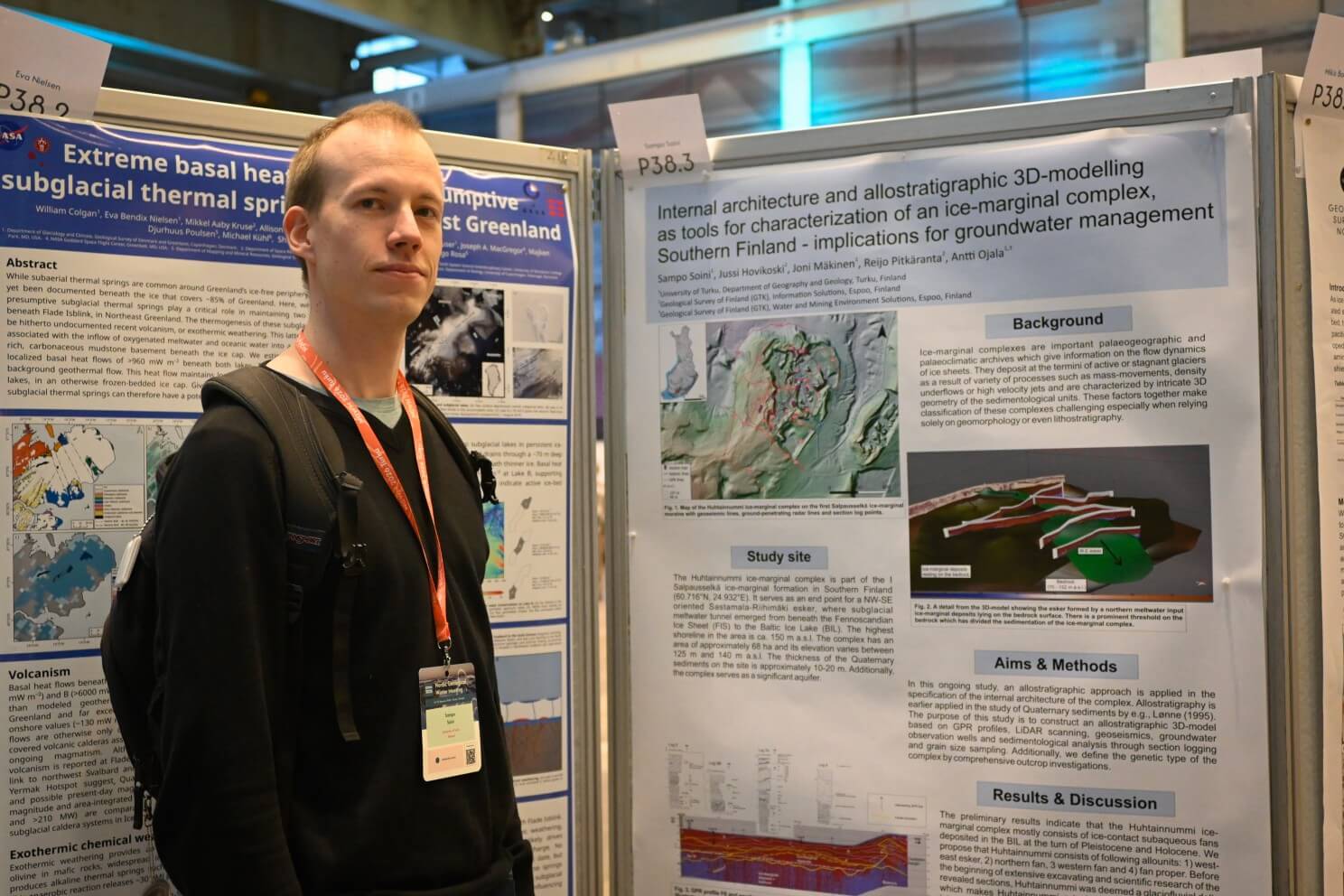
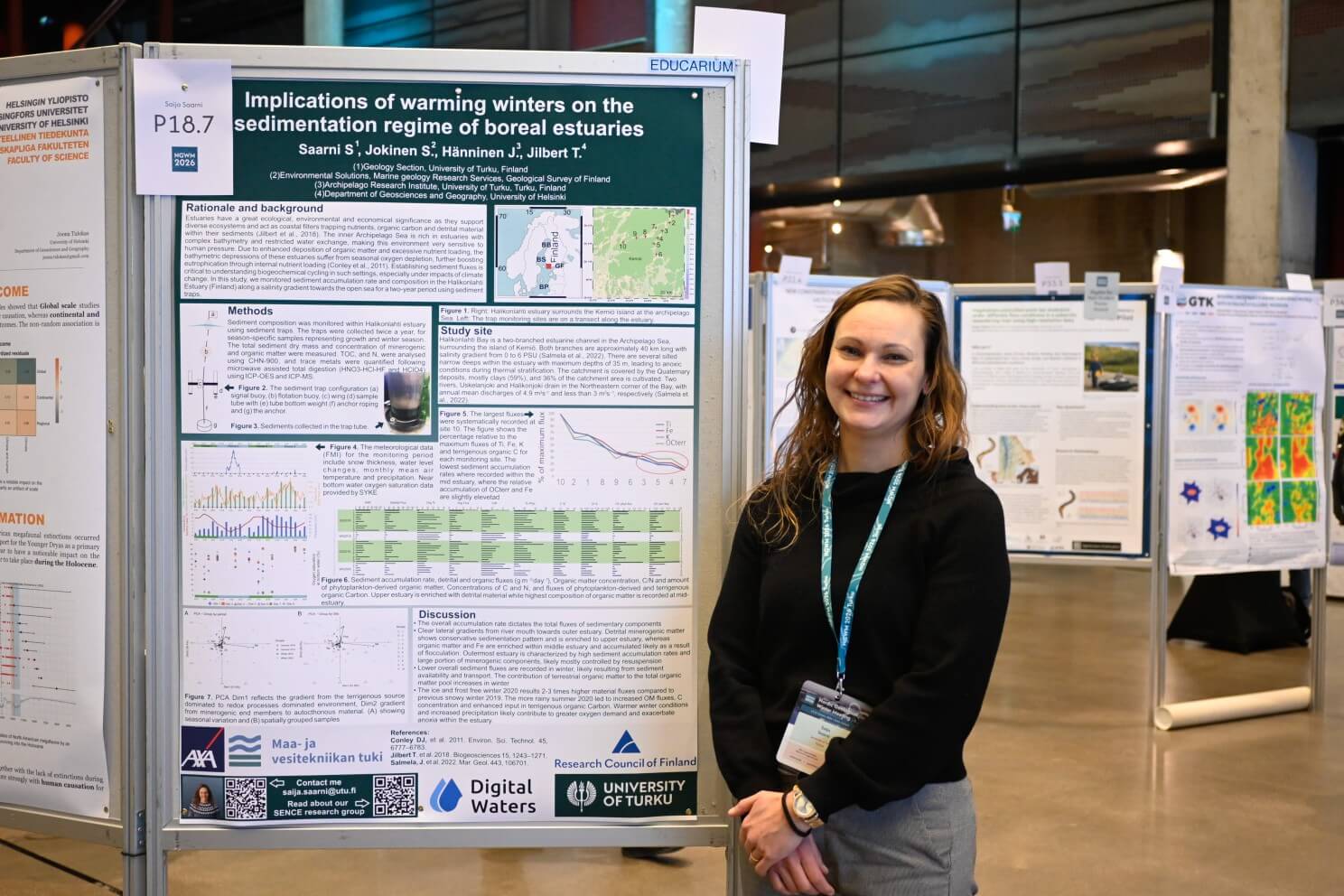
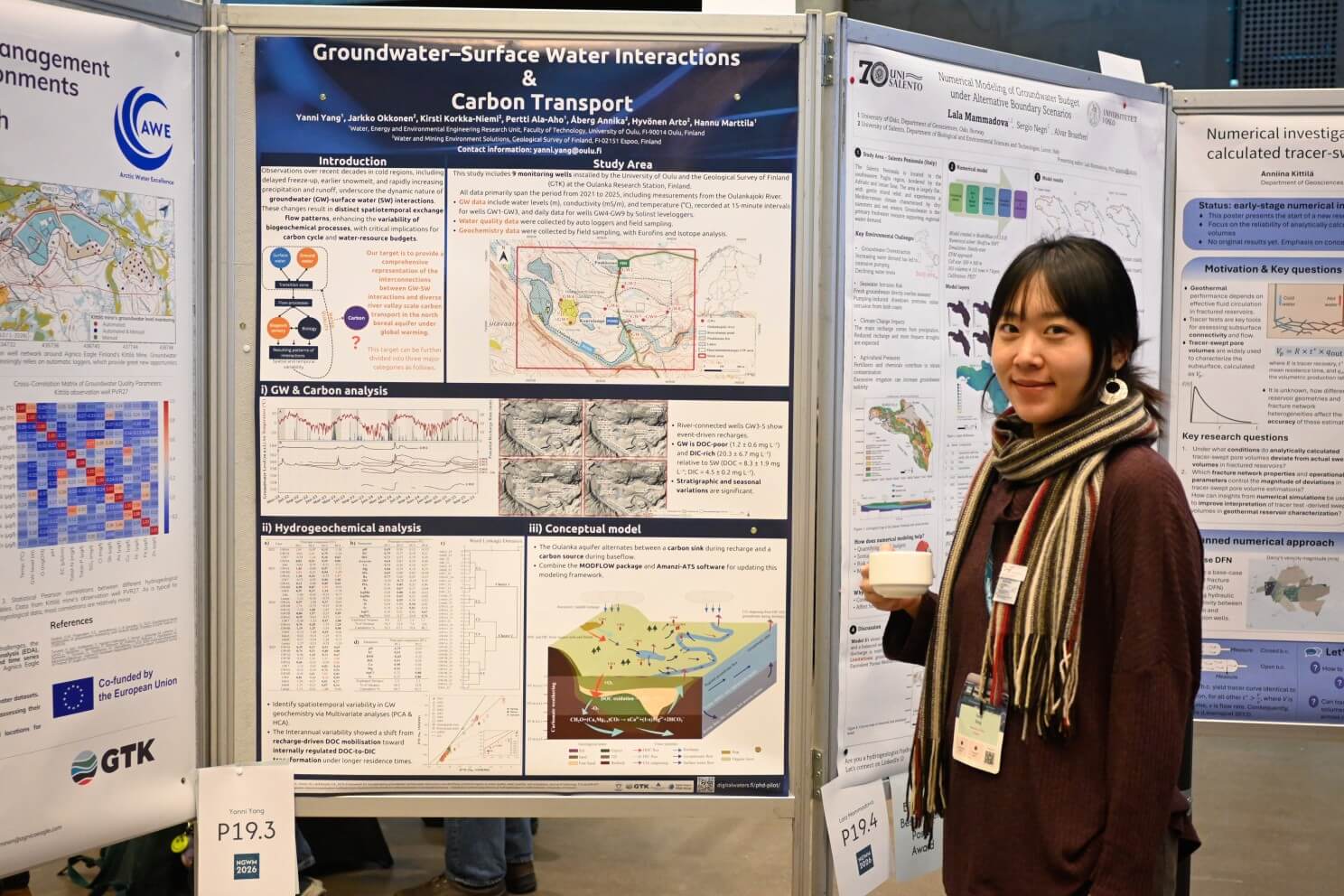
Part of the Digital Waters Flagship staff, especially PhD researchers and other staff from the Department of Geology, University of Turku, made sure the event was running smoothly. Several of our PhD Pilot researchers from the University of Turku and Oulu also had posters and presentations, showcasing our geological and hydrological research and working with groundwater.
16.1.2026