Authors: Annukka Pekkarinen & Ville Kankare
Traveling to the Oulanka River to do winter measurements through the river ice would be a once-in-a-lifetime experience for most people – but not for this crowd. Professor Petteri Alho and researchers Linnea Blåfield and Ville Kankare, water professionals from the University of Turku’s Fluvial and Coastal research group, have been conducting field research at Oulanka for years.
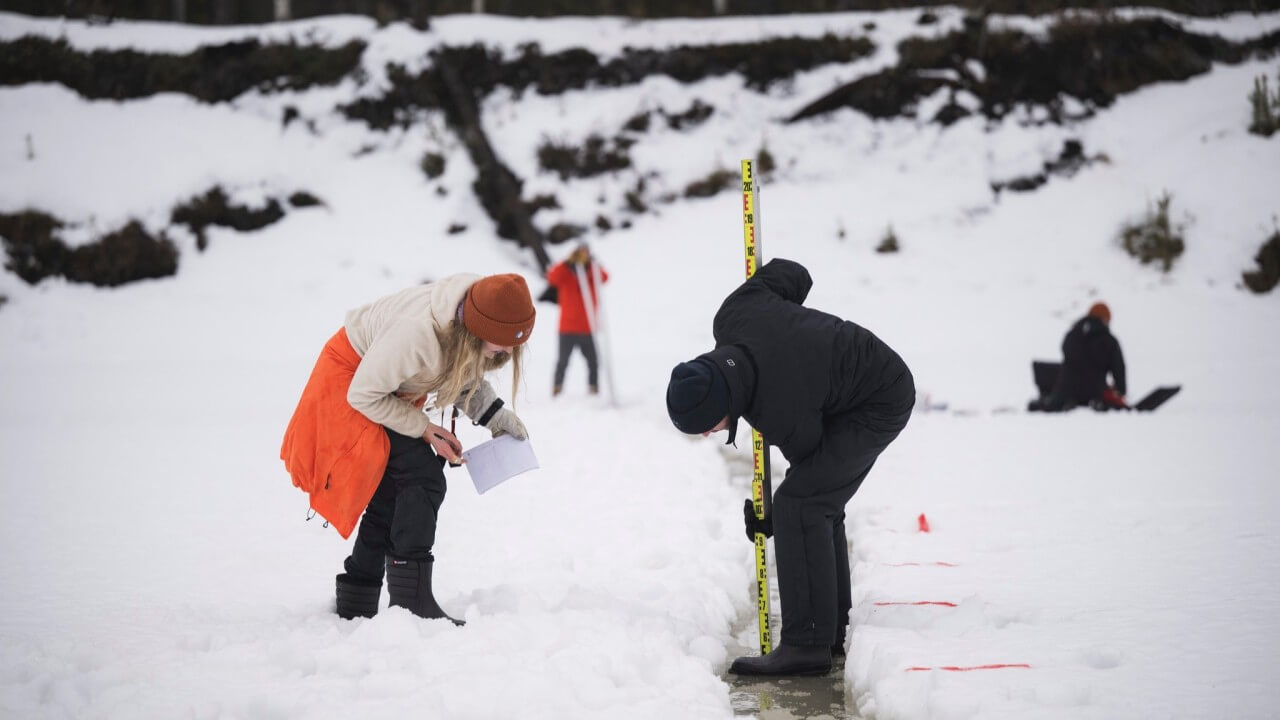
The first hydrological measurements from the area date back to the 1970s and create a valuable time series of data, used now for advanced climate change research, specifically focused on the boreal climate. They have a trailer full of items that only an experienced winter researcher knows to pack, and our first task when arriving in Oulanka is to unpack all the skis, winter boots, power auger, ice saw, and pickaxe to hack holes in the ice, ice safety equipment, and the research equipment to be deployed into the river. We get to do some good old man-hauling with sledges to bring the equipment for the last kilometer to the river ice.
Water flows effortlessly under the ice – measuring it is a whole another story!
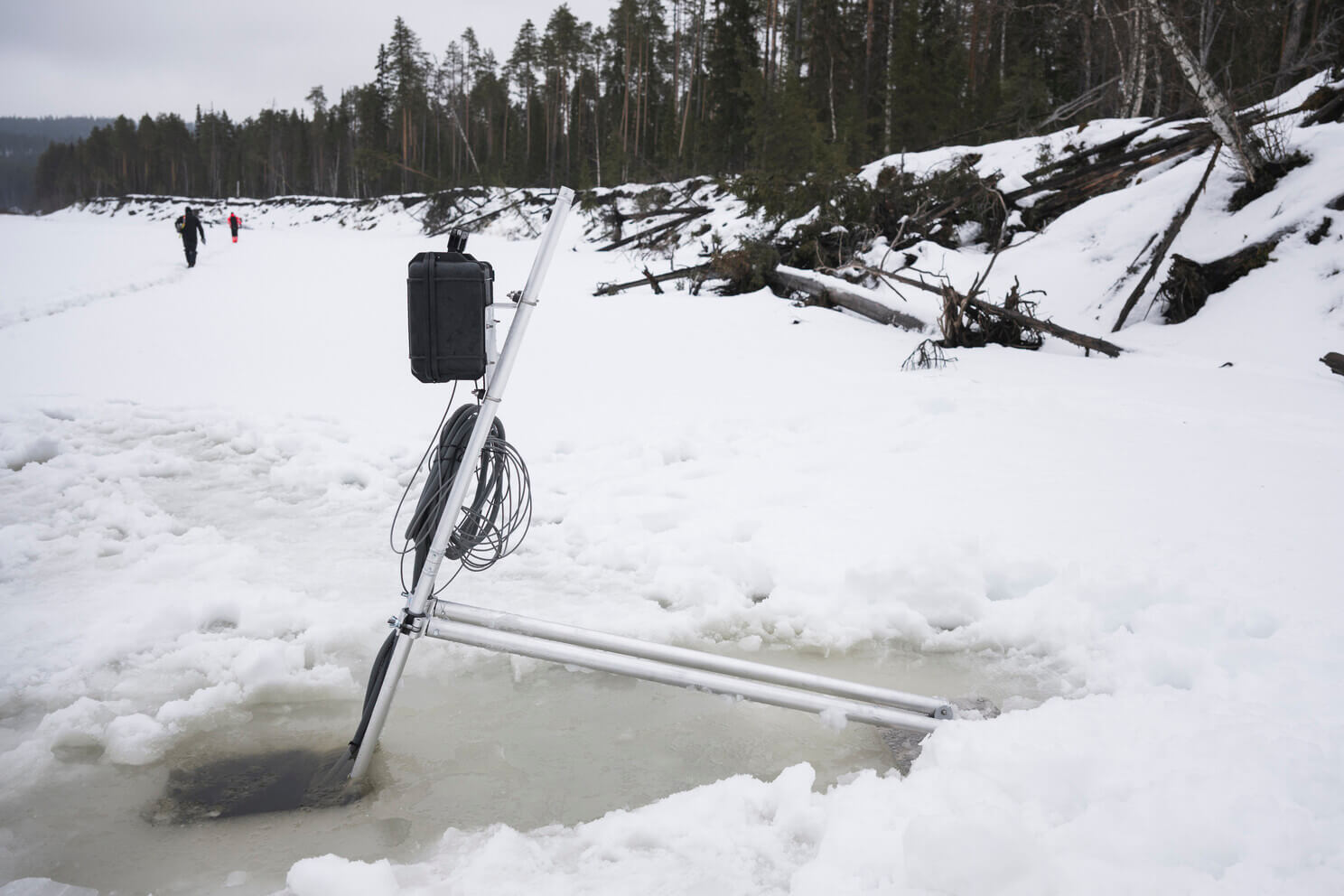
The biggest equipment to haul is a unique sensor configuration to measure under-ice flow conditions in a meandering section of the river – for example to determine changes in the water cycle. Essentially, they are custom-built rigs each equipped with several Sontek SL1500 side-looking Doppler current meters, positioned across three different cross sections to capture horizontal flow measurements at varying heights beneath the ice. We are also collecting under-ice flow measurements using Sontek M9 and RS5 instruments — deployed through ice holes drilled at 2-meter intervals along the same cross sections. What this means in practice is that we spend the first couple of days simply making a large number of holes of variable sizes in the ice – a fun job that requires some power tools, muscles and patience.
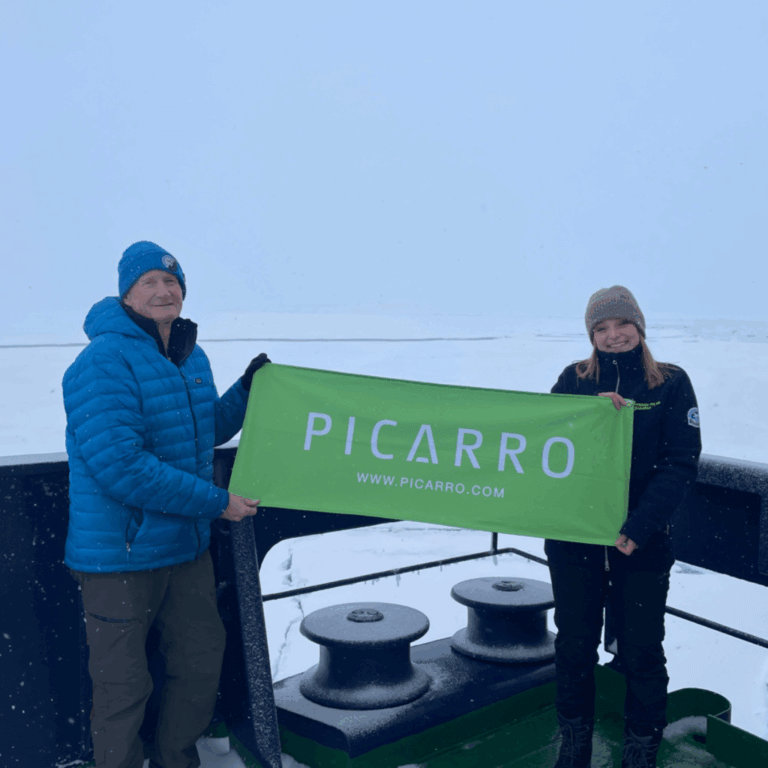
We had some special guests on this field campaign: Rob Thompson from Xylem is a specialist with the abovementioned Sontek instruments and is following and assisting the deployment to ensure good data, and Professor Julian Leyland from the University of Southampton, who is part of the Digital Waters international research collaboration network, getting familiarized with conducting field research in icy conditions. On the first days, we are also accompanied by Juha Lyytikäinen, representing GWM engineering, the company that imports devices and equipment required for hydrological measurements. Information about using the equipment in extreme conditions is valuable for manufacturers and importers alike. For us, having all these extra hands for the fieldwork is much appreciated!
I also got to participate as the research and interaction coordinator, to film and document the work. In addition to that, I found my niche in the crowd, hauling the sledges and making holes in the ice and the field lunches on the cooking stoves – I found out that cooking is possibly the most rewarding job of all, because a lukewarm hot dog tastes absolutely incredible when eaten on river ice after a few hours of wintertime physical field work.
First-ever deployment of the underwater LiDAR system ULi under the ice
In the expedition team, we also have Research professor Harri Kaartinen and researcher Matias Mäki-Leppilampi from Finnish Geospatial Research Institute FGI, who are packing their expedition sledge full of laptops, batteries, boxes of wires and equipment, and the most important thing: the green Fraunhofer IPM Underwater Lidar sensor. This sensor can map the riverbed with millimeter precision using the pulsed time-of-flight method, providing an entirely new perspective for monitoring riverbed structures — potentially even providing real-time data. The system is highly versatile, and capable of static scans or operating in motion onboard an underwater vehicle or boat. One of the major highlights of our winter field campaign at the Oulanka River was the first-ever deployment of this Underwater LiDAR system for under-ice measurements.
The Finnish Geospatial Research Institute FGI is well-known for its ability to test new emerging technologies, sensors and sensor combinations for mapping and analyzing various environments with great geospatial accuracy. Their work extends from aerial applications like drones and helicopters to robot boats, ATV’s, and now under the ice installations.
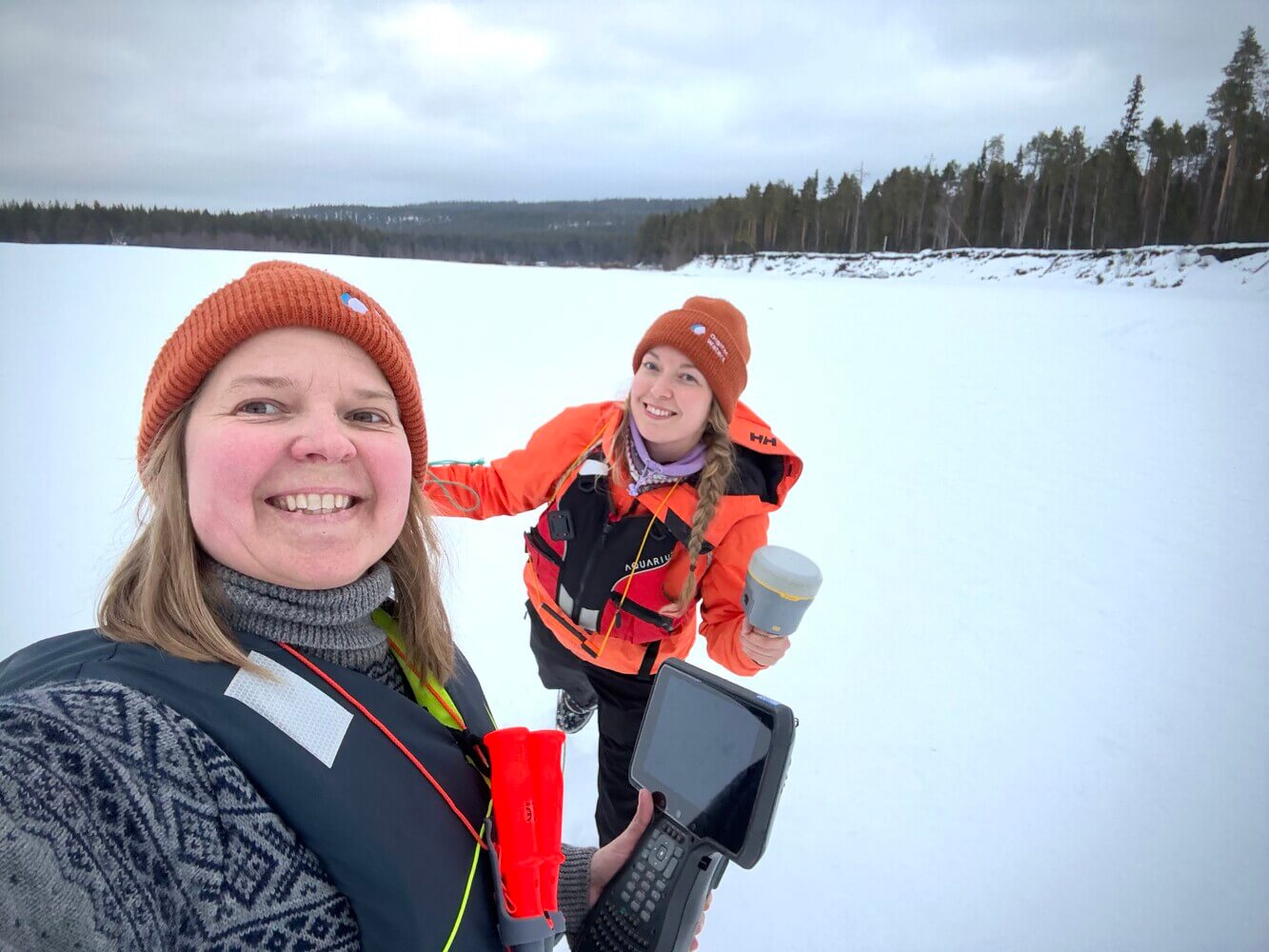
We are looking forward to being able to tell you about the results of this Oulanka field collaboration. The publications will be out during the DIWA project duration as soon as the data is analyzed, so stay tuned!
11.3.2025