Events

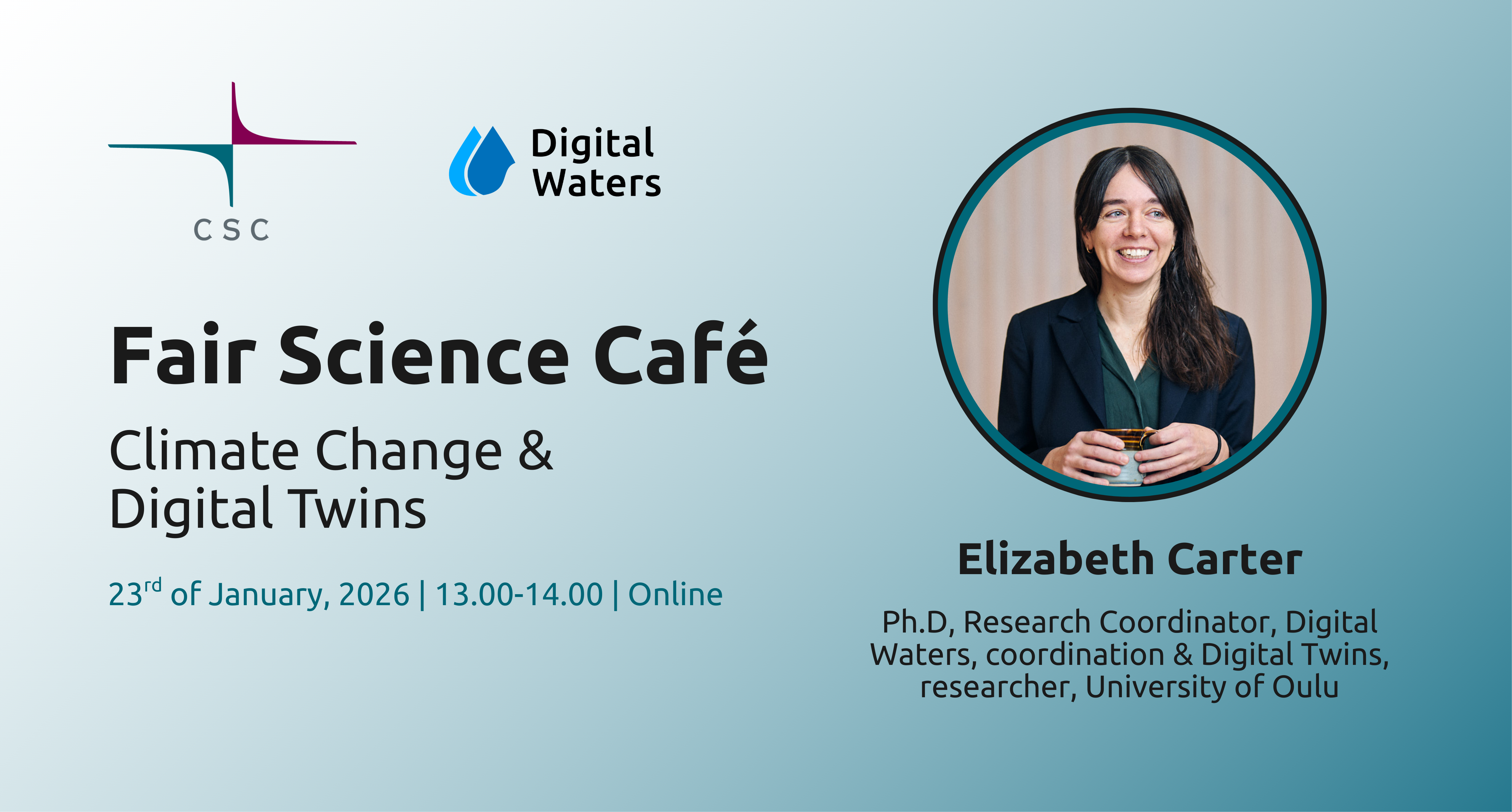
CSC – FAIR Science Café — Climate Change & Digital Twins 23.1.

DIWA Webinaari sarja

CSC – IT Center for Science is organizing a FAIR Science Café — Climate Change & Digital Twins on Friday, the 23rd of January.

The speaker at January’s FAIR Science Café is Research Coordinator Elizabeth Carter from the University of Oulu and the Digital Waters Flagship (Ph.D, coordination & Digital Twins, researcher), who works on innovative solutions for climate change and water management using digital twins. Digital twins are virtual models of physical objects, systems, or processes.

In this FAIR Science Café, Carter will introduce you:
• How digital twins create virtual models of water systems to predict and manage climate impacts
• The role of real-time data and FAIR principles in sustainable water research
• Insights from the Digital Waters flagship initiative and its vision for future water security

To read more about the Fair Science Café and register, access the official event page through the button below.

17.1.2026
Share the Post:

Related Posts

Postdoctoral researcher position

Open position: Postdoctoral Researcher within the Digital Waters (DIWA) Doctoral Education Pilot!

The Faculty of Science and Engineering at Åbo Akademi invites applications for a postdoctoral researcher position within the Digital Waters Doctoral Education Pilot. The postdoctoral researcher position is full-time and will be seated at the Faculty of Science and Engineering at the subject of Environmental and Marine Biology in Turku.

Open position: Postdoctoral researcher

Open position: Postdoctoral Researcher (Extreme Climate Events, Hydrology, and Carbon Cycling in Northern Environments)

Water, Energy and Environmental Engineering research unit, at the Faculty of Technology (University of Oulu) invites applications for a Postdoctoral Researcher position to join our project investigating how extreme climatic events, such as heatwaves, droughts, winter warming episodes, and rain‑on‑snow events, shape hydrology and carbon cycling in high‑latitude northern ecosystems. Description of