Dilshan Dissanayaka, University of Eastern Finland. dilshan.dissanayakage@uef.fi
From Sri Lanka to Finland: My Journey in Aquatic Toxicology and Nanoparticle Research
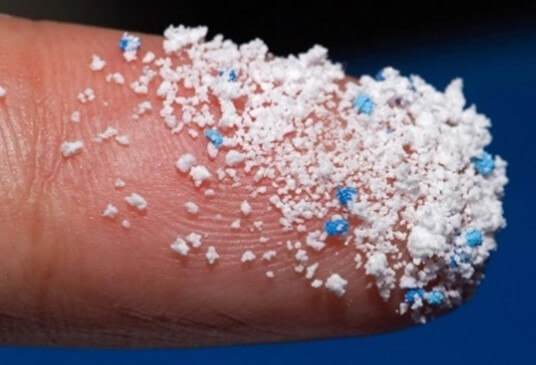
My journey as an aquatic toxicologist began knee-deep in the vibrant, complex waters of Sri Lanka and has led me to the crystal-clear, yet vulnerable, lakes of Finland. Across continents and ecosystems, one burning question drives me: How do microscopic plastics, especially nanoplastics, silently sabotage aquatic health, and what role does their surface chemistry play in this toxicity?
Plastics vary depending on the production, such as polypropylene, polyethylene, and polystyrene (PS). Unlike other plastics, Polystyrene is widely used in insulation, packaging, and disposable items due to its small size, lightweight, low production cost, and transparency. As plastic waste breaks down in the environment, it doesn’t just disappear. It becomes smaller first into microplastics, and eventually into nano plastics, particles less than 100 nanometers in size. These polystyrene nanoparticles (PS-NPs) are especially concerning because they’re small enough to cross biological barriers and interact directly with cells and tissues.
But what I’ve learned is that size, shape, and chemical composition alone don’t tell the full story. It’s the surface of these nanoparticles and their functionalization that largely dictates how they behave and how toxic they are.
Why polystyrene (PS)?
PS is an aromatic polymer composed of styrene monomers derived from benzene and ethylene. Like other types of plastics, polystyrene is susceptible to degradation processes such as photodegradation (UV radiation), oxidation, hydrolytic degradation, and thermal degradation [1,2], resulting in nano-sized particles (PS-NPs).
Polystyrene in the pure state is electrostatically neutral. However, it rarely remains in a neutral state in the natural environment; instead, PS-NPs transform into charged particles, primarily due to oxidation, adsorption of organic matter, microbial activities, and pH changes [3]. Further, the subsequent aging process of plastics also leads to a change of the surface charge by breaking chemical bonds, resulting in functionalized polystyrene [4]. Durability and persistence of the PS-NPs in the environment further increase due to the readily binding nature with hydrophobic persistent organic pollutants.
Why This Matters: An Invisible Invasion
Micro and nanoplastics (MNPs) aren’t just an “out there” problem. They’re inside us. We ingest them in food and water (5000 MPs/L in bottled water [5]), and we inhale them [6]. Disturbingly, research detects microplastics like polyethylene and PS in human blood (found in 10-30% of samples, with microplastics detected in 1 in 5 donors). PS-NPs are emerging as potent environmental poisons, with mounting evidence of harm:
- Human Health: Linked to lung inflammation, neurological risks (crossing the blood-brain barrier), metabolic disorders (reducing energy, causing oxidative stress), and even cancer risks (damaging DNA, disrupting cell death).
- Aquatic Ecosystems: Exposure causes increased cell death and horrific embryonic deformities in fish, reduces fertility in bottom-dwelling organisms, and leads to liver damage as nanoplastics accumulate and climb the food chain.
Freshwater ecosystems are under pressure from climate change, pollution, and overexploitation. The addition of nanoplastics to this mix raises urgent questions about long-term ecological stability. Since these materials are so small, they often evade conventional filtration systems and go unnoticed, yet they can interact with biological systems in ways we’re only beginning to understand.
The Surface Tells the Story: More Than Just a Coating
Surface functionalization is the key. It’s the chemical “decoration” added to a nanoparticle’s outer layer. This isn’t cosmetic; it fundamentally changes how the particle behaves:
- Negatively Charged: e.g., Carboxyl-functionalized (-COOH)
- Positively Charged: e.g., Amine-functionalized (-NH₂)
- Neutral/Hydrophobic: Uncharged, repelling water
These surface properties dictate critical interactions:
- How tightly they stick to cell membranes
- How easily cells engulf them (endocytosis)
- What “protein corona” do they form in blood or bodily fluids (changing their identity)
- Whether they clump together (aggregate) or sink in water bodies.
My Research: Unraveling the Functionalization Code in Finland’s Lakes
Here in Finland, my work focuses on the graceful whitefish (Coregonus lavaretus), a vital part of these pristine freshwater ecosystems. I expose them to different types of functionalized PS-NPs – the negatively charged, the positively charged, and the neutrals. Then, I meticulously observe:
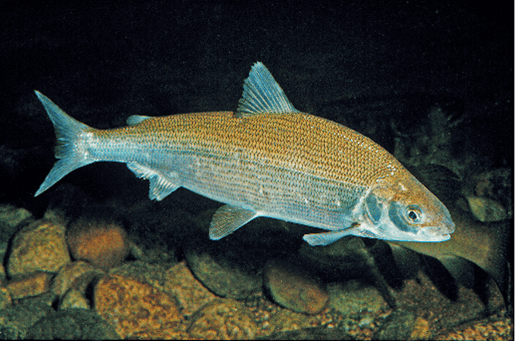
Behavior: Are they swimming normally? Showing stress?
Reproduction: Is fertility impacted? Are offspring developing correctly?
Genetic Integrity: Is their DNA being damaged?
By comparing how these differently “coated” nanoparticles affect the fish, my goal is clear: Identify which surface chemistries pose the greatest danger to aquatic life. Is the positively charged particle, drawn to negatively charged cell membranes, the most invasive? Does the neutral particle persist longer, causing chronic damage? The answers are critical.
My Hope: Turning Knowledge into Action
This journey, from tropical shores to boreal lakes, fuels my mission to contribute to:
- Stronger Regulations: Science-based policies specifically addressing micro and nanoplastics.
- Risk Identification: Pinpointing the most hazardous types of nanoplastics based on their core and surface properties.
- Smarter Water Management: Developing advanced wastewater treatment strategies capable of capturing these tiny terrors.
- Public Awareness: Shining a light on the pervasive threat of “invisible” plastic pollution – because you can’t fight what you don’t see.
References
- Andrady, A. L. (2011). Microplastics in the marine environment. Marine pollution bulletin, 62(8), 1596-1605.
- Li, Q., Jiang, L., Feng, J., Wang, X., Wang, X., Xu, X., & Chu, W. (2024). Aged polystyrene microplastics exacerbate alopecia associated with tight junction injuries and apoptosis via oxidative stress pathway in skin. Environment International, 186, 108638.
- Awet, T. T., Kohl, Y., Meier, F., Straskraba, S., Grün, A. L., Ruf, T., … & Emmerling, C. (2018). Effects of polystyrene nanoparticles on the microbiota and functional diversity of enzymes in soil. Environmental Sciences Europe, 30, 1-10.
- Teng, M., Zhao, X., Wu, F., Wang, C., Wang, C., White, J. C., … & Tian, S. (2022). Charge-specific adverse effects of polystyrene nanoparticles on zebrafish (Danio rerio) development and behavior. Environment International, 163, 107154.
- Danopoulos, E., Twiddy, M., & Rotchell, J. M. (2020). Microplastic contamination of drinking water: A systematic review. PloS one, 15(7), e0236838.
- Yang, S., Zhang, T., Ge, Y., Yin, L., Pu, Y., & Liang, G. (2024). Inhalation exposure to polystyrene nanoplastics induces chronic obstructive pulmonary disease-like lung injury in mice through multi-dimensional assessment. Environmental Pollution, 347, 123633.
16.8.2025.