
Jonna Tauriainen, University of Oulu. jonna.tauriainen@oulu.fi
Most of us are familiar with phrases like “bacteria are found everywhere.” Indeed, they can be found from the highest mountain tops to deep within the soil. But why are they everywhere, and what exactly do they do? And what about water—are microbes present there too?
The Good and the Bad
Microorganisms, or microbes, are a large group of microscopically small living creatures that include bacteria, fungi, protozoa, and archaea. They often have a bad reputation, as the “bad guys” tend to get most of the media attention.
One of the most well-known aquatic microorganisms is probably cyanobacteria, more familiarly known as blue-green algae. They cause annual blooms as the waters warm during the summer, making swimming inadvisable or unsafe—and potentially causing skin and stomach symptoms. Cyanobacteria blooms are easily recognizable and contact can be avoided, but not all microorganisms are so easily spotted. Water can act as a favourable medium for microbial growth, especially when warm or still, hosting pathogens that may cause life-threatening conditions.
Sounds scary? In reality, not all microorganisms are bad, and not all water bodies carry deadly bacteria. While some microbes can cause serious or even lethal medical conditions, most are harmless or actively involved in useful processes that benefit our everyday lives, such as food production and industrial applications. They also play many important roles in natural environments.
What Do They Do—and Why Does It Matter?
Bacteria are actually the most abundant living organisms on earth and can be found almost everywhere, even in environments where no life is expected. Bacteria and other microbial groups have evolved to be extremely versatile and diverse, having adapted to many environments, consuming a wide range of substances, and even photosynthesizing like plants.
Thanks to their small size, they can fit almost anywhere, and their energy requirements are often minimal—helping them survive in nutrient-poor environments.
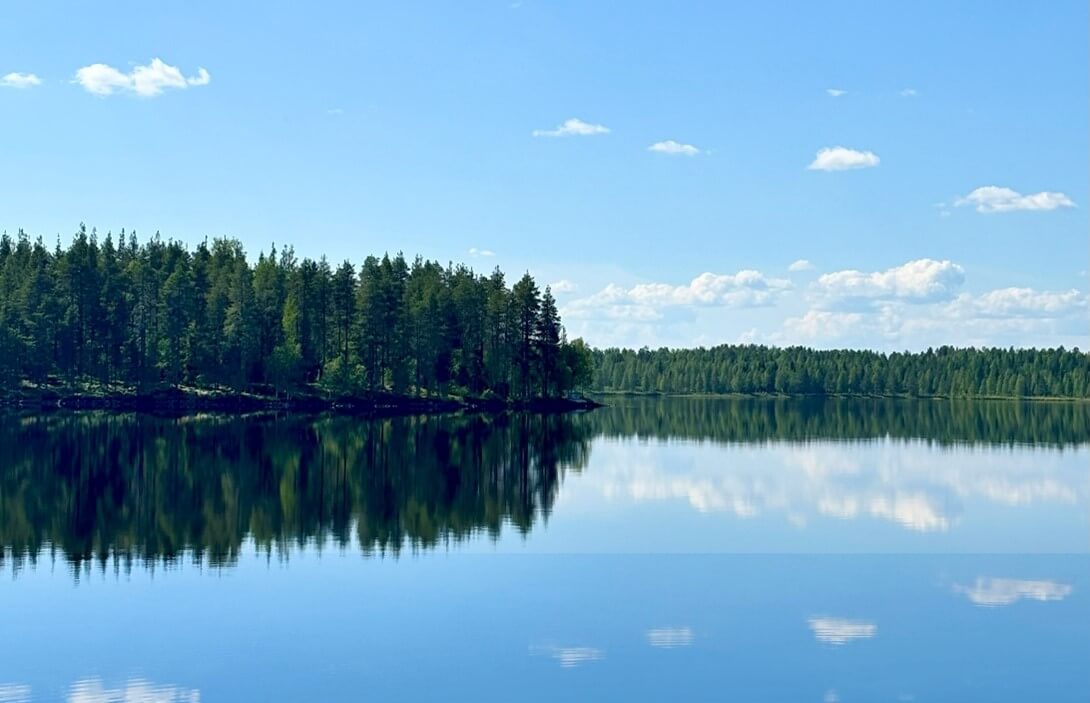
In aquatic ecosystems, microorganisms can inhabit several niches: they float freely in the water, grow on rocks and plant surfaces, and live buried in sediment. They take part in many important tasks within water bodies, some of which can be classified as ecosystem services. They break down organic matter like leaf litter, transform nutrients into different substances, and help clean the water. Microorganisms can be highly specialized in breaking down specific substances—even human-made pollutants and microplastics!
In many freshwater environments, microbes also form the base of the food web, serving as food for larger creatures and thus supporting entire aquatic ecosystems.
There is still much we don’t know about the secret life of microorganisms and all the ways they affect the world around us. But one thing is clear: they are essential for sustaining life and providing clean water, which makes them an interesting and important part of water-related research.
References
- Vesi.fi. (2019). Mistä tuntee sinilevän? https://www.vesi.fi/vesitieto/mista-tuntee-sinilevan/
- Microplastic research must consider microbes. Nat Microbiol 10, 603 (2025). https://doi.org/10.1038/s41564-025-01960-6
30.9.2025.