Raffa Ahmed, University of Oulu, Raffa.Ahmed@oulu.fi
When I began my PhD, I thought resilience was a technical concept, something engineers talk about when designing turbines. But as I dive deeper into hydropower in cold climate regions, I have learned that resilience is about much more. It is about systems, people, and even researchers themselves.
I entered my PhD with a clear goal: study hydropower resilience in cold climates. It sounded straightforward, an engineering challenge with environmental implications. But the deeper I go, the more I realize resilience is not just about ice, snow, and turbines. It is about adaptability, complexity, and sometimes, survival.
Why is Hydropower Resilience important?
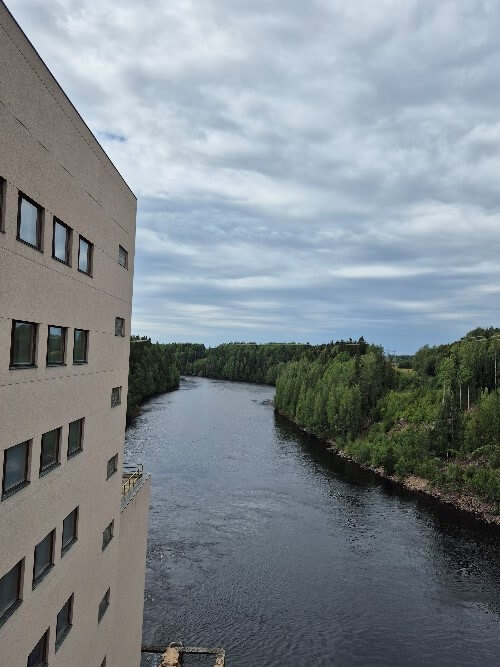
Around 15- 20% of Finland’s electricity comes from hydropower, making it one of the country’s most important renewable sources alongside wind and nuclear energy. There are over 90 hydropower plants across Finland, concentrated along major rivers like Kemijoki, Iijoki, and Oulujoki, with a combined capacity of about 2,300 – 3,100 MW.
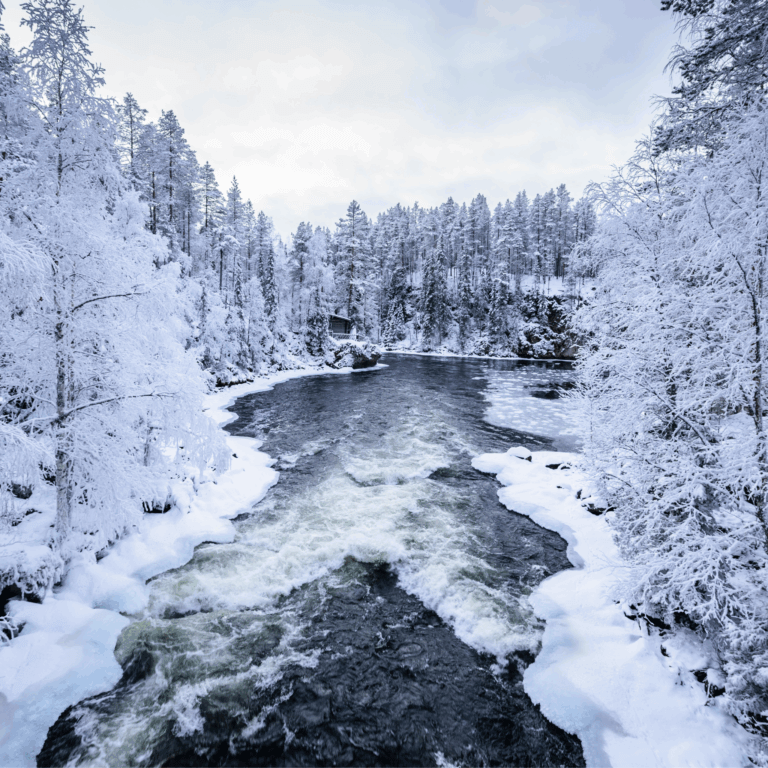
Hydropower is often portrayed as a stable source of renewable energy, with storage reservoirs managed carefully to store water during warmer months for winter energy demand. Yet operating in a cold climate brings its own unique challenges. The cold winter temperatures create river ice formation, frazil ice, and freeze-thaw cycles that disrupt water flow and can damage turbines. Sudden snowmelt events cause risks to hydropower infrastructure. And so, when systems fail, the consequences are immediate and severe, especially to communities that depend on hydropower during the harsh winters.
One surprising insight: Climate change doesn’t make things simpler (more water, more hydropower); it makes them messier. Changing precipitation patterns complicate water availability. Solutions must integrate adaptive strategies, be proactive, not reactive, and require collaboration across disciplines.
Learning outcomes
So, what have I learned? – Resilience is not a single fix. It’s a mindset system of strategies that evolve with changing conditions. For hydropower, that means integrating engineering innovations with environmental science and policy frameworks. For researchers, it means staying curious, asking for help, and remembering why the work matters and how to deliver the message for decision makers.
If you’re thinking about renewable energy & climate adaptation, here’s my advice: embrace complexity. The answers are not simple, but the questions are worth asking. Because resilience – whether in energy systems or in life – is what keeps us moving forward.
References
- “Hydro Power Plants in Finland (Map) | database.earth.” Accessed: Nov. 28, 2025. [Online]. Available: https://database.earth/energy/power-plants/hydro-power/finland
- “Finland Electricity Generation Mix 2024/2025 | Low-Carbon Power Data.” Accessed: Dec. 01, 2025. [Online]. Available: https://lowcarbonpower.org/region/Finland
15.12.2025