Sajjad Mohammadzadeh Vatanchi, University of Oulu, Sajjad.MohammadzadehVatanchi@oulu.fi
Short-term hydropower regulation is at the heart of balancing renewable energy supply and demand in today’s dynamic power systems. But with increasing climate variability and pressure for clean energy, traditional methods are no longer enough. My research examines how coupling hydrological and energy modeling, enhanced by Artificial Intelligence (AI), can lead to more efficient and flexible hydropower operations.
Hydropower Regulation in a Rapidly Changing World
Hydropower is more than just a source of renewable energy; it’s a crucial tool for maintaining grid stability, particularly as variable renewable energy sources such as wind and solar become more prevalent. Managing water flows in real-time, however, is becoming increasingly challenging. Factors such as unpredictable rainfall, changing snowmelt patterns, and shifting electricity market demands necessitate that operators make quick and complex decisions.
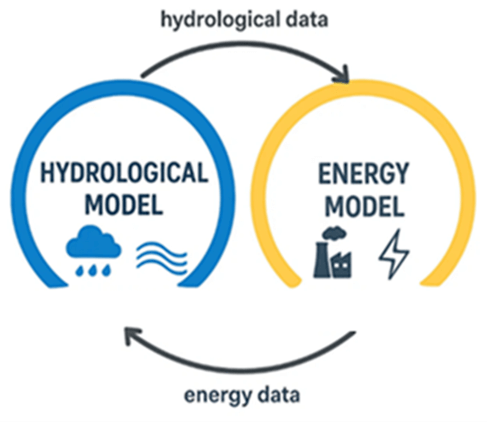
That’s where my work comes in. I focus on integrating hydrological models (which predict river inflows based on weather and catchment conditions) with energy system models (which optimize how much power to generate and when). The magic happens when these models work together, creating a feedback loop between the natural environment and the energy market.
Bringing Artificial Intelligence into the Mix
To make this integration even more intelligent, I utilize AI-based forecasting. Machine learning models can analyze large datasets, such as past weather records, river flows, and electricity prices, to predict short-term inflows and market needs with impressive accuracy. This empowers hydropower operators to schedule generation more efficiently, reducing both water waste and energy market risks. For example, suppose a model predicts a sudden increase in river flow. In that case, operators can plan to store or release water at the optimal time, maximizing both energy production and economic returns. On the other hand, accurate forecasts help avoid unnecessary water spills or missed market opportunities.
Why This Matters?
The coupling of hydrological and energy models, enhanced by AI, isn’t just a technical upgrade. It’s a fundamental shift in how we manage water resources and energy production, making hydropower more adaptive, efficient, and environmentally friendly. As climate change introduces more uncertainty into our water and energy systems, these approaches are becoming essential.
For me, the most rewarding aspect of this work is witnessing how interdisciplinary collaboration among hydrologists, data scientists, and energy experts can lead to innovations that directly support the transition to a cleaner, more resilient energy future.
For final words, I want to say that short-term hydropower regulation is evolving fast, thanks to the integration of hydrological modeling, energy systems optimization, and AI-driven forecasting. By bridging the gap between environmental variability and energy market needs, we can unlock the full potential of hydropower in the era of renewable energy.
14.11.2025