Tanya Santalahti, University of Turku, tanya.santalahti@utu.fi
In October, I had the opportunity to spend two weeks at Wageningen University in the Netherlands as part of my PhD research. This visit was a collaborative effort between Turku University, Aalto University, and Wageningen University, focused on a study exploring future visions for farms within the context of circular agriculture, and how these visions might be achieved.
Our study uses a method called backcasting, which is commonly used in futures studies and has been applied in agri-food research before (Andreotti et al., 2020; Remans et al., 2024). However, our approach is unique in that we apply it individually with one actor in the food system, the farmers. This makes our use of the method novel, and testing it before beginning data collection was a necessary step to ensure its relevance and feasibility.
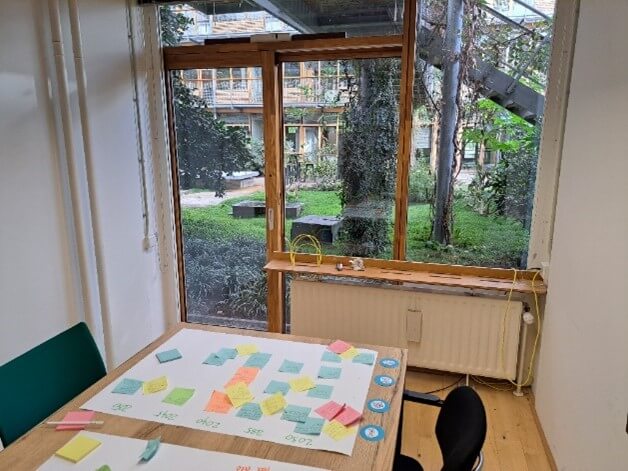
Planning the visit to Wageningen University
The visit was co-organized by my colleague from Aalto and me, with one of our co-authors kindly hosting us at Wageningen. As someone with no prior experience in university collaborations or research visits, I wasn’t sure what to expect. Fortunately, the planning went smoothly. We received guest cards for campus access and were even assigned desks for the duration of our stay. I also booked nearby accommodation, which gave me the flexibility to work remotely when needed. I found this a good option, especially since I noticed my work rhythm differed slightly from the Dutch academic pace.
Balancing work & free time
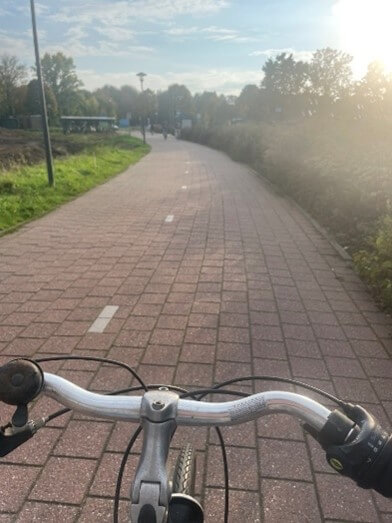
While the visit was primarily work-focused, being in a new environment sparked my curiosity to explore the surroundings. I managed to run 77 kilometers through forest trails and riverside paths, giving me a pretty good sense of Wageningen’s beautiful landscape. I was warned that the Dutch don’t walk much, and true enough, I was offered a bike to borrow. I felt very local cycling to campus.
One highlight was attending Dutch Design Week, where we joined a session on serious games developed to address sustainability challenges, particularly in the food system. It was fascinating to see how research can be communicated through creative public events, and I’d definitely recommend checking out local happenings during any research visit.
Of course, no trip to the Netherlands would be complete without sampling the local treats. I explored the town’s marketplace and tried several pastries, but the stroopwafel—a syrup-filled waffle sandwich—was hands-down my favorite.
Key Takeaways from the research visit
Reflecting on the visit, here are a few things I’d keep in mind for future research trips:
- Plan your networking: Think ahead about who you’d like to meet and connect with.
- Set clear goals: Having specific objectives made our visit productive and focused.
- Balance work and exploration: While I did a lot of work, the time spent outside the office was equally valuable for inspiration and well-being.
- Debriefing matters: We wrapped up the visit with a reflection session, which helped us assess how well we met our expectations.
Overall, I’m incredibly grateful for the opportunity to visit Wageningen University. I returned home inspired, with new insights and a stronger foundation for our research.
Dank u wel, Wageningen!
References
Andreotti, F., Speelman, E. N., Van Den Meersche, K., & Allinne, C. (2020). Combining participatory games and backcasting to support collective scenario evaluation: An action research approach for sustainable agroforestry landscape management. Sustainability Science, 15(5), 1383–1399. https://doi.org/10.1007/s11625-020-00829-3
Remans, R., Zornetzer, H., Mason-D’Croz, D., Kugler, C., Thornton, P., Pedersen, C., Cattaneo, F., Samantaray, D., Brouwer, I. D., Bosch, D., Bekele, T. H., Martinez, S., Ivanova, Y., Sanchez-Choy, J., Mockshell, J., Bergamini, N., Tibebe, D., Balcha, Y., Ebrahim, M., … Herrero, M. (2024). Backcasting supports cross-sectoral collaboration and social-technical innovation bundling: Case studies in agri-food systems. Frontiers in Sustainable Food Systems, 8, 1378883. https://doi.org/10.3389/fsufs.2024.1378883
12.11.2025