FRESENING IN THE ARCTIC OCEAN DEPICETED BY SOURCE TO SEA HYDROLOGICAL CONNECTIONS: VALIDATIONS USING SEA WATER ISOTOPE δ (δ 18O, δ2H, d-excess) FORENSICS
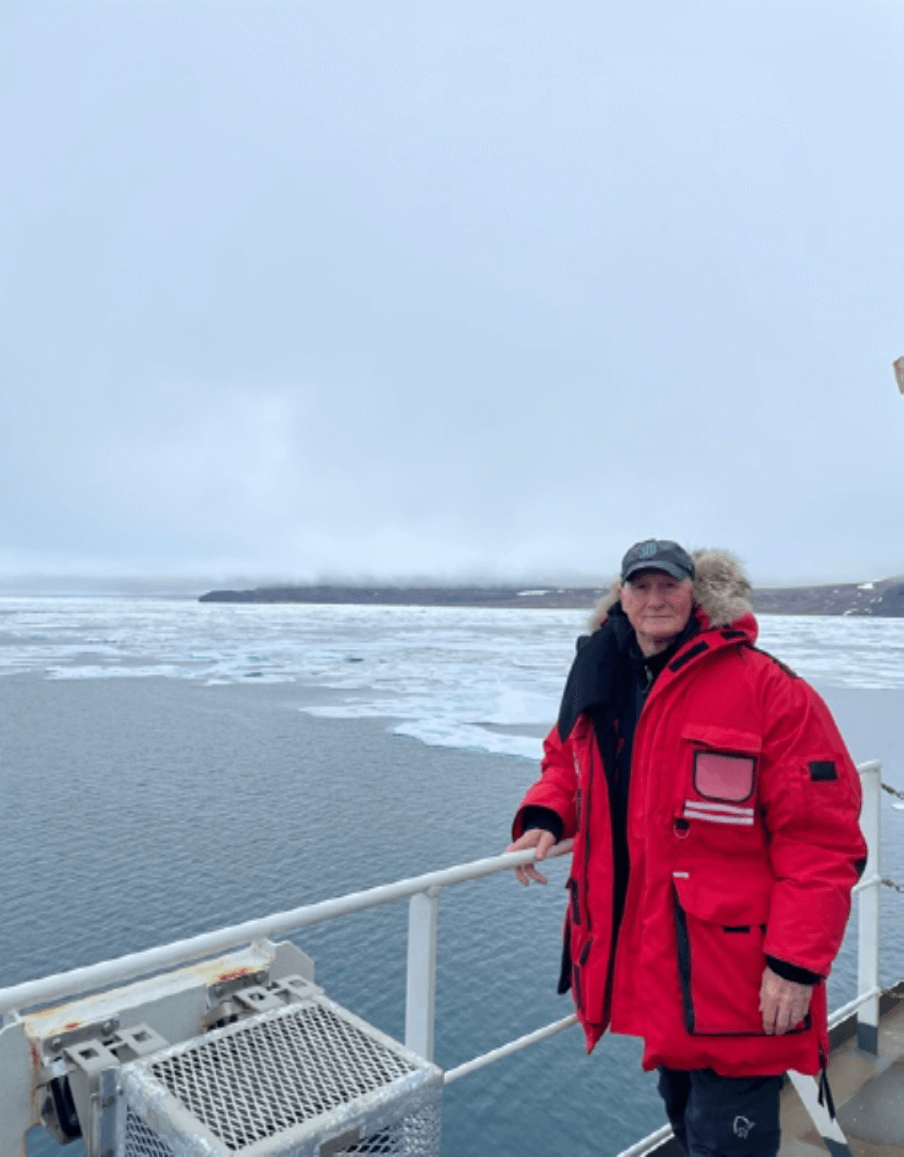
University of Alaska Anchorage‘s & University of Oulu’s Professor, Digital Waters (DIWA) Flagship Investigator & UArctic Research Chair, Jeff Welker’s research group completed their second major research expedition into the Arctic Ocean about a year ago, in August 2024.
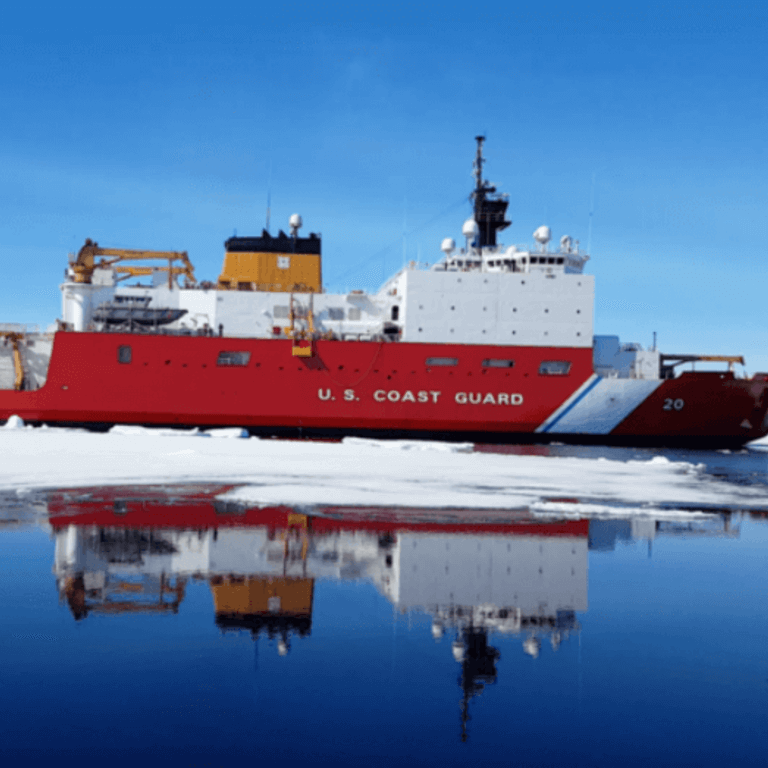
In the research expedition, they quantified the hydrologic linkages between northern landscapes, rivers, and the Arctic Ocean using geochemistry tracers aboard the US Coast Guard’s icebreaker Healy (Figure 1). The program was jointly supported by the University of Alaska Anchorage, the University of Oulu, and Welker’s awards from the Research Council of Finland (RCF) and the National Science Foundation (NSF).
Major research expedition into the Arctic Ocean
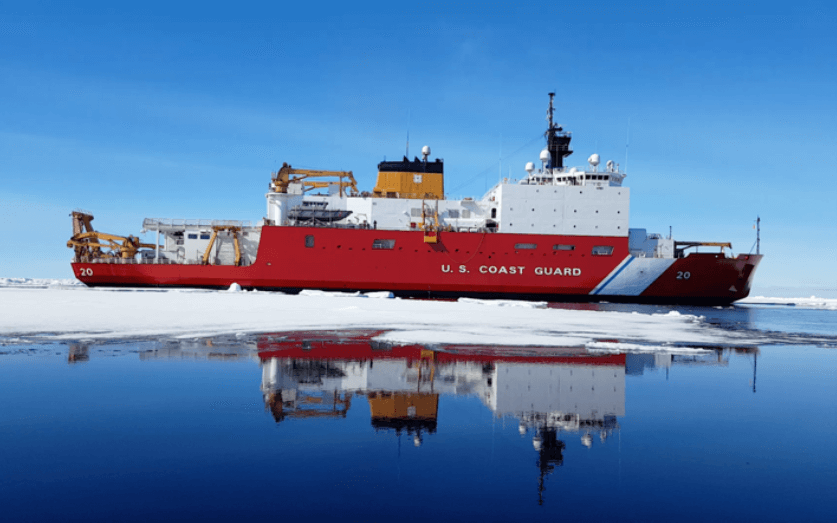
Welker’s team left the Aleutian Island Chain of West Alaska in late June 2024. The team spent the next 35 days taking over 40 million continuous measurements of the ocean’s surface water (10 m) isotope geochemistry (δ18O, δ2H, d-excess) as a means by which to verify major river inputs of isotopically distinct fresh water (snow and glacial ice melt) and melting sea ice inputs.
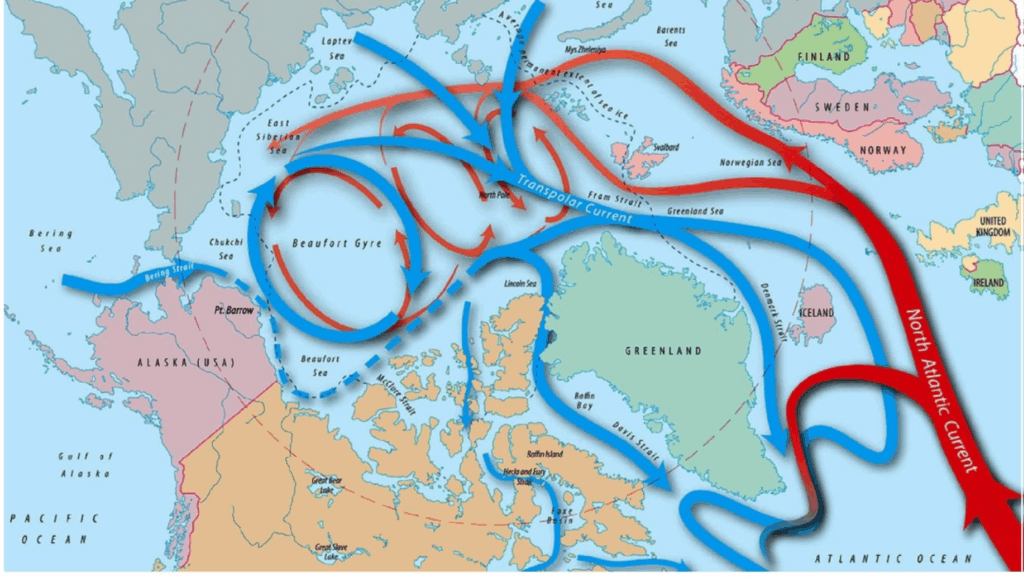
In addition, Welker’s source-sea research program is providing additional forensic data for differentiating water masses that exist in the complex Arctic Ocean system, including the northern migration of the warm Pacific current into the Arctic through the Bering Strait and the simultaneous transport of Eastern Eurasian current water south into the Pacific, as part of the bi-directional water mass fluxes through the Bering Strait Arctic Gateway System.
Welker’s team delineated the transport of old, freshwater out of the Beaufort Gyre into the Canadian Arctic and its contribution to the freshening of the East Greenland Current and Arctic water mass fluxes over Northern Greenland and out of the Arctic through the Fram Strait and into the Northern Atlantic-connecting the western and eastern Arctic Basin (Figure 2).
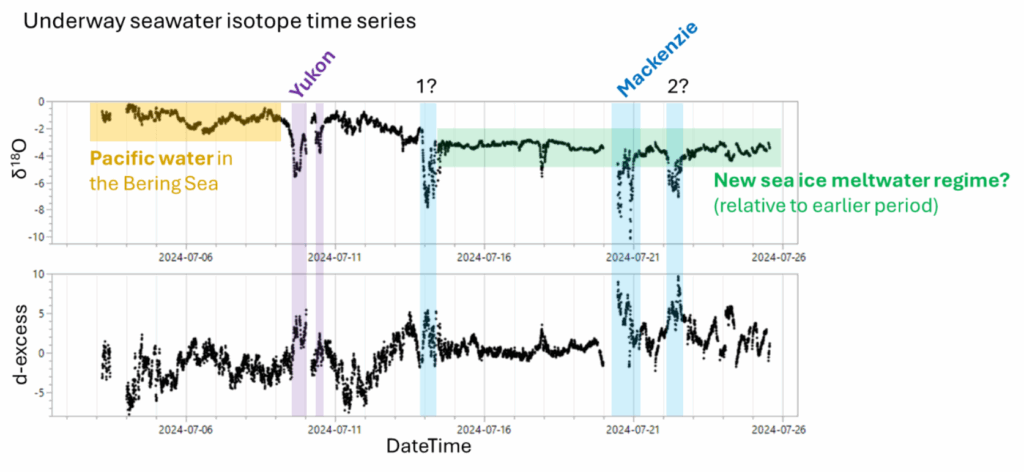
Using their continuous seawater measurements, taken by their Picarro laser-based isotope measurement device, called Neptune, Welker’s team found that the Yukon River contributes freshwater that makes up to 40% of the Bering Sea water in its massive plume. And that off the Northern coast of Canada, the MacKenzie River contributes freshwater that makes up more than 50% of the Beaufort Sea water as part of its plume extending 50 kilometers into the Arctic Ocean. Freshening geochemical signals were also observed in the marginal ice zones as they entered the western edge of the Northwest Passage in the Amundson Gulf and the McClure Strait areas (Figure 3).
Welker’s team published their earlier Arctic Ocean Freshening findings in 2024 from an earlier Healy icebreaker expedition that spanned the western and the central Arctic, supported by NSF, his UArctic Research Chairship, University of Oulu’s Research Council of Finland Arctic Interaction Profile 4 award, and collaboration with the US Coast Guard icebreaker Healy. The findings from Welker’s expedition have been jointly published by Welker’s University of Oulu and the University of Alaska teams, including early career scientist, Dr. Ben Kopec, who was the lead-author on the paper in one of the world’s premier oceanic research outlets: The Journal of Geophysical Research Oceans.
Freshening the Arctic Ocean
The 2021 Freshening expedition also traversed along the western and northern Alaska coastline. Then it passed through the entire Northwest Passage of the Canadian High Arctic, and spent weeks taking surface water isotope measurements all along the west Coast of Greenland, the East Coast of Baffin Island and back and forth across Baffin Bay, existing through the Davis Strait, and sampling across the Labrador Sea, reaching land in Halifax, Canada after 61 days at sea. During this study, the team took around 60 million water isotope measurements throughout the mission. This freshening package captured distinct Greenland Ice Sheet meltwater injections along the Kord systems of Western Greenland and Baffin Island.
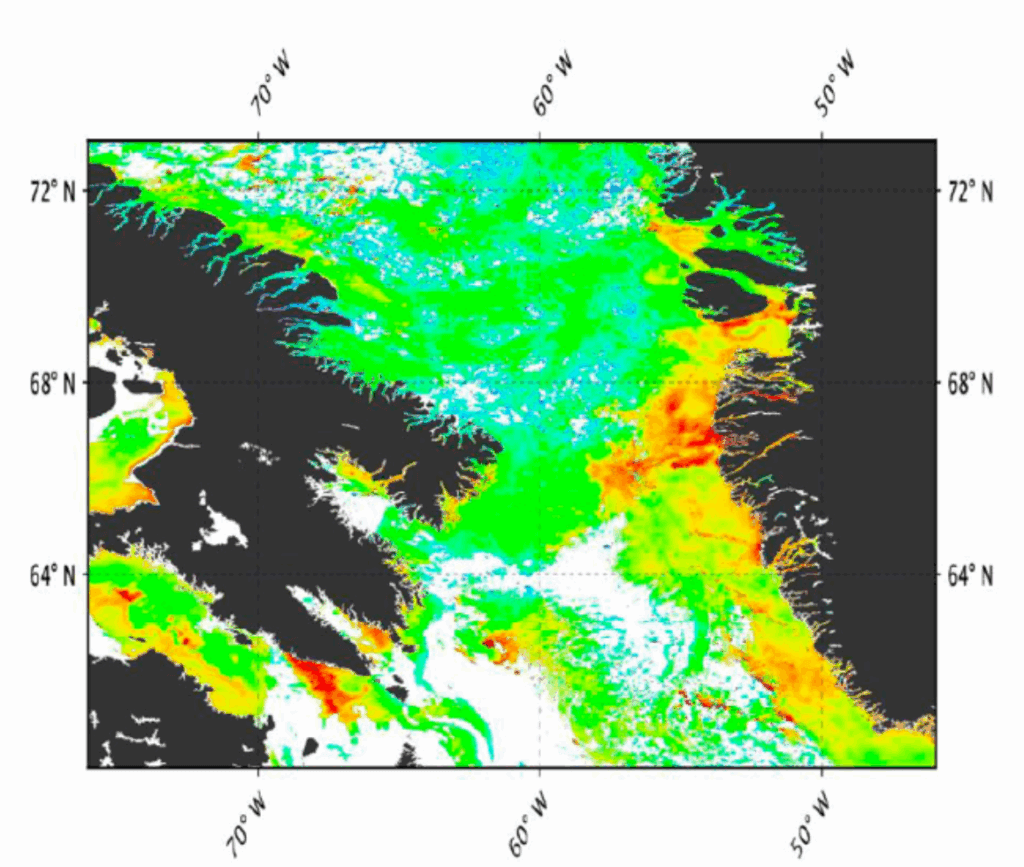
Freshening of the Arctic Ocean is one of the most important processes to document today, because as reported: “Freshening of the Arctic may completely change the Earth’s Climate” in the paper: Physics-based early warning signal shows that AMOC is on a tipping course: R Westen et al. Science Advances Feb. 2024
These global alarm bells are ringing because this linkage that Welker’s team is stitching together and contributing to DIWA is a “connecting the dots” scenario: climate warming-ice melt-freshwater increases in rivers, more freshwater into the Arctic Ocean leading to a complex set of consequences that may include a weakening of the Atlantic Meridional Overturning Circulation (AMOC) that regulates the heat transport from the mid- to the high latitudes.
25.6.2025.